2025-11-17 カリフォルニア大学サンタバーバラ校(UCSB)
<関連情報>
- https://news.ucsb.edu/2025/022229/two-minute-fix-procrastination
- https://bmcpsychology.biomedcentral.com/articles/10.1186/s40359-025-03388-3
そろそろ手をつけられそうな気がする:状態の先延ばしに対する簡潔で拡張性のある介入策 Now I feel like I’m going to get to it soon: a brief, scalable intervention for state procrastination
Anusha Garg,Shivang Shelat & Jonathan W. Schooler
BMC Psychology Published:16 October 2025
DOI:https://doi.org/10.1186/s40359-025-03388-3
Abstract
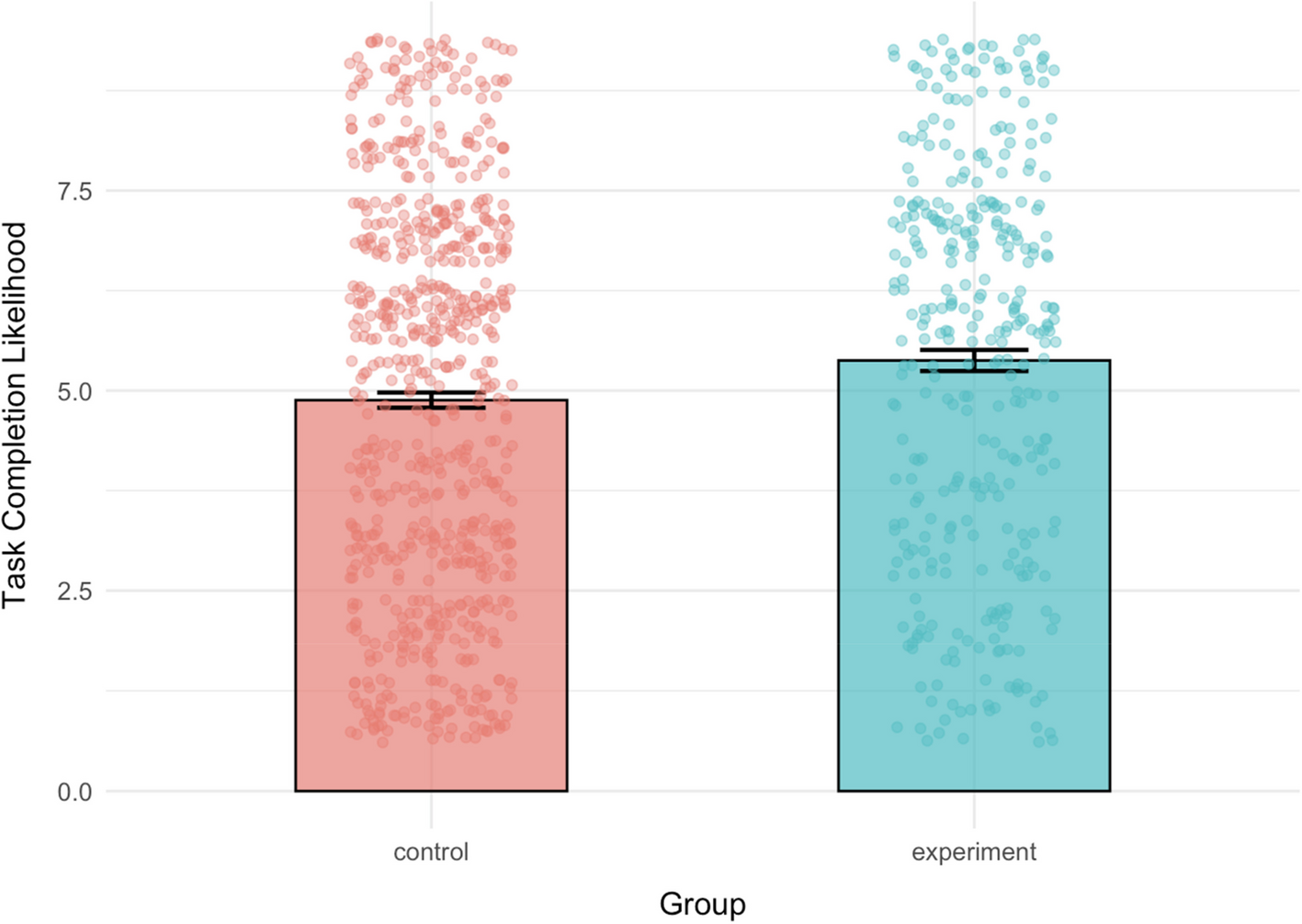
Procrastination is a pervasive habit that undermines well-being, productivity, and mental health. Developing brief and scalable interventions to address this issue is crucial. Here, we tested the efficacy of an intervention grounded in the Temporal Decision Model of procrastination. Our intervention targeted state-level procrastination by simultaneously reducing task aversion and enhancing outcome utility. A total of 1,035 participants were randomly assigned to an experimental group or one of two control groups. The experimental group engaged in a structured activity that adapted an Affect Labeling technique with subtask generation/reward selection; the former stage aimed to reduce task aversion and the latter stage aimed to enhance outcome utility. Control groups responded to neutral or some task-related questions. Participants rated task aversion, outcome utility, mood, stress, motivation, and likelihood of completing the procrastinated task. Social desirability bias was measured and controlled for. The experimental group reported significantly higher task completion likelihood, greater outcome utility, improved mood, and a larger utility–aversion gap compared to control groups. Mediation analysis revealed that the utility–aversion gap and mood partially mediated the relationship between group assignment and task completion likelihood. These findings illustrate the potential effectiveness of a brief, low-effort intervention for reducing state procrastination. By enhancing outcome utility and employing structured strategies, this intervention suggests a scalable solution with potential applications in digital platforms and workplace settings to improve task engagement and productivity.