2025-11-24 テキサスA&M大学
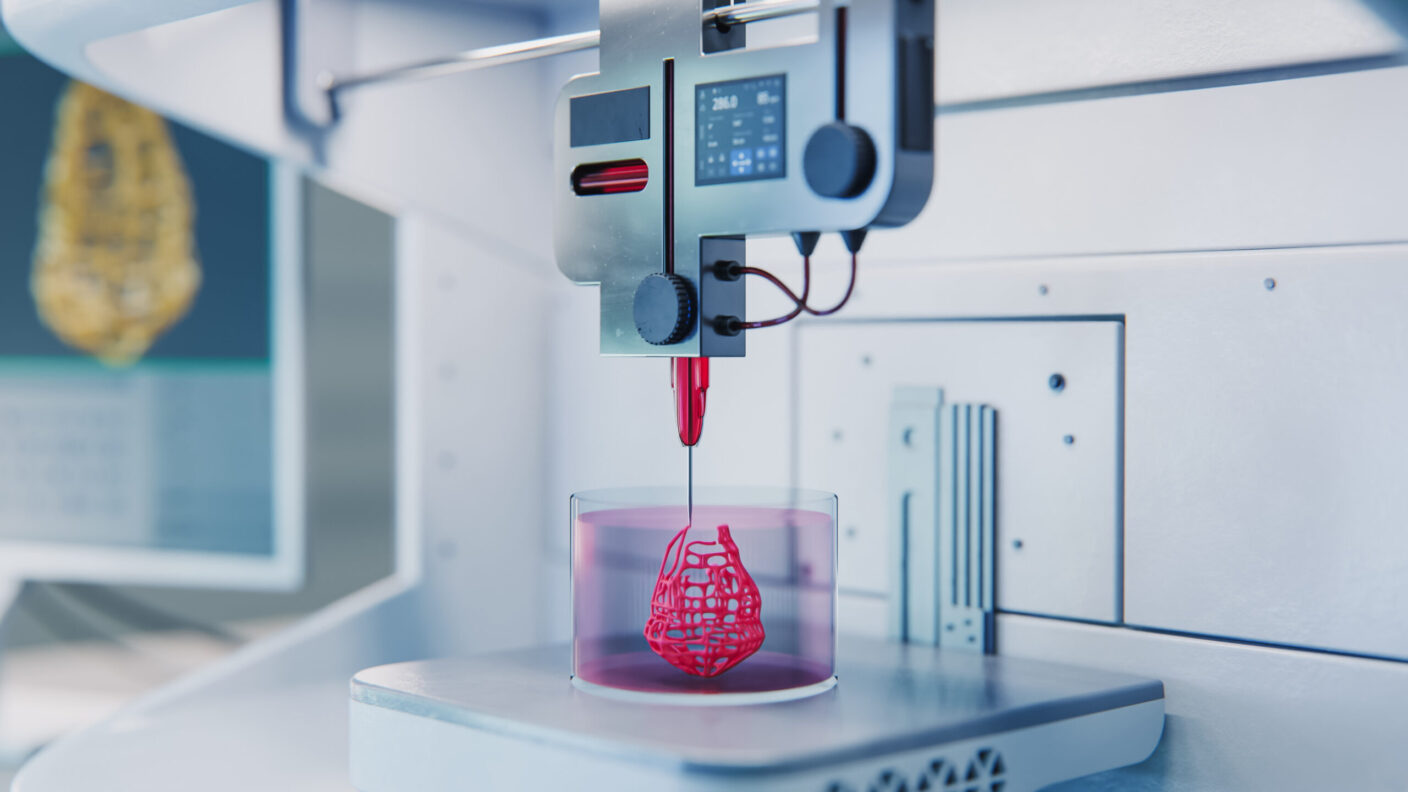
Researchers at Texas A&M University model extreme conditions using 3D bioprinting, revealing insights that could make flight and space travel protocols safer while driving new breakthroughs in respiratory disease research and drug discoveries.Credit: Getty Images
<関連情報>
- https://stories.tamu.edu/news/2025/11/24/building-breath-layer-by-layer-3d-printing-with-living-lung-cells-in-extreme-environments/
- https://www.mdpi.com/2313-7673/10/5/297
- https://www.mdpi.com/2306-5354/11/12/1201
- https://www.mdpi.com/2306-5354/11/9/862
3Dプリント中の押し出し圧力が3Dプリントサンプル中のヒト気管支上皮細胞の生存率に及ぼす影響 Effects of Extrusion Pressure During 3D Printing on Viability of Human Bronchial Epithelial Cells in 3D Printed Samples
Taieba Tuba Rahman,Nathan Wood,Zhijian Pei,Hongmin Qin and Padmini Mohan
Biomimetics Published: 8 May 2025
DOI:https://doi.org/10.3390/biomimetics10050297
Abstract
This study investigates how different levels of extrusion pressure during 3D printing affect the cell viability of human bronchial epithelial (HBE) cells embedded in printed samples. In this study, samples were printed at three levels of extrusion pressure. The cell viability was assessed through live/dead staining via microscopic imaging. The results show that increasing the extrusion pressure from 50 to 100 kPa led to a higher degree of cell death. These results demonstrate how the extrusion pressure affects the viability of HBE cells and provide a basis for future studies on pressure-induced responses in respiratory tissues.
3Dプリントサンプルにおけるヒト気管支上皮細胞への極度の温度の影響 Effects of Extreme Temperature on Human Bronchial Epithelial Cells in 3D Printed Samples
Taieba Tuba Rahman,Nathan Wood,Zhijian Pei and Hongmin Qin
Bioengineering Published: 28 November 2024
DOI:https://doi.org/10.3390/bioengineering11121201
Abstract
This paper reports an experimental study on the effects of extreme temperature on human bronchial epithelial (HBE) cells encapsulated in 3D printed samples. Well plates of the 3D printed samples were exposed to three levels of temperature (37 °C, 45 °C, and 55 °C, respectively) for a duration of 10 min. Cells’ responses, specifically cell viability and oxidative stress, were quantified using Hoechst 33342, Sytox, and Mitosox stains, with intensity measurements obtained via a plate reader. In addition, cell viability was assessed through microscopic imaging of the 3D printed samples. Experimental results demonstrated that the temperature increase from 37 °C to 55 °C significantly reduced nuclear integrity as observed through Hoechst 33342 intensity, while increased Sytox intensity reflected a higher degree of cell death. Furthermore, cells exposed to 45 °C and 55 °C exhibited decreased cell viability and elevated mitochondrial oxidative stress. These findings offer valuable insights into the effects of extreme temperature on HBE cells, establishing a foundation for future research into how respiratory tissues respond to thermal stress. This research can potentially advance the knowledge regarding effects of heat exposure on the respiratory system.
3Dプリント用コラーゲン-アルギン酸バイオインクにおけるヒト気管支上皮細胞の適合性に関する実験的研究 Experimental Study on Compatibility of Human Bronchial Epithelial Cells in Collagen–Alginate Bioink for 3D Printing
Taieba Tuba Rahman,Nathan Wood,Yeasir Mohammad Akib,Hongmin Qin and Zhijian Pei
Bioengineering Published: 23 August 2024
DOI:https://doi.org/10.3390/bioengineering11090862
Abstract
This paper reports an experimental study on the compatibility of human bronchial epithelial (HBE) cells in a collagen–alginate bioink. The compatibility was assessed using the culture well method with three bioink compositions prepared from a 10% alginate solution and neutralized TeloCol-10 mg/mL collagen stock solution. Cell viability, quantified by (live cell count—dead cell count)/live cell count within the HBE cell-laden hydrogel, was evaluated using the live/dead assay method from Day 0 to Day 6. Experimental results demonstrated that the collagen–alginate 4:1 bioink composition exhibited the highest cell viability on Day 6 (85%), outperforming the collagen–alginate 1:4 bioink composition and the alginate bioink composition, which showed cell viability of 75% and 45%, respectively. Additionally, the live cell count was highest for the collagen–alginate 4:1 bioink composition on Day 0, a trend that persisted through Days 1 to 6, underscoring its superior performance in maintaining cell viability and promoting cell proliferation. These findings show that the compatibility of HBE cells with the collagen–alginate 4:1 bioink composition was higher compared with the other two bioink compositions.