
2025-12-17 ペンシルベニア州立大学(Penn State)
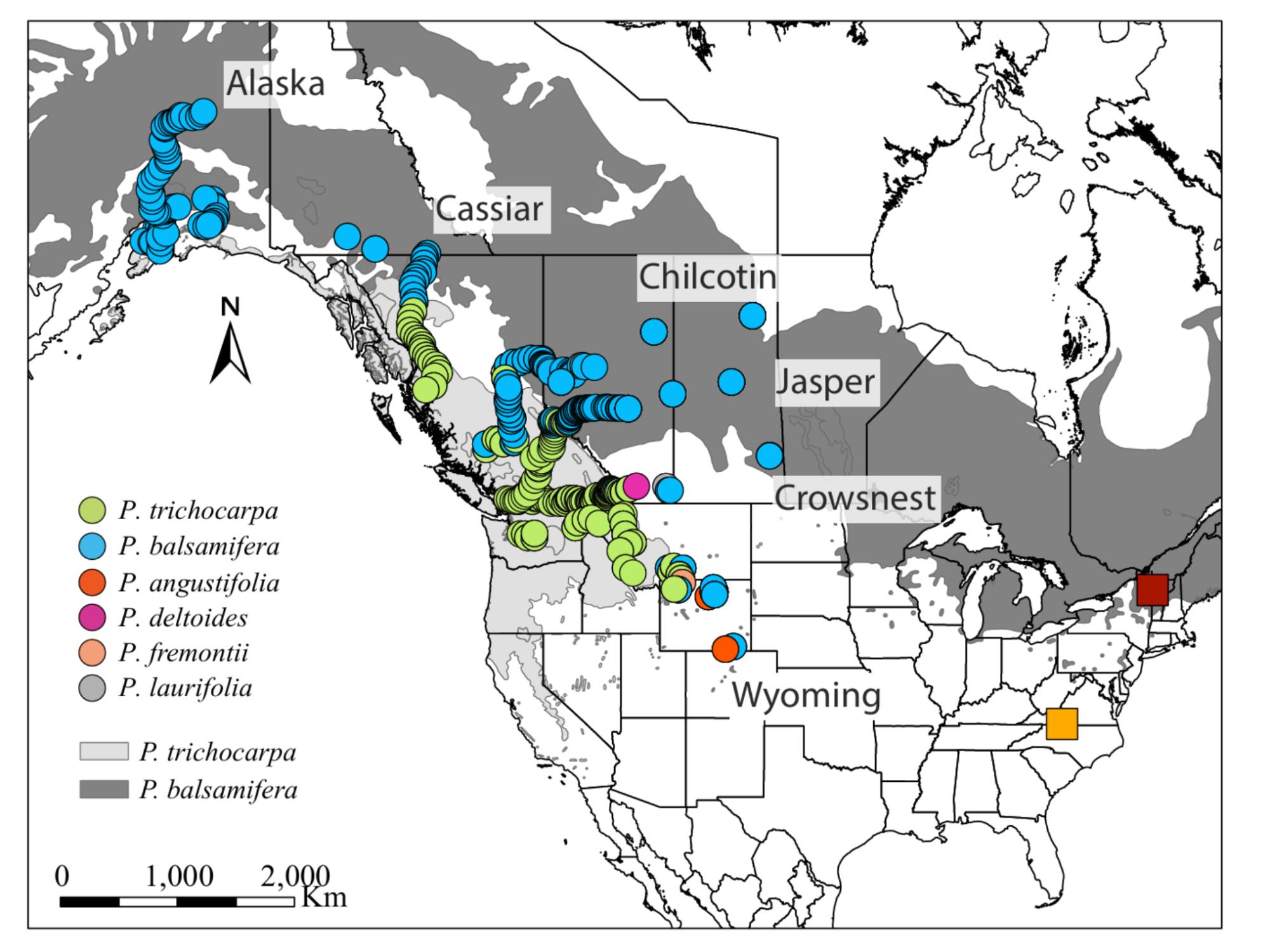
The researchers collected vegetative cuttings from 574 different trees within the natural hybrid zone between black cottonwood and balsam poplar in a geographic swath stretching from Alaska to Wyoming. Within this region, the researchers identified six different east-west contact zones where the two species naturally hybridize. Credit: Penn State. Creative Commons
<関連情報>
- https://www.psu.edu/news/research/story/genetic-teamwork-may-be-secret-climate-resilient-plants-researchers-find
- https://royalsocietypublishing.org/rspb/article/292/2059/20251239/355767
ポプラ雑種地帯 における植物の適応に対する細胞核相互作用の役割 The role of cytonuclear interactions to plant adaptation across a Populus hybrid zone
Michelle Zavala-PaezBrianna N. Sutara;Stephen R. Keller;Jason A. Holliday;Matthew C. Fitzpatrick;Jill A. Hamilton
Proceedings of the Royal Society B Published:26 Nov 2025
DOI:https://doi.org/10.1098/rspb.2025.1239
Abstract
Co-adaptation of cytoplasmic and nuclear genomes is critical to physiological function for many species. Despite this understanding, hybridization can disrupt co-adaptation, leading to a mismatch between maternally inherited cytoplasmic genomes and biparentally inherited nuclear genomes. Few studies have examined the consequences of cytonuclear interactions to physiological function across environments. Here, we quantify the degree of co-introgression between chloroplast and nuclear–chloroplast (N-cp) genes across repeated hybrid zones and its consequences to physiological function across environments. We use whole-genome resequencing and common garden experiments with clonally replicated genotypes sampled across the natural hybrid zone between Populus trichocarpa and P. balsamifera. Geographic clines were used to test for co-introgression of the chloroplast genome with N-cp and non-interacting nuclear genes. Co-introgression of the chloroplast alongside N-cp genes was limited, although contact-zone specific patterns point to the importance of regional differences. Combining ancestry estimates with phenotypic data across common gardens revealed that mismatches between chloroplast and nuclear ancestry can influence physiological performance, but the strength and direction of these effects vary depending on the environment. Overall, this study highlights the importance of cytonuclear interactions to adaptation, and the context-dependent role the environment may play influencing that interaction.

