2025-12-17 ニューヨーク大学(NYU)
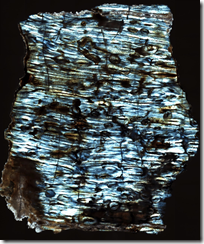
A polarized light image of fossilized antelope bone showing intact collagen (scale: 1 mm across) Credit: Timothy Bromage and Bin Hu, NYU Dentistry
<関連情報>
- https://www.nyu.edu/about/news-publications/news/2025/december/metabolic-analyses-animal-fossils.html
- https://www.nature.com/articles/s41586-025-09843-w
古代メタボロームは、初期の人類遺跡における生物学的・生態学的プロファイルを提供する Palaeometabolomes yield biological and ecological profiles at early human sites
Timothy G. Bromage,Christiane Denys,Christopher Lawrence De Jesus,Hediye Erdjument-Bromage,Ottmar Kullmer,Oliver Sandrock,Friedemann Schrenk,Marc D. McKee,Natalie Reznikov,Gail M. Ashley,Bin Hu,Sher B. Poudel,Antoine Souron,Daniel J. Buss,Eran Ittah,Jülide Kubat,Sasan Rabieh,Shoshana Yakar & Thomas A. Neubert
Nature Published:17 December 2025
DOI:https://doi.org/10.1038/s41586-025-09843-w
Abstract
The science of metabolic profiling exploits chemical compound byproducts of metabolism called metabolites1 that explain internal biological functions, physiological health and disease, and provide evidence of external influences specific to an organism’s habitat. Here we assess palaeometabolomes from fossilized mammalian hard tissues as a molecular ecological strategy to provide evidence of an ancient organism’s relationship with its environment. From eastern, central and southern African Plio-Pleistocene localities of palaeoanthropological significance, we study six fossils from Olduvai Gorge, Tanzania, one from the Chiwondo Beds, Malawi, and one from Makapansgat, South Africa. We perform endogeneity assessments by analysing palaeometabolomes of palaeosols and the effects of owl digestion on rodent bones to enable prudent ecological inferences. Diagenesis is indicated by metabolites of collagenase-producing bacteria2, whereas the preservation of peptides including those of collagen are identified by proteomics. Endogenous metabolites document biological functions and exogenous metabolites render environmental details including soil characteristics and woody cover, and enable annual minimum and maximum rainfall and temperature reconstructions at Olduvai Gorge, supporting the freshwater woodland and grasslands of Olduvai Gorge Bed I3,4,5, and the dry woodlands and marsh of Olduvai Gorge Upper Bed II6. All sites denote wetter and/or warmer conditions than today. We infer that metabolites preserved in hard tissues derive from an extravasated vasculature serum filtrate that becomes entombed within developing mineralized matrices, and most probably survive palaeontological timeframes in the nanoscopic ‘pool’ of structural-bound water that occurs in hard tissue niches7.