2025-12-18 ジョンズ・ホプキンス大学
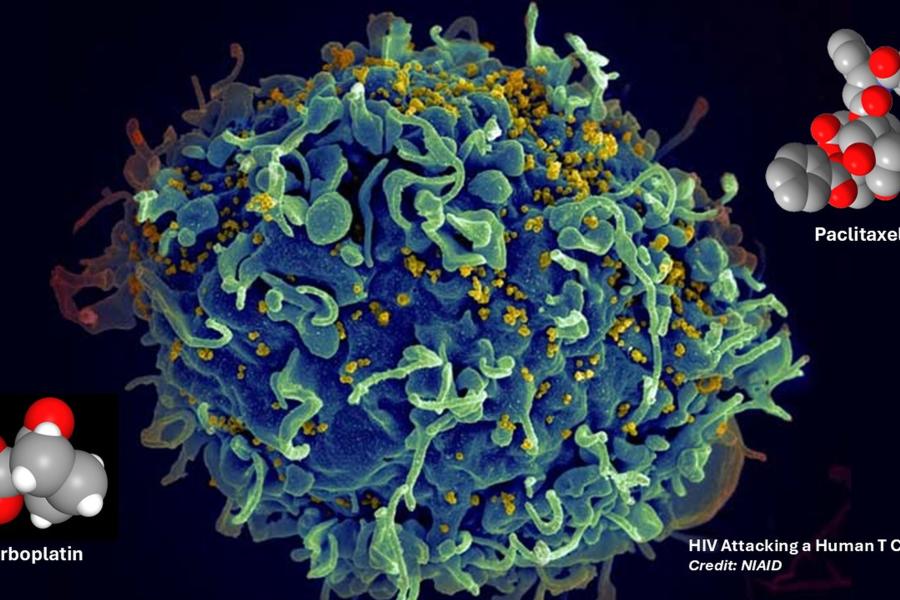
Scanning electron micrograph showing HIV (yellow) attacking a human T cell (blue).Credit:National Institute of Allergies and Infectious Diseases, National Institutes of Health
<関連情報>
- https://hub.jhu.edu/2025/12/18/cancer-treatment-decreases-hiv-immune-cells/
- https://www.jci.org/articles/view/197266
同族ペプチド刺激と抗増殖薬によるHIV感染クローンの選択的標的化 Selective targeting of HIV-infected clones by cognate peptide stimulation and antiproliferative drugs
Filippo Dragoni, Joel Sop, Isha Gurumurthy,Tyler P. Beckey, Kellie N. Smith,Francesco R. Simonetti,and Joel N. Blankson
Journal of Clinical Investigation Published: October 21, 2025
DOI:https://doi.org/10.1172/JCI197266
Abstract
Clonal expansion of HIV-infected CD4+ T cells is a barrier to HIV eradication. We previously described a marked reduction in the frequency of the most clonally expanded, infected CD4+ T cells in an individual with elite control (ES24) after initiating chemoradiation for metastatic lung cancer with a regimen that included paclitaxel and carboplatin. We tested the hypothesis that this phenomenon was due to a higher susceptibility to the chemotherapeutic drugs of CD4+ T cell clones that were sustained by proliferation. We studied a CD4+ T cell clone with replication-competent provirus integrated into the ZNF721 gene, termed ZNF721i. We stimulated the clone with its cognate peptide and then exposed the cells to paclitaxel and/or carboplatin or the antiproliferative drug mycophenolate mofetil. While treatment of cells with the cognate peptide alone led to a marked expansion of the ZNF721i clone, treatment with the cognate peptide followed by culture with either paclitaxel or mycophenolate mofetil abrogated this process. The drugs did not affect the proliferation of other CD4+ T cell clones that were not specific for the cognate peptide. This strategy of antigen-specific stimulation followed by treatment with an antiproliferative agent may lead to the selective elimination of clonally expanded HIV-infected cells.