
2026-01-05 ニューヨーク大学(NYU)
<関連情報>
- https://www.nyu.edu/about/news-publications/news/2026/january/neuroscientists-devise-formulas-to-measure-multilingualism.html
- https://www.cambridge.org/core/journals/bilingualism-language-and-cognition/article/theoretically-driven-and-empirically-grounded-calculation-for-language-dominance-and-degree-of-multilingualism/76757921DA38601C02D9E9D0FA5FE899
言語優位性と多言語性の程度に関する理論的かつ経験的根拠に基づいた計算 A theoretically driven and empirically grounded calculation for language dominance and degree of multilingualism
Xuanyi Jessica Chen and Esti Blanco-Elorrieta
Bilingualism: Language and Cognition Published:29 December 2025
DOI:https://doi.org/10.1017/S1366728925100849
Abstract
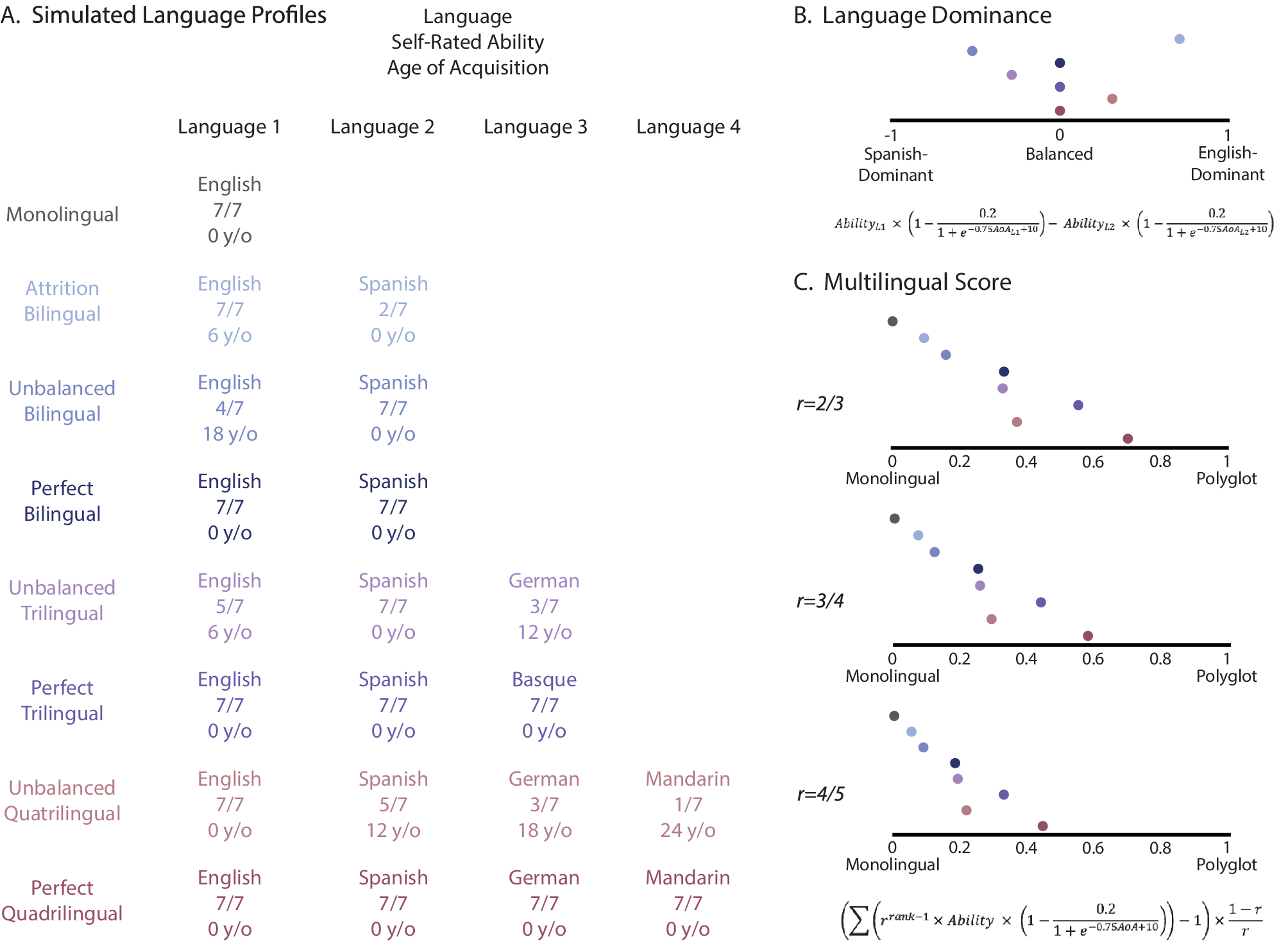
Bilingualism research has long been challenged by a lack of a unified approach to quantifying language dominance and degree of multilingualism. While numerous questionnaires (e.g., LHQ, BLP, LEAP‑Q, and LUQ) provide valuable data on language background variables, they lack a standardized formula to compute key measures from it. We introduce two formulas that synthesize critical linguistic variables to efficiently calculate language dominance and a multilingualism score that ranges from perfect monolingualism to native-like proficiency in multiple languages. Validation across two large datasets shows our dominance measure closely aligns with more complex PCA methods while being simpler and more efficient.

