2026-01-09 中国科学院(CAS)
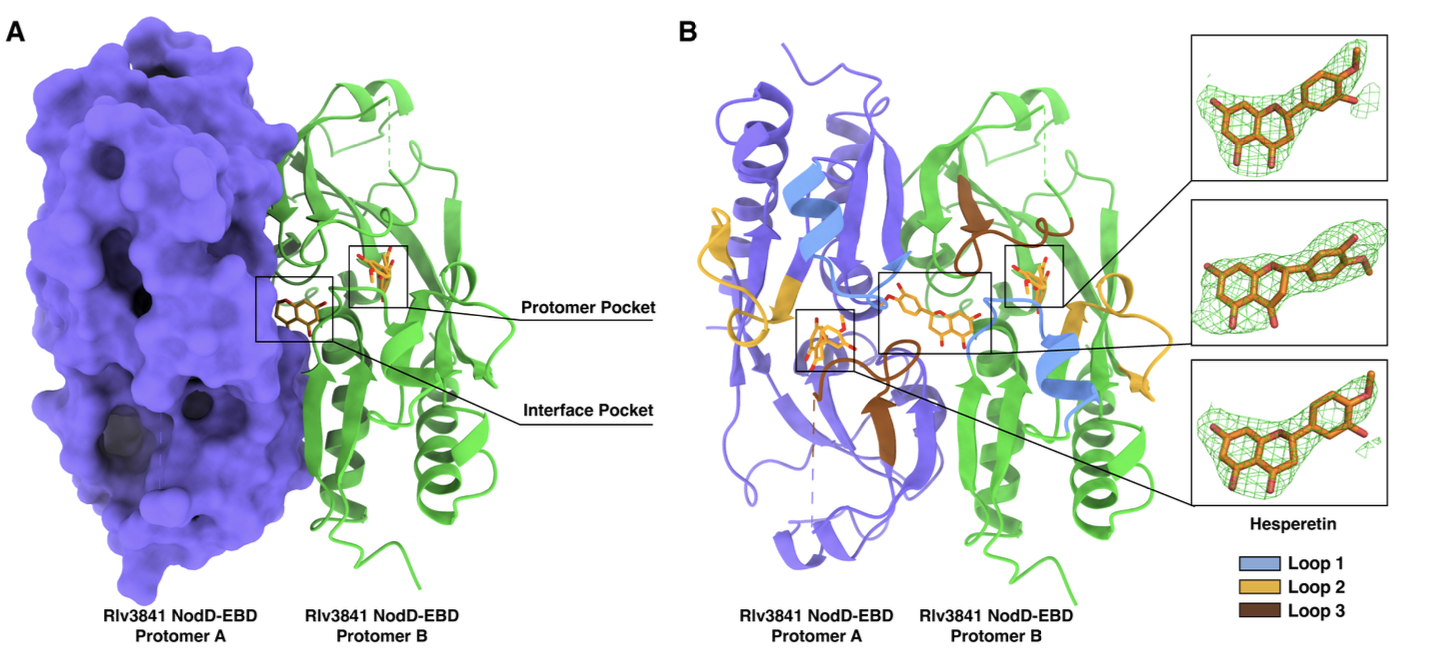
Figure 1 Overall structure of the Rlv3841 NodD-EBD in complex with hesperetin
<関連情報>
- http://english.cemps.cas.cn/News/picNews/202601/t20260109_1145501.html
- https://www.science.org/doi/10.1126/science.aec3061
フラボノイドによる根粒菌NodDの結合と特異的活性化の分子基盤 The molecular basis of the binding and specific activation of rhizobial NodD by flavonoids
Yiting Ruan, Shangzhi Dong, Suyu Jiang, Yisheng Wang, […] , and Jeremy D. Murray
Science Published:8 Jan 2026
DOI:https://doi.org/10.1126/science.aec3061
Editor’s summary
Legume plants such as pea and alfalfa form an ecologically and agriculturally important symbiotic relationship with nitrogen-fixing soil bacteria called rhizobia. This interaction begins when the plant releases specific flavonoids into the soil that are selectively recognized by its symbiotic partners. The bacteria perceive these signals and produce a countersignal, initiating a chemical dialogue. This communication allows the bacteria to enter the plant’s roots and provide fixed nitrogen, showcasing a highly specific form of plant-microbe communication. Ruan et al. describe the molecular basis of how the rhizobia are able to discriminate between different flavonoids to recognize the appropriate host. —Stella M. Hurtley
Abstract
The specific partnership between legumes and rhizobia relies on a chemical dialogue. Plant flavonoids activate the bacterial transcription factor NodD, which triggers production of Nod factors that are recognized by the plant. Structural studies of the Pisum sativum (pea) symbiont Rhizobium leguminosarum NodD revealed two pockets that are essential for its activation by flavonoids. Comparative studies with NodD1 of Sinorhizobium medicae, the symbiont of Medicago truncatula, revealed that this specificity is determined by the shape of the pocket and by specific amino acids. A chimeric NodD containing the flavonoid recognition residues from S. medicae NodD1 in the R. leguminosarum NodD backbone was sufficient to complement nitrogen fixation in M. truncatula by an S. medicae nodD1 mutant, confirming the critical role of flavonoid recognition in host range.