2026-01-27 エディンバラ大学
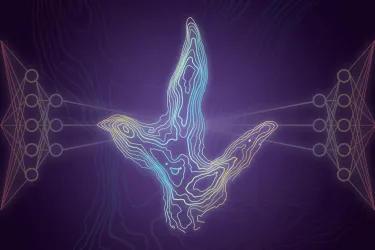
Scan of a dinosaur footprint from the Jurassic age, Isle of Skye, Scotland. Credit Tone Blakesley.
<関連情報>
- https://www.ed.ac.uk/news/ai-sheds-light-on-mysterious-dinosaur-footprints
- https://www.pnas.org/doi/10.1073/pnas.2527222122
偏りのない教師なし機械学習による恐竜の足跡の変異の特定と問題のある標本の分類 Identifying variation in dinosaur footprints and classifying problematic specimens via unbiased unsupervised machine learning
Gregor Hartmann, Tone Blakesley, Paige E. dePolo, and Stephen L. Brusatte
Proceedings of the National Academy of Sciences Published:January 26, 2026
DOI:https://doi.org/10.1073/pnas.2527222122
Significance
Dinosaur footprints are iconic fossils, but it is challenging to identify their makers. This is illustrated by a long-standing debate about whether some footprints from the Late Triassic-Early Jurassic belong to birds, which would be ~60 Ma older than the oldest skeletons. Recently, machine learning has been heralded as a tool for classifying and identifying tracks, but existing methods require researchers to supervise the process by labeling training data, which can perpetuate human biases. We use an unsupervised neural network to process a dataset of nearly 2,000 dinosaur tracks, which recognizes eight ways in which they most vary, and which finds that the problematic bird-like tracks are more similar to modern and fossil birds than any other dinosaur.
Abstract
Machine learning holds great promise for classifying and identifying fossils, and has recently been marshaled to identify trackmakers of dinosaur footprints and address long-standing debates over whether some dinosaur tracks are the oldest birds or ornithopods (duck-billed herbivores and kin) in the fossil record, or alternatively were made by nonavian theropods. Existing methods in paleontology, however, require supervision and a priori labeling of training data by researchers, which can lead to bias. We employ an unsupervised machine learning technique for recognizing inherent patterns in shape data, using a disentangled variational autoencoder network, to a database of 1,974 footprints, spanning a diversity of dinosaurs across their evolutionary history, including modern birds. Our neural network identified eight features of shape variation that most differentiate these tracks: overall load and shape (amount of ground contact area), digit spread, digit attachment, heel load, digit and heel emphasis, loading position, heel position, and left–right load. With the unsupervised process finished, we a posteriori labeled each track based on published expert judgments, plotted them into morphospace, and applied distance metrics to group means and nearest neighbors, which showed 80 to 93% agreement with expert identifications. Controversial Late Triassic-Early Jurassic bird-like tracks group with fossil and modern birds and some Middle Jurassic three-toed tracks with ornithopods, supporting an older origin for these groups than recorded by body fossils. We provide an app, DinoTracker, to make this process accessible, and source code that can be adapted to other cases where paleontologists or biologists are studying patterns of shape variation.