2025-08-07 カリフォルニア大学サンタバーバラ校(UCSB)
<関連情報>
- https://news.ucsb.edu/2025/021986/better-access-technology-can-help-african-americans-bridge-healthcare-gap
- https://www.frontiersin.org/journals/public-health/articles/10.3389/fpubh.2025.1547189/full
米国アフリカ系アメリカ人における技術へのアクセス、利用、社会経済的地位、および医療格差
Technology access, use, socioeconomic status, and healthcare disparities among African Americans in the US
Ebenezer Larnyo,Sharon Tettegah,Jonathan Aseye Nutakor,Stephen Addai-Dansoh,Francisca Arboh
Frontiers in Public Health Published:28 May 2025
DOI:https://doi.org/10.3389/fpubh.2025.1547189
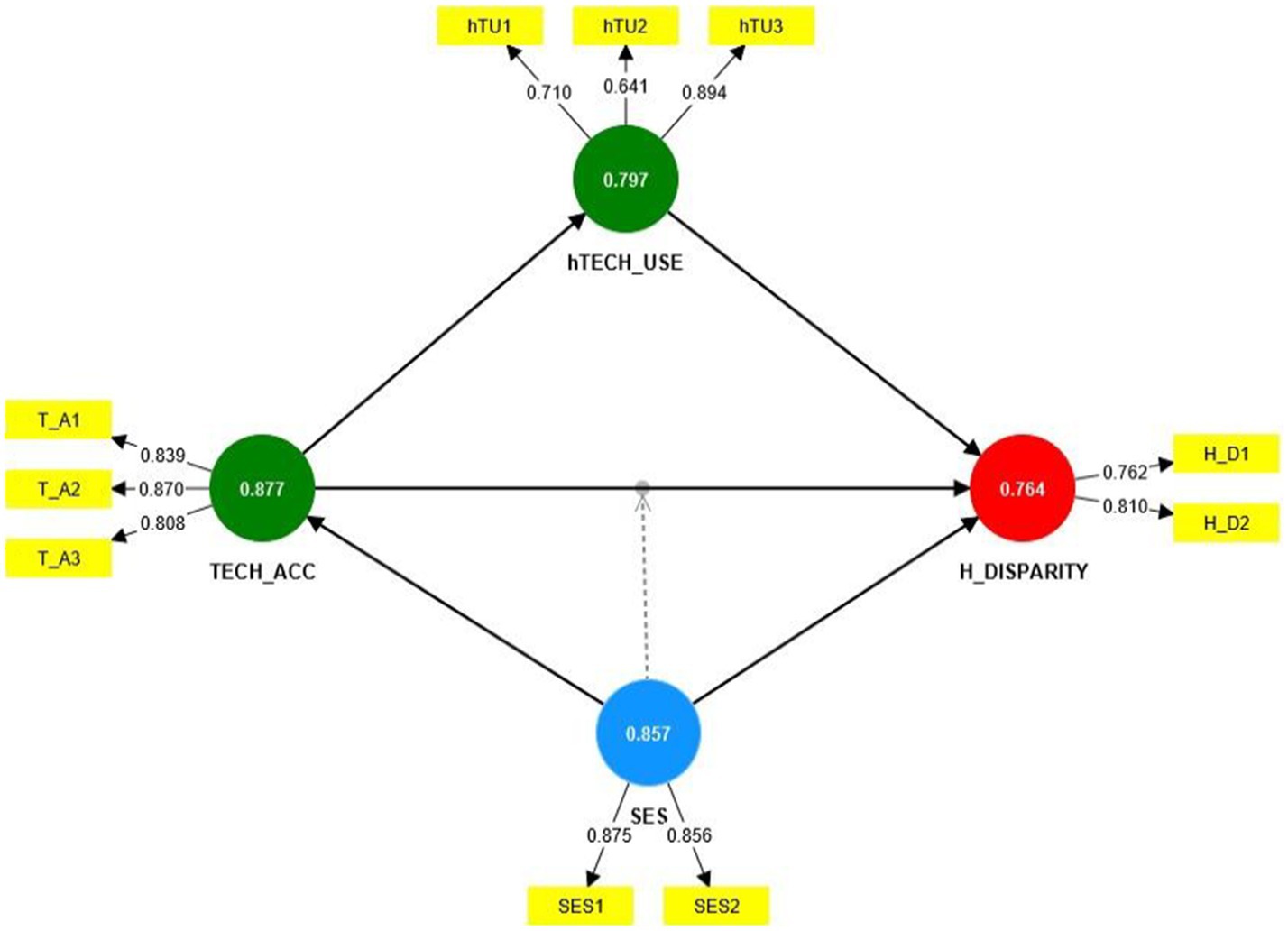
Background: Healthcare disparities remain a significant challenge in addressing equitable healthcare access and outcomes for minority populations, including African Americans. Rooted in systemic racism and historical exclusion, these inequities persist as part of broader structural violence. Leveraging health technology holds promise in addressing these disparities by enhancing access to care, improving its quality, and reducing inequities. However, the association between health technology access, use, socioeconomic status (SES), and healthcare disparities among African Americans remains underexplored. This study aims to explore the potential role of technology in mitigating healthcare disparities by investigating the associations between technology access, healthcare technology use, socioeconomic status (SES), and health disparities among African Americans.
Methods: Using data from the Health Information National Trends Survey (HINTS) Wave 6 dataset, a sample of 815 African Americans was analyzed using Partial Least Squares-Structural Equation Modeling (PLS-SEM).
Findings: The results of the study showed that technology access had a significant positive effect on healthcare technology use (β = 0.260, p < 0.000). Technology access (β = -0.086, p = 0.034) and healthcare technology use (β = -0.180, p < 0.001) demonstrated a significant negative effect on healthcare disparity, respectively. Results also revealed SES had a significant positive effect on technology access (β = 0.424, p < 0.001). Additionally, SES was found to significantly moderate the relationship between technology access and healthcare disparities, indicating variability in the impact of technology access based on SES levels among African Americans.
Conclusion: These findings highlight the potential of technology in mitigating healthcare disparities among African Americans. By promoting enhanced health technology access and utilization, particularly in lower SES populations, the healthcare outcomes for vulnerable communities can be significantly improved. Policymakers, healthcare providers, and technology developers are encouraged to collaborate in providing conducive conditions for the adoption and use of technology to advance healthcare equity.