2025-07-30 カリフォルニア大学ロサンゼルス校(UCLA)
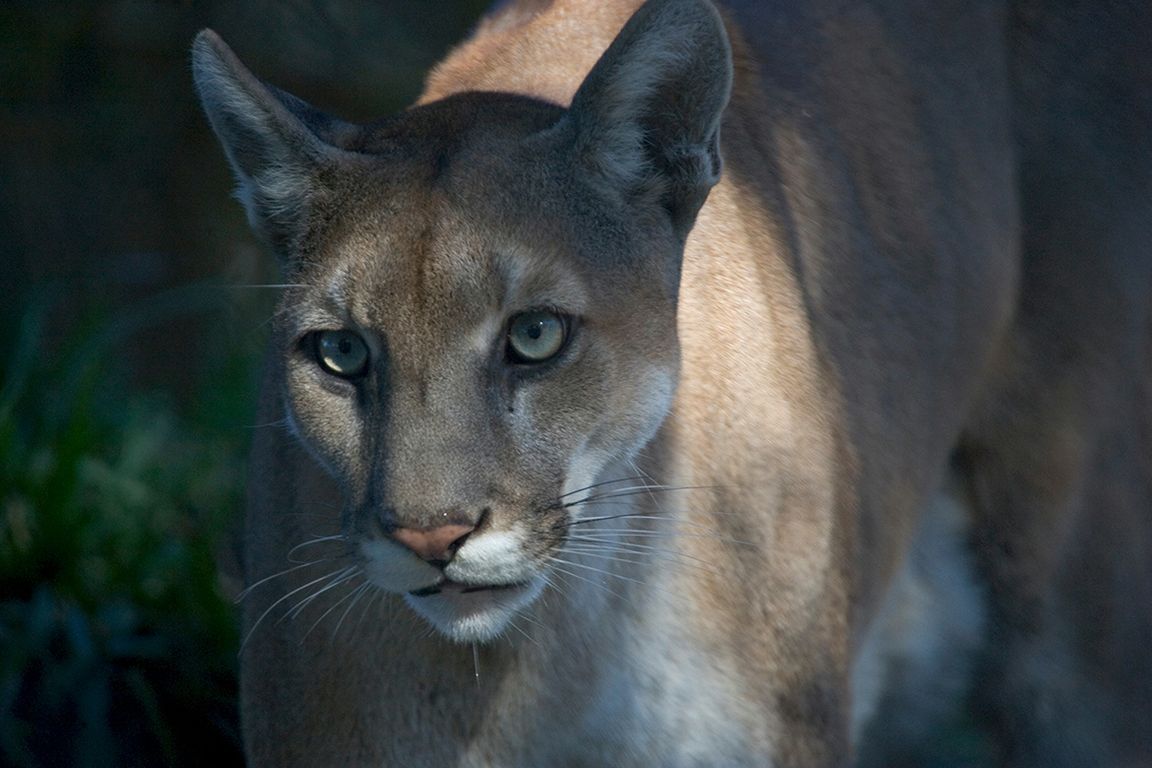
National Park Service photo by Rodney Cammauf.A Florida panther walking in the Everglades National Park in 2006.
<関連情報>
- https://newsroom.ucla.edu/releases/florida-panther-conservation-success?utm_source=chatgpt.com
- https://www.pnas.org/doi/10.1073/pnas.2410945122
フロリダパンサーの遺伝的救済はホモ接合性を減少させたが、祖先型遺伝子型を圧倒することはなかった Genetic rescue of Florida panthers reduced homozygosity but did not swamp ancestral genotypes
Diana Aguilar-Gómez, Lin Yuan, Yulin Zhang, +5 , and Rasmus Nielsen
Proceedings of the National Academy of Sciences Published:July 28, 2025
DOI:https://doi.org/10.1073/pnas.2410945122
Significance
In the mid 1990s, Florida panthers were at risk of extinction due to isolation and habitat loss with the population numbering less than 30 individuals, many of whom exhibited morphologic and genetic correlates of inbreeding. In 1995, eight female pumas from Texas were translocated to Florida to attempt “genetic rescue.” We show that the rescue was successful with observed improvements due to increased heterozygosity rather than reduction in the number of deleterious variants. Further, our analysis shows that the Florida genetic ancestry was not completely replaced, thus allying fears that rescue leads to extinction by replacement. We demonstrate that knowledge gained from speciation science can be applied to conservation action via the mechanism of genetic rescue from appropriately diverged populations.
Abstract
Pumas (Puma concolor) occupy a vast geographical range spanning from Canada to Argentina. Due to urbanization and unregulated hunting, pumas in Florida, known as panthers, are the only breeding population east of the Mississippi River. In the 1990s, Florida panthers numbered <30 individuals suffering from inbreeding depression. In 1995, eight pumas from Texas were translocated into southern Florida to mitigate the effects of isolation. This translocation reduced inbreeding depression and increased population size. While genetic rescue is often suggested as a means of ameliorating the effects of small population size, the underlying genetic mechanism and its long-term efficacy remain understudied. We sequenced the genomes of posttranslocation Florida panthers (PTFPs) to elucidate the genomic consequences of genetic rescue. We inferred local ancestry across the genomes of PTFPs and found that no regions have been entirely replaced by Texas ancestry, discarding the possibility of genetic swamping. Furthermore, the beneficial effects of the translocation were likely caused by a reduction in homozygosity, alleviating recessive deleterious load, rather than by a reduction in the number of deleterious variants. We did not find evidence that selection has favored replacement of original Florida DNA with Texas DNA in any systematic fashion. Using simulations, we found that heterozygosity increased in the long-term compared to a no translocation scenario; however, the effects on fitness are more transient. Our findings hold significant implications not only for the management of Florida’s panther population, but also for informing strategies for genetic rescue in other wild, inbred populations encompassing broader conservation efforts.