2026-02-19 カリフォルニア大学リバーサイド校(UCR)
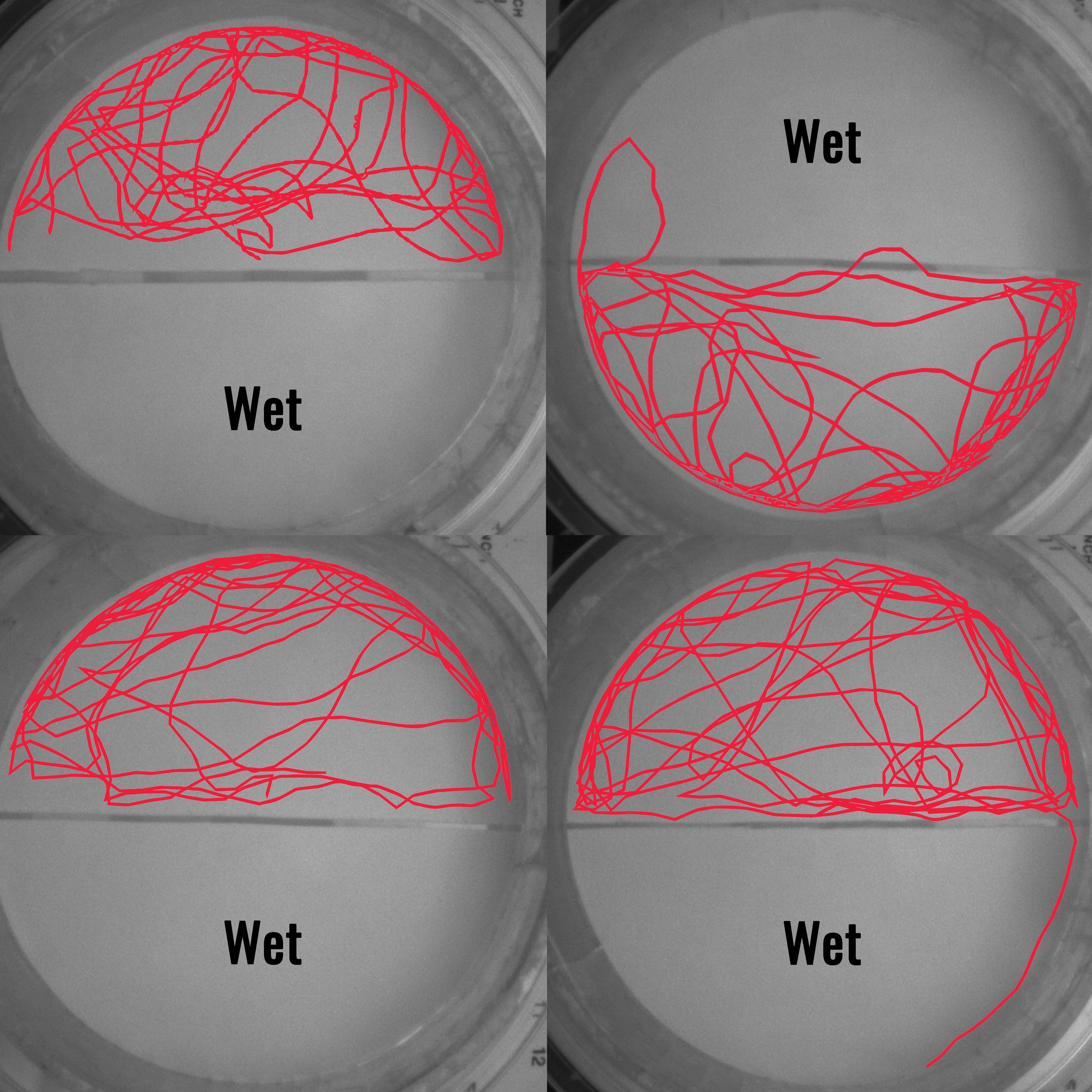
Movement traces of bed bugs in the experiment, recorded using an infrared camera under infrared illumination. It is clear the insects avoid the wet surfaces. (Jorge Bustamante, Jr. /Dong-Hwan Choe/ UCR)
<関連情報>
- https://news.ucr.edu/articles/2026/02/19/water-bed-bugs-kryptonite
- https://link.springer.com/article/10.1007/s10164-025-00880-6
湿った表面に対するトコジラミ(半翅目:トコジラミ科)の行動反応 Behavioral response of bed Bugs (Hemiptera: Cimicidae) to wet surfaces
Jorge Bustamante Jr. & Dong-Hwan Choe
Journal of Ethology Published:17 December 2025
DOI:https://doi.org/10.1007/s10164-025-00880-6
Abstract
The behavioral response of bed bugs, Cimex lectularius, to wet surfaces was analyzed using motion-tracking. In an arena with a filter paper floor, one half was treated with varying amounts of deionized water (low, medium, or high application rates), while the other half was left dry. For both sexes (adult) and nymphs, the bed bugs spent significantly less time and walked significantly shorter distances on the wet surface. This result was amplified with increased water application rates. Most approaches (86.9%) resulted in bed bugs turning away without contacting the wet zone. Bed bugs increased their speed by 38% when fleeing the wet zone relative to their approaching speed. On average, bed bugs made turns when they were 0.58 cm away from the wet zone. The minimum distance from the wet zone before making a turn was 60% longer for nymphs compared to adults. This negative hydrotaxis functions as an aversive behavior towards a potential hazard, such as drowning. These findings demonstrate that the wet surface is intrinsically aversive to bed bugs, a factor that must be considered in the development and application of liquid-based control tactics to prevent bed bugs from evading freshly treated surfaces.