2025-07-24 早稲田大学
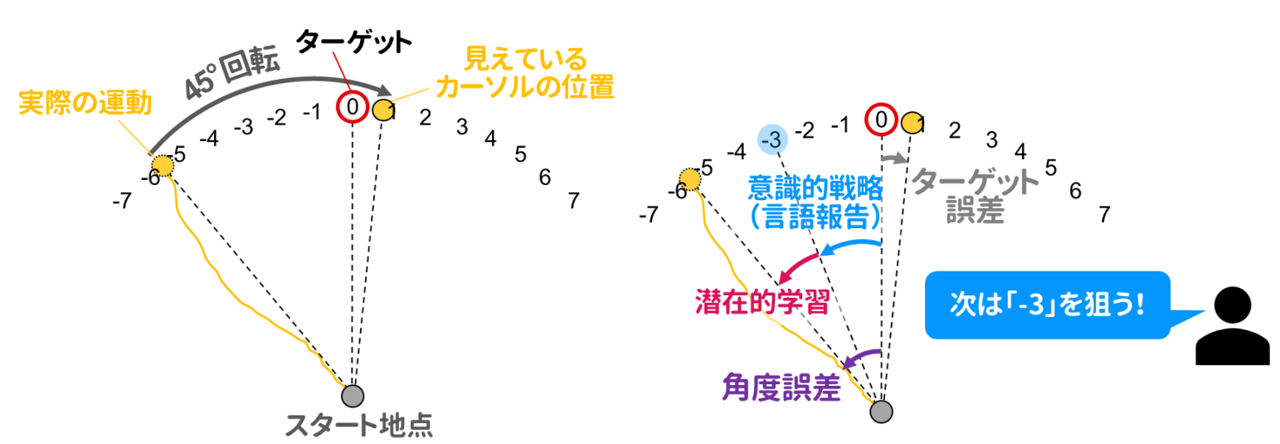
図1 本研究の実験デザイン
参加者の言語報告と運動誤差に基づいて潜在学習の量を推定した。
<関連情報>
視覚運動適応の明示的プロセスにおける無意識の文化的認知バイアス Unconscious cultural cognitive biases in explicit processes of visuomotor adaptation
Chiharu Yamada,Yoshihiro Itaguchi & Claudia Rodríguez-Aranda
npj Science of Learning Published:02 July 2025
DOI:https://doi.org/10.1038/s41539-025-00335-0
Abstract
Studies have shown that explicit strategies make a significant contribution to visuomotor adaptation. However, little attention has been given to potential unconscious cognitive biases in these strategies, despite that they involve a sequence of cognitive decision-making processes. To reveal the possible cultural biases involved in motor learning, we compared Norwegian and Japanese participants in a visuomotor adaptation task using a verbal report paradigm. The results showed that Japanese participants aimed at locations more deviant from the target to account for rotated visual feedback. Additionally, a greater proportion of Japanese participants changed their aiming direction more frequently than Norwegian participants, even after successfully hitting the target. However, both groups showed similar behavioral performance, with comparable reaching accuracy and aftereffect amplitudes. These results suggest that the explicit component, which is estimated based on verbal reports, includes cognitive biases. The present study challenges the assumption of universality of motor learning among cultures.