2025-10-29 フランス国立科学研究センター(CNRS)
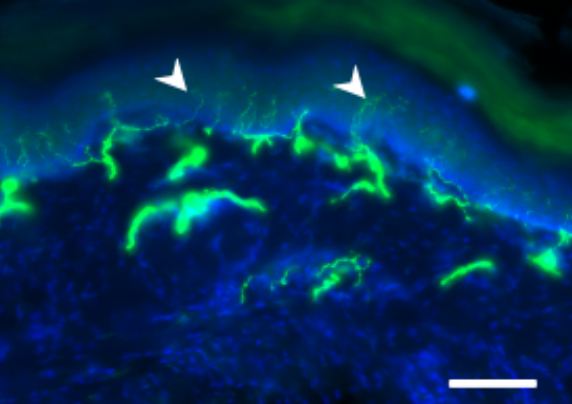
Microscope images showing fine nerve endings in the hind leg skin of rats following a treatment with two molecules: paclitaxel, a chemotherapy drug, and Carba1, a molecule that protects the nerves. © Science Advances/ David Balayssac
<関連情報>
- https://www.cnrs.fr/en/press/promising-molecule-against-chemotherapy-induced-neuropathies
- https://www.science.org/doi/10.1126/sciadv.adw6328
カルバゾール系化合物による神経障害の予防と抗癌化学療法の改善 Preventing neuropathy and improving anticancer chemotherapy with a carbazole-based compound
Lauriane Bosc, Maria Elena Pero, David Balayssac, Nathalie Jacquemot, […] , and Laurence Lafanechère
Science Advances Published:29 Oct 2025
DOI:https://doi.org/10.1126/sciadv.adw6328
Abstract
While advances in cancer therapy have improved remission rates, chemotherapy-induced peripheral neuropathy (CIPN) remains a lasting and untreatable side effect. This study introduces Carba1, a bifunctional carbazole compound that protects against CIPN through two mechanisms. First, Carba1 interacts with tubulin, allowing for lower doses of taxanes, common chemotherapeutics known for causing CIPN, without reducing their anticancer effectiveness. Second, Carba1 activates nicotinamide phosphoribosyltransferase (NAMPT), enhancing NAD biosynthesis and boosting the metabolic resilience of neurons and Schwann cells against chemotherapy-induced damage. Carba1 shows strong neuroprotective effects in vitro against paclitaxel, cisplatin, and bortezomib toxicity and in vivo in a rat model of paclitaxel-induced neuropathy. Crucially, Carba1 does not interfere with paclitaxel’s tumor-fighting ability or promote tumor growth. Structure-activity analyses of Carba1 derivatives reveal the potential to develop compounds with dual or solely neuroprotective effects. These findings position Carba1 as a promising candidate to prevent CIPN, with potential to enhance both cancer treatment outcomes and patients’ quality of life.