2025-10-31 清華大学
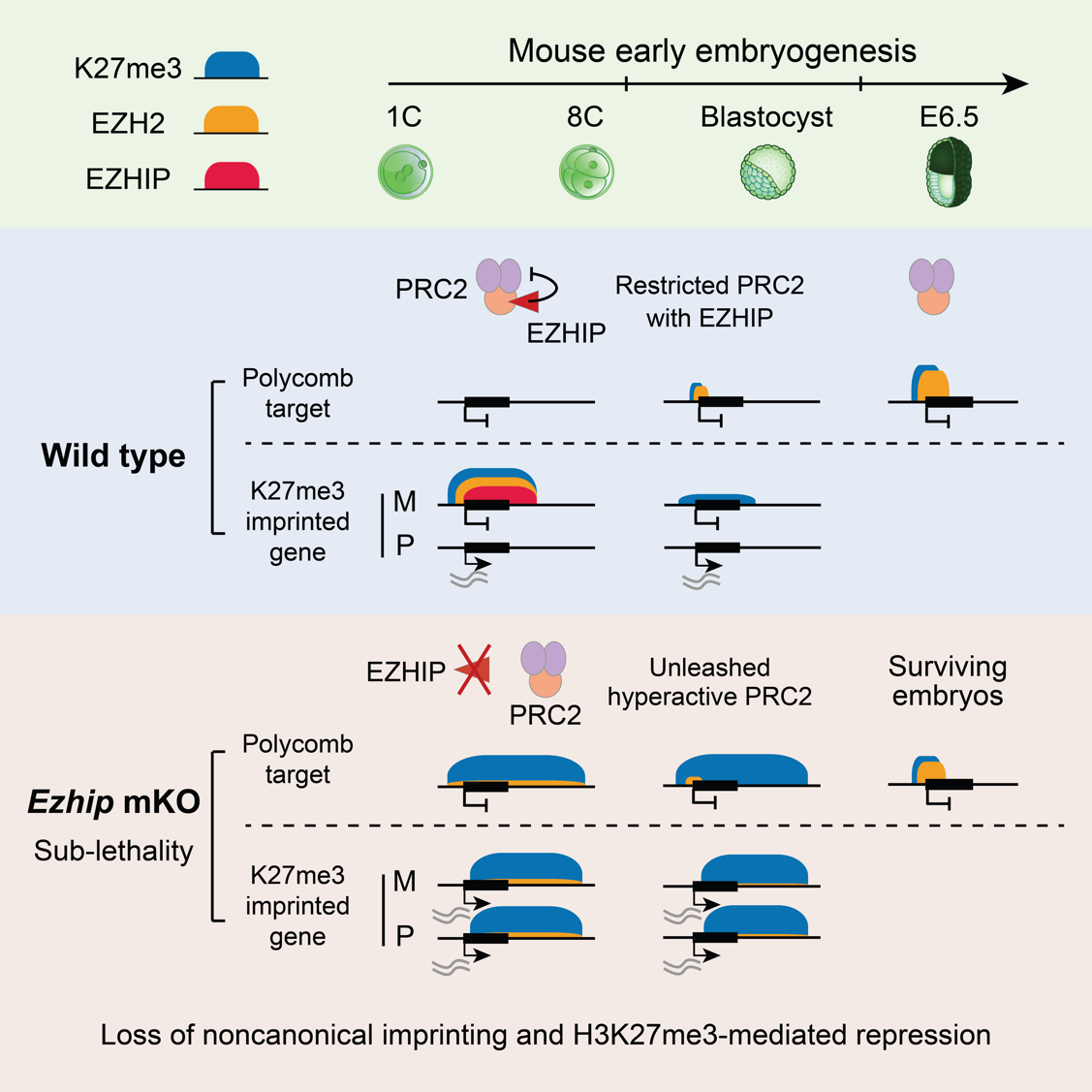
Figure 1. EZHIP regulates noncanonical PRC2 binding and intergenerational H3K27me3 reprogramming
<関連情報>
- https://www.tsinghua.edu.cn/en/info/1245/14545.htm
- https://www.cell.com/cell-stem-cell/abstract/S1934-5909(25)00340-6
EZHIPは非典型的なPRC2結合を制限し、H3K27me3の世代間継承と再プログラミングを制御する EZHIP restricts noncanonical PRC2 binding and regulates H3K27me3 intergenerational inheritance and reprogramming
Yitian Zeng (曾埶天) ∙ Feng Kong (孔凤) ∙ Zihan Xu (徐子寒) ∙ … ∙ Wenying Wang (王文英) ∙ Bing Zhu (朱冰) ∙ Wei Xie (颉伟)
Cell Stem Cell published:October 20, 2025
DOI:https://doi.org/10.1016/j.stem.2025.09.009
Highlights
- EZHIP limits PRC2 activity and promotes global H3K27me3 erasure in mouse early embryos
- EZHIP restricts PRC2 to noncanonical H3K27me3 domains
- EZHIP loss causes spread PRC2 and excessive H3K27me3 in early embryos
- Excessive H3K27me3 paradoxically impairs H3K27me3-mediated repression and imprinting
Summary
In mice, the repressive histone mark H3K27me3 undergoes both region-specific inheritance and erasure during the parental-to-embryonic transition, with the underlying mechanisms poorly understood. Here, we show that PRC2, which catalyzes H3K27me3, binds both classic Polycomb targets and noncanonical H3K27me3 domains in growing oocytes but dissociates from chromatin in fully grown oocytes. After fertilization, PRC2 rebinds noncanonical H3K27me3 domains before relocating to Polycomb targets in blastocysts. Interestingly, the binding and activity of PRC2 are restricted by a maternal inhibitory factor, EZH inhibitory protein (EZHIP), which co-binds with PRC2. Upon knockout of Ezhip, hyperactive PRC2 promiscuously deposits H3K27me3 genome-wide. This overwrites H3K27me3 memories at noncanonical imprinted genes and paradoxically causes derepression of H3K27me3 targets, defective X chromosome inactivation, and diluted chromatin PRC2. H3K27me3 restoration at Polycomb targets after implantation is also attenuated, accompanied by sub-lethality. These data unveil principles of epigenetic inheritance that both insufficient and excessive heterochromatic marks cause loss of epigenetic memories and repression.