2025-11-06 フランス国立科学研究センター(CNRS)
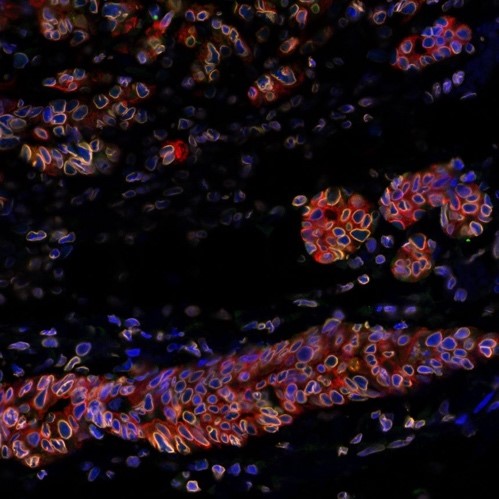
Breast tumour in an animal. The cells are labelled in blue and the keratin 8 molecules in orange. © Equipe Vallot – Institut Curie
<関連情報>
- https://www.cnrs.fr/en/press/relapses-breast-cancer-discovery-key-cellular-resistance-mechanism
- https://aacrjournals.org/cancerres/article-abstract/doi/10.1158/0008-5472.CAN-25-0995/767175/Characterization-of-Drug-Tolerant-Persister-Cells?redirectedFrom=fulltext
トリプルネガティブ乳がんにおける薬剤耐性持続細胞の特徴解析により、治療と患者間で共有される持続プログラムが特定される Characterization of Drug-Tolerant Persister Cells in Triple-Negative Breast Cancer Identifies a Shared Persistence Program across Treatments and Patients Available to Purchase
Léa Baudre;Gregoire Jouault;Pacôme Prompsy;Melissa Saichi;Sarah Gastineau;Christophe Huret;Laura Sourd;Ahmed Dahmani;Elodie Montaudon;Florent Dingli;Damarys Loew;Elisabetta Marangoni;Justine Marsolier;Céline Vallot
Cancer Research Published:November 06 2025
DOI:https://doi.org/10.1158/0008-5472.CAN-25-0995
Abstract
Acquisition of resistance to anti-cancer therapies is a multistep process initiated by the survival of drug-tolerant persister cells. Accessibility of drug-tolerant persister cells in patients is limited, which has hindered understanding the mechanisms driving their emergence. Here, using multiple patient-derived models to isolate persister cells, we showed that these cells are transcriptionally plastic in vivo and return to a common treatment naïve-like state upon relapse, regardless of treatment. Hallmarks of the persister state in TNBC across treatment modalities included high expression of basal keratins together with activation of stress response and inflammation pathways. These hallmarks were also activated in HER2+ breast and lung cancer cells in response to targeted therapies. Analysis of gene regulatory networks identified AP-1, NF-κB and IRF/STAT as the key drivers of this hallmark persister state. Functionally, FOSL1, an AP-1 member, drove cells to the persister state by binding enhancers and reprogramming the transcriptome of cancer cells. On the contrary, cancer cells without FOSL1 had a decreased ability to reach the persister state. By defining hallmarks of TNBC persistence on multiple therapies, this study provides a resource to design effective combination therapeutic strategies that limit resistance.