2025-11-06 ブラウン大学
<関連情報>
- https://www.brown.edu/news/2025-11-06/woodpeckers-drilling-physiology
- https://journals.biologists.com/jeb/article/228/21/jeb251167/369678/Neuromuscular-coordination-of-movement-and
運動と呼吸の神経筋協調がキツツキの穴掘りにハンマーのようなメカニズムを生み出す Neuromuscular coordination of movement and breathing forges a hammer-like mechanism for woodpecker drilling
Nicholas D. Antonson,Stephen Ogunbiyi,Margot Champigneulle,Thomas J. Roberts,Franz Goller,Matthew J. Fuxjager
Journal of Experimental Biology Published:06 November 2025
DOI:https://doi.org/10.1242/jeb.251167
ABSTRACT
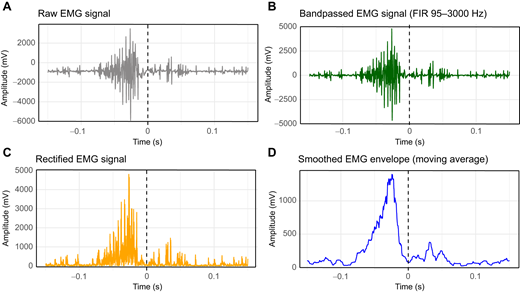
Drilling and tapping behaviors in woodpeckers have long garnered significant attention, given their extreme, high-impact nature. However, how these birds integrate neuromuscular and respiratory systems to produce such high-force, high-frequency behaviors remains poorly understood. Here, we combined electromyography with measures of respiratory air-sac pressure and syringeal airflow to investigate the neuromuscular and ventilatory mechanisms of forceful pecking in downy woodpeckers. We found that both types of pecking behaviors tested engage skeletal muscles across the head, neck, hips, tail and abdomen. In-depth analysis of EMG timing and activity point to a hammer-like model associated with drilling, whereby head and neck muscles contract to create a stiffened cephalo-cervical lever arm that efficiently transfers kinetic energy from the swinging bill into the wood. Moreover, hip flexors help power protraction of the head and body for drilling, whereas tail muscles presumably help brace the bird’s body against the tree. Respiratory analyses show that woodpeckers actively exhale with each bill strike of the substrate, resembling the ‘grunting’ behavior that human athletes use to stabilize their core and enhance force output. These effects persist at high tapping frequencies, indicating that individuals take mini-breaths between successive taps. Altogether, our results highlight the way motor and respiratory systems are leveraged to facilitate the production of extreme behavior, which hinges on biomechanical specializations and extraordinary performance abilities.