
2025-11-06 タフツ大学
<関連情報>
- https://now.tufts.edu/2025/11/06/study-identifies-which-patients-benefit-most-new-schizophrenia-drug
- https://www.nature.com/articles/s44220-025-00529-w
精神病におけるムスカリン標的薬への反応の予備的な実世界予測因子 Preliminary real-world predictors of response to muscarinic targeting in psychosis
Michael M. Halassa
Nature Material Health Published:06 November 2025
DOI:https://doi.org/10.1038/s44220-025-00529-w
Abstract
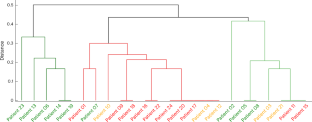
Xanomeline/trospium (Cobenfy) was recently approved by the US Food and Drug Administration for the treatment of adults with schizophrenia. Despite promising findings in placebo-controlled trials, there is limited understanding of its real-world use. Here we perform a post-hoc analysis of medical records following Cobenfy add-on administration in an inpatient population. In an initial cohort of 24 patients, ~40% experienced positive responses. To identify predictive clinical features, we used a combination of hierarchical clustering and linear discriminant analysis, which showed that negative symptoms and stimulant use were the largest predictors of a positive response, while the presence of intellectual delay was negatively predictive. This pattern was independently replicated in 25 patients. Overall, this work supports the notion of biologically distinct psychosis subgroups and invites further research into the underlying biological substrates.
