2025-12-10 エディンバラ大学
<関連情報>
- https://www.ed.ac.uk/news/peatland-viruses-play-active-role-in-ecosystem-health
- https://www.nature.com/articles/s41564-025-02199-x
生態系の健全性が泥炭地土壌のウイルス生態を形作る Ecosystem health shapes viral ecology in peatland soils
James C. Kosmopoulos,William Pallier,Ashish A. Malik & Karthik Anantharaman
Nature Microbiology Published:10 December 2025
DOI:https://doi.org/10.1038/s41564-025-02199-x
Abstract
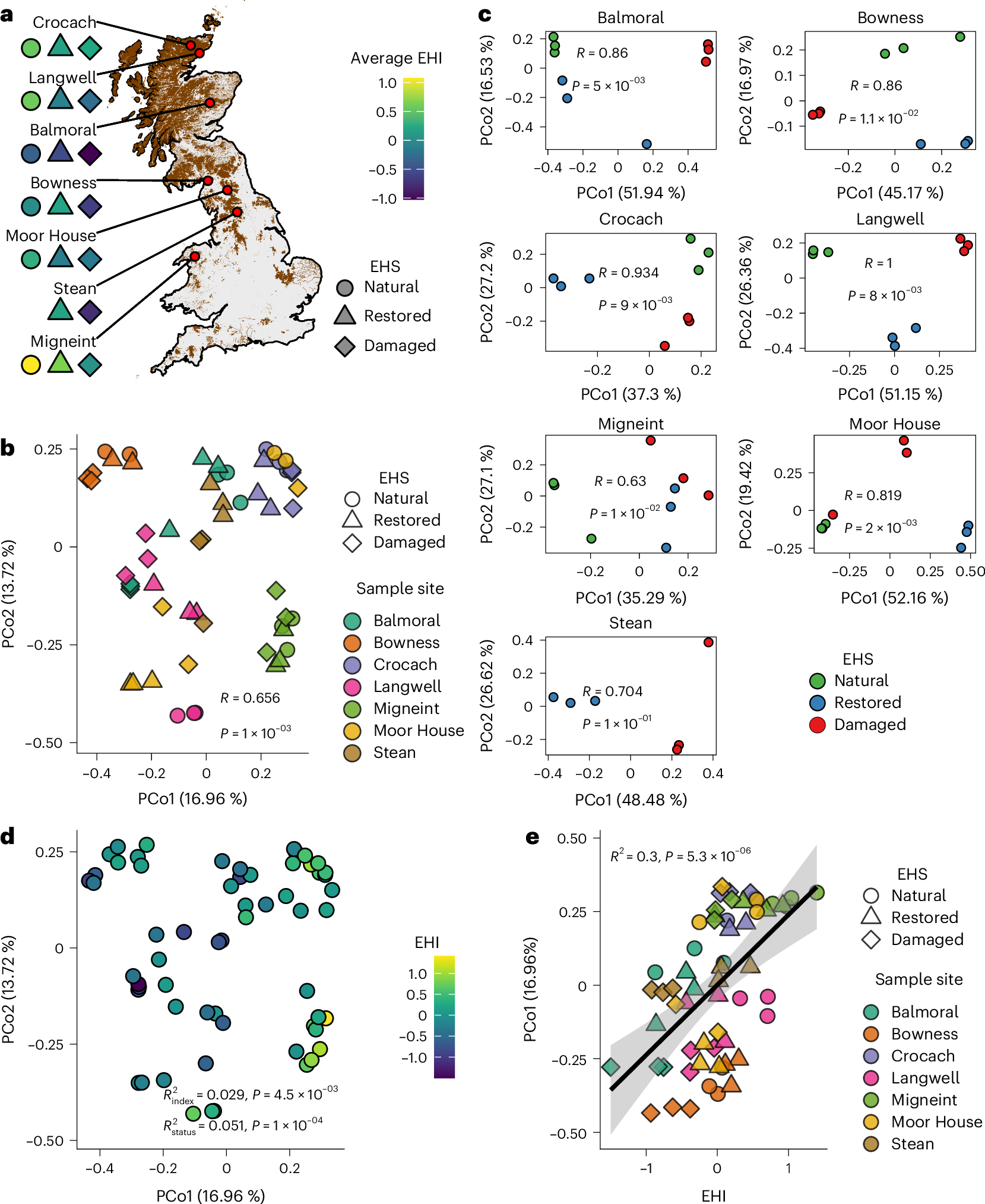
Peatlands hold up to one-third of Earth’s soil carbon but are increasingly turning from being carbon sinks to becoming carbon sources due to human impacts. Restoration efforts aim to reverse this trend, but viral influences on peatland recovery remain unclear, despite viruses being potent regulators of microbiomes and ecosystem function. Here we sequenced soil metagenomes to study viral communities across seven UK peatlands, each encompassing areas representing three peatland ecosystem health statuses: natural, damaged and restored. We found that viral diversity and community structure were shaped by both geography and ecosystem health. Viruses were geographically widespread, yet exhibited ecosystem health-specific endemism and functional adaptation, highlighting their sensitivity to restoration. Virus–host dynamics ranged from stable ‘piggyback-the-winner’ relationships to decoupled dynamics in those infecting keystone aerobes, sulfate reducers, carbohydrate degraders and fermenters. These findings position viruses as dynamic drivers of peatland ecosystem recovery and could unlock pathways to bolster carbon retention and accelerate climate mitigation.