2026-01-08 カリフォルニア大学サンディエゴ校(UCSD)
<関連情報>
- https://today.ucsd.edu/story/what-causes-some-peoples-gut-microbes-to-produce-high-alcohol-levels
- https://www.nature.com/articles/s41564-025-02225-y
腸内微生物のエタノール代謝は観察コホートにおける自家醸造症候群に寄与する Gut microbial ethanol metabolism contributes to auto-brewery syndrome in an observational cohort
Cynthia L. Hsu,Shikha Shukla,Linton Freund,Annie C. Chou,Yongqiang Yang,Ryan Bruellman,Fernanda Raya Tonetti,Noemí Cabré,Susan Mayo,Hyun Gyu Lim,Valeria Magallan,Barbara J. Cordell,Sonja Lang,Münevver Demir,Peter Stärkel,Cristina Llorente,Bernhard O. Palsson,Chitra Mandyam,Brigid S. Boland,Elizabeth Hohmann & Bernd Schnabl
Nature Microbiology Published:08 January 2026
DOI:https://doi.org/10.1038/s41564-025-02225-y
Abstract
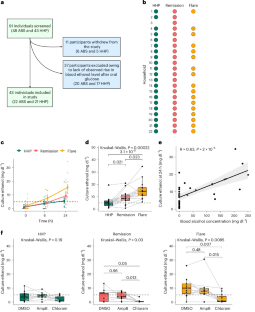
Auto-brewery syndrome (ABS) is a rarely diagnosed disorder of alcohol intoxication due to gut microbial ethanol production. Despite case reports and a small cohort study, the microbiological profiles of patients remain poorly understood. Here we conducted an observational study of 22 patients with ABS and 21 unaffected household partners. Faecal samples from individuals with ABS during a flare produced more ethanol in vitro, which could be reduced by antibiotic treatment. Gut microbiome analysis using metagenomics revealed an enrichment of Proteobacteria, including Escherichia coli and Klebsiella pneumoniae. Genes in metabolic pathways associated with ethanol production were enriched, including the mixed-acid fermentation pathway, heterolactic fermentation pathway and ethanolamine utilization pathway. Faecal metabolomics revealed increased acetate levels associated with ABS, which correlated with blood alcohol concentrations. Finally, one patient was treated with faecal microbiota transplantation, with positive correlations between gut microbiota composition and function, and symptoms. These findings can inform future clinical interventions for ABS.