2026-01-28 マックス・プランク研究所
<関連情報>
- https://www.mpg.de/26064803/signals-from-the-roots-control-pollen-development
- https://www.nature.com/articles/s41477-026-02219-6
花粉の発達に機能的役割を果たすsiRNAの長距離輸送 Long-distance transport of siRNAs with functional roles in pollen development
Jiali Zhu,Juan Santos-González,Zhenxing Wang,Tinja Strothans,Thales Henrique Cherubino Ribeiro,Ai Zhang,Charles W. Melnyk,Blake C. Meyers & Claudia Köhler
Nature Plants Published:28 January 2026
DOI:https://doi.org/10.1038/s41477-026-02219-6
Abstract
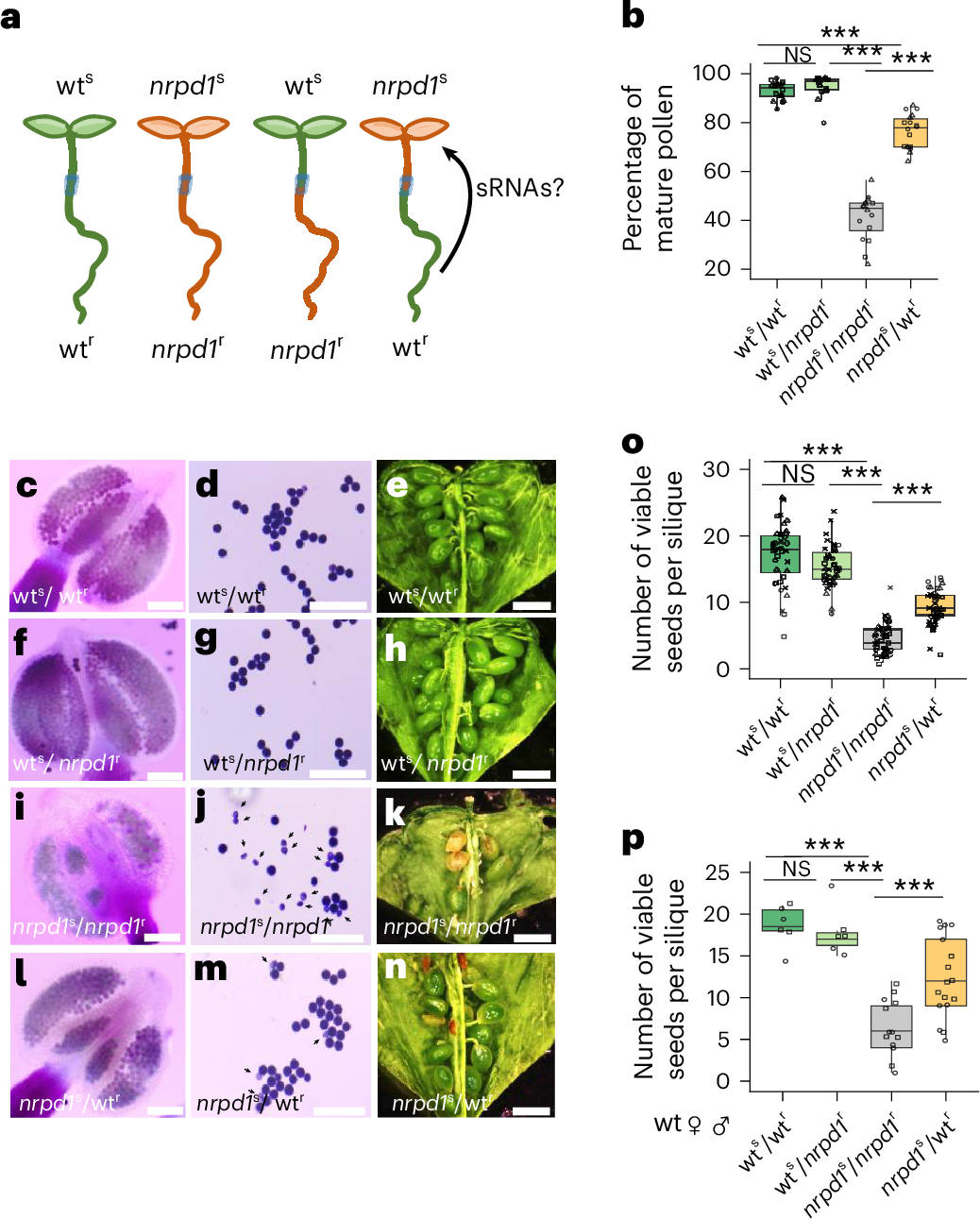
Small interfering RNAs (siRNAs) play a crucial role in plant reproduction, yet their mobility and function remain incompletely understood. We report that a large proportion of siRNAs found in pollen of Capsella rubella relies on mobile siRNAs from maternal sporophytic tissues, highlighting the importance of non-cell-autonomous siRNAs in male gametophyte development. Unlike tapetal siRNAs, which guide DNA methylation and require CLASSY3 and DNA-dependent RNA polymerase IV (Pol IV) activity in the tapetum, we found that Pol IV-dependent mobile siRNAs (PMsiRNAs) mainly function post-transcriptionally and do not guide DNA methylation. Nevertheless, PMsiRNAs share key features with tapetal siRNAs, including Pol IV dependency, clustering and a size range of 21–24 nucleotides. Using a grafting approach, we show that sporophytic Pol IV-dependent siRNAs act as non-cell-autonomous mobile signals that trigger PMsiRNA formation through post-transcriptional gene silencing. This process parallels reproductive phased siRNA biogenesis, which is widespread across angiosperms but has been considered absent in Brassicaceae. Loss of PMsiRNAs causes pollen arrest, underscoring their essential role. Together, these findings highlight siRNAs as long-distance communication signals from maternal sporophytic tissues to the male gametophyte with critical functions in developmental regulation.