2026-02-06 カロリンスカ研究所(KI)
<関連情報>
- https://news.ki.se/mutation-type-shapes-early-alzheimers-0
- https://www.nature.com/articles/s41398-026-03829-6
常染色体優性アルツハイマー病変異を有するスウェーデン人家族における早期の機能変化と血漿GFAP Early functional changes and plasma GFAP in Swedish families with Autosomal Dominant Alzheimer’s disease mutations
Emma S. Luckett,Mariola Zapater-Fajari,Ove Almkvist,Charlotte Johansson,Konstantinos Chiotis,Marco Bucci,Anders Wall,Nicholas J. Ashton,Kaj Blennow,Henrik Zetterberg,Elena Rodriguez-Vieitez,Caroline Graff & Agneta Nordberg
Translational Psychiatry Published:27 January 2026
DOI:https://doi.org/10.1038/s41398-026-03829-6
Abstract
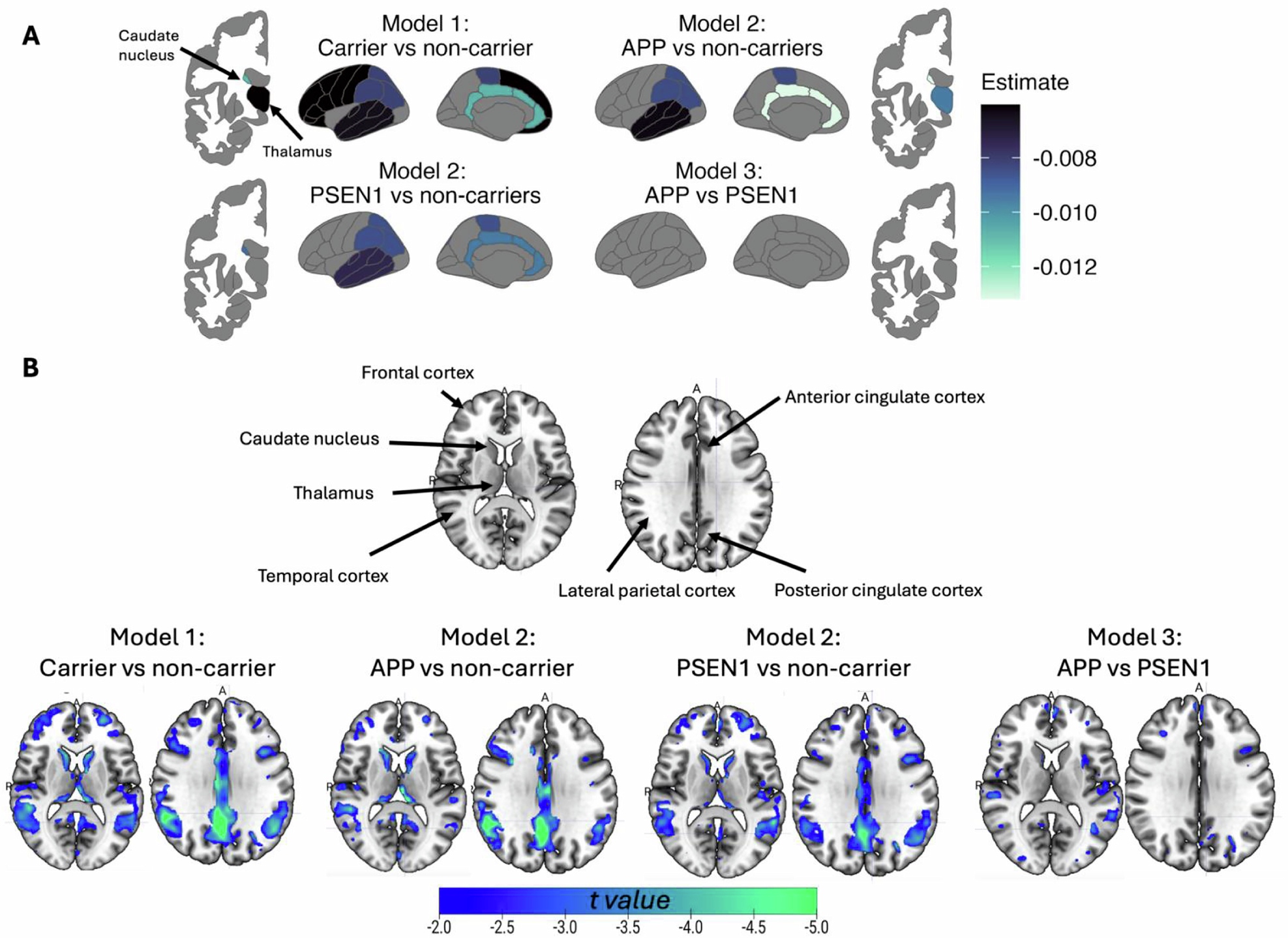
We aimed to understand longitudinal associations between Alzheimer’s disease (AD) biomarkers in Autosomal Dominant AD (ADAD) across estimated years to symptom onset (EYO). Forty-five individuals (19 mutation carriers [EYO = -7.9 ± 11.7 years, APP N = 11; PSEN1 N = 8]) from Swedish ADAD families participated. All received baseline 18F-Flurodeoxyglucose (FDG) PET and cognitive testing, and a subset (N = 26) plasma glial fibrillary acidic protein (GFAP) measurement. Follow-up data collection (including 106 FDG scans) was performed over 7.4 ± 6.4 years (visits ranged from 1–5, EYO = -25.8 to +10.3 years in mutation carriers). Mixed effects models were applied to determine longitudinal associations. APP and PSEN1 mutation carriers showed different FDG uptake profiles from EYO = -20 to -10 years, with a hypermetabolism before hypometabolism in PSEN1 mutation carriers. Early increases in plasma GFAP were primarily related to subcortical FDG decreases and cognitive changes in APP mutation carriers compared to non-carriers. We provide evidence for gene-dependent biomarker trajectories in ADAD.