
2026-02-24 ケンブリッジ大学
<関連情報>
感覚ホムンクルスの全体的な再マッピングは、幼児期の発達の早い段階で現れる Global remapping of the sensory homunculus emerges early in childhood development
Raffaele Tucciarelli,Laura Bird,Zdenek Straka,Maggie Szymanska,Mathew Kollamkulam,Harshal Arun Sonar,Jamie Paik,Danielle Clode,Matej Hoffmann,Dorothy Cowie & Tamar R. Makin
Nature Communications Published:24 February 2026
DOI:https://doi.org/10.1038/s41467-025-66539-5
Abstract
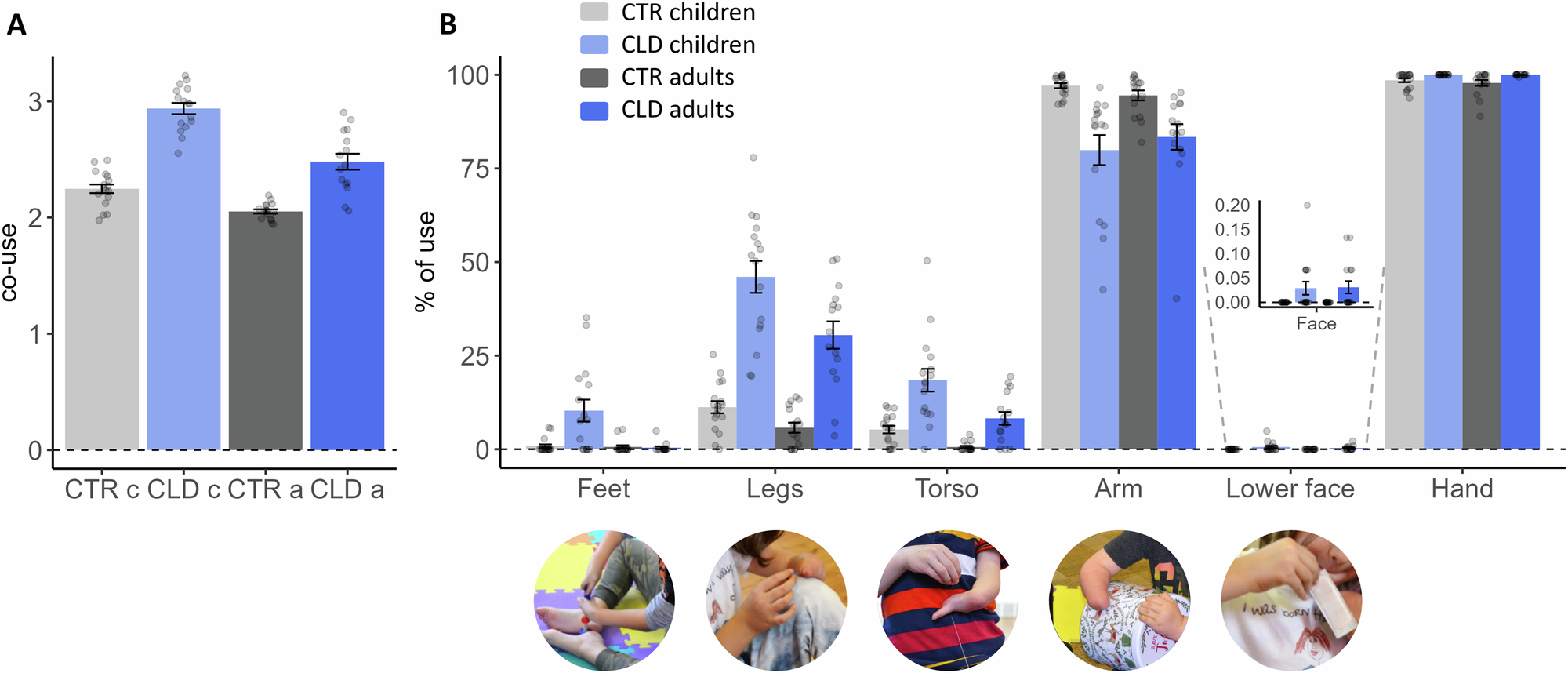
Some of the most dramatic examples of neuroplasticity in the human brain follow congenital sensory deprivation, yet the plasticity mechanisms producing this large-scale cortical remapping remain poorly understood. Congenital malformation of the upper-limb provides a unique temporal dissociation of developmental plasticity mechanisms: While sensory deprivation from the absent hand is triggered before birth, compensatory motor behaviours develop gradually throughout childhood. Using paediatric neuroimaging and semi-ecological behavioural analysis in children (5-7 years old) and adults (>25 years old) with unilateral upper-limb congenital limb difference, we studied deprivation- and use-dependent plasticity in the deprived primary somatosensory cortex and beyond. We reveal that global remapping, encompassing the entire sensory homunculus, is established early and maintained in adulthood. Modelling indicates that deprivation-driven homeostatic plasticity can account for this global remapping. Hebbian-based compensatory learning further contributes to the magnitude of inter-individual differences observed at both childhood and adulthood. Our findings emphasise the early establishment and stability of cortical maps, despite extensive daily-life behavioural adaptation.

