
2026-03-03 東大病院
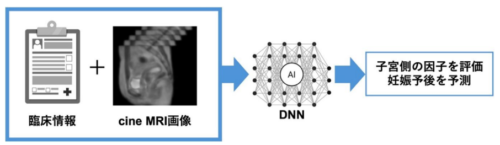
子宮因子に着目した個別化医療の実現着床不全患者に対する新たな診断・治療戦略の構築へ
<関連情報>
- https://www.h.u-tokyo.ac.jp/press/20260303-1.html
- https://www.h.u-tokyo.ac.jp/press/__icsFiles/afieldfile/2026/03/03/release_20260303-1.pdf
- https://onlinelibrary.wiley.com/doi/10.1002/rmb2.70028
シネ磁気共鳴画像解析における人工知能の活用:反復着床不全患者の子宮因子の評価と妊娠転帰の予測のための有望なアプローチ Utilizing Artificial Intelligence in Cine Magnetic Resonance Imaging Analysis: A Promising Approach for Assessment of Uterine Factors and Prediction of Pregnancy Outcomes in Patients With Recurrent Implantation Failure
Daiki Hiratsuka, Katsuhiko Noda, Kaname Yoshida, Mayu Kinoshita, Yumiko Doi, Okikaze Kato, Kotaro Oshima, Shizu Aikawa, Chihiro Ishizawa, Yamato Fukui, Takehiro Hiraoka, …
Reproductive Medicine and Biology Published: 02 March 2026
DOI:https://doi.org/10.1002/rmb2.70028
ABSTRACT
Purpose
Recurrent implantation failure (RIF) is a form of refractory infertility that persists despite assisted reproductive technology. Cine magnetic resonance imaging (cine MRI) enables the visualization of uterine peristalsis; however, its use in RIF assessment is limited due to the lack of a standardized application method. This study aimed to develop pregnancy prediction models for patients with RIF and to evaluate the utility of cine MRI image analysis using artificial intelligence (AI).
Methods
We retrospectively analyzed the anonymized clinical data and cine MRI images of 188 patients with RIF and known pregnancy outcomes. Two types of models, based on clinical data only or both clinical data and cine MRI images, were built using the Random Forest model. The best model was identified using the area under the receiver operating characteristic curve (AUC), accuracy, sensitivity, and specificity.
Results
Higher performance was achieved using the Random Forest model integrating clinical data and cine MRI images (AUC/accuracy/sensitivity/specificity: 0.835, 0.754, 0.879, and 0.583, respectively), outperforming models using clinical data only (0.617, 0.596, 0.697, and 0.458, respectively).
Conclusions
AI analysis of clinical data combined with cine MRI data improved pregnancy prediction, suggesting that cine MRI can be used to evaluate uterine factor-related RIF.
