2026-03-02 東京科学大学
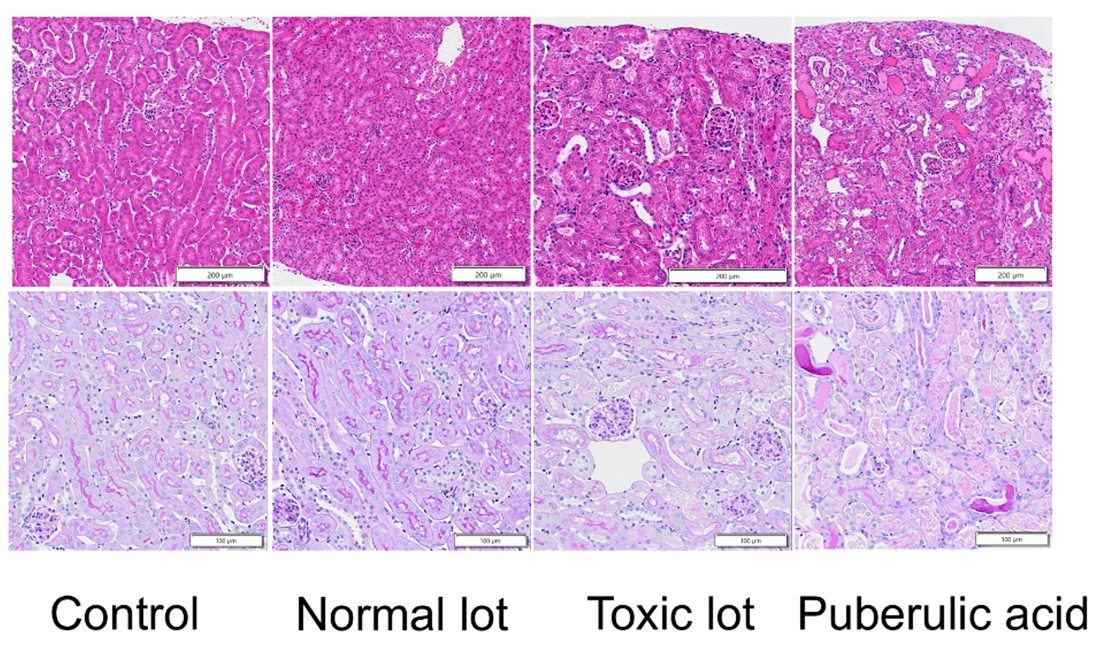
図1.マウスモデル病理画像(上:HE染色 下:PAS染色)
<関連情報>
- https://www.isct.ac.jp/ja/news/7mvu9tepfmx7#top
- https://www.kireports.org/article/S2468-0249(26)00024-0/fulltext
紅麹コレステロール低下作用またはプベルラ酸誘発性腎障害の病態生理学的メカニズム The Pathophysiological Mechanism of Beni-koji Choleste-Help or Puberulic Acid–Induced Kidney Injury
Yuta Sekiguchi ∙ Makiko Mori ∙ Haruka Maruyama ∙ … ∙ Eisei Sohara ∙ Shinichi Uchida ∙ Yutaro Mori
Kidney International Reports Published:January 23, 2026
DOI:https://doi.org/10.1016/j.ekir.2026.103793
Abstract
Introduction
In March 2024, kidney injury caused by some specific red yeast rice supplements was reported in Japan. By November 2024, 2628 people had visited medical facilities, making it a social problem. Many patients still show decreased estimated glomerular filtration rate. Puberulic acid was reported to be present in Beni-koji Choleste-Help toxic lots. However, the pathophysiology is not yet clarified. Here, we discovered that mitochondrial dysfunction in renal proximal tubular epithelial cells is associated with, and may contribute to, nephrotoxicity.
Methods
To assess the effects of Beni-koji Choleste-Help toxic lots and puberulic acid, we performed RNA sequencing (RNA-seq), extracellular flux analysis, and other assays across multiple models, including human kidney biopsy specimens, primary human renal proximal tubular epithelial cells (hRPTECs), human renal organoids, and mice.
Results
A patient renal biopsy sample showed kidney injury molecule-1 expression in proximal tubules surrounded by activated myofibroblasts, indicating tubular damage and fibrosis. Mice treated with toxic lots and puberulic acid showed kidney injury with some features of Fanconi syndrome. Pathological sections revealed tubular necrosis and fibrosis. RNA-seq analysis of whole kidneys showed that the toxic lot and puberulic acid produced similar RNA patterns, suggesting puberulic acid is a causative agent. Gene ontology (GO) analysis comparing the normal and toxic lot revealed mitochondrial pathways downregulation. Puberulic acid showed toxicity to hRPTECs and tubular organoids. In vitro experiment revealed that it causes mitochondrial damage, especially to the respiratory metabolism, associated with subsequent cell death.
Conclusion
Puberulic acid and Beni-koji Choleste-Help toxic lots cause mitochondrial damage and cell death to tubular epithelial cells.