2025-07-08 ノースカロライナ州立大学(NCState)
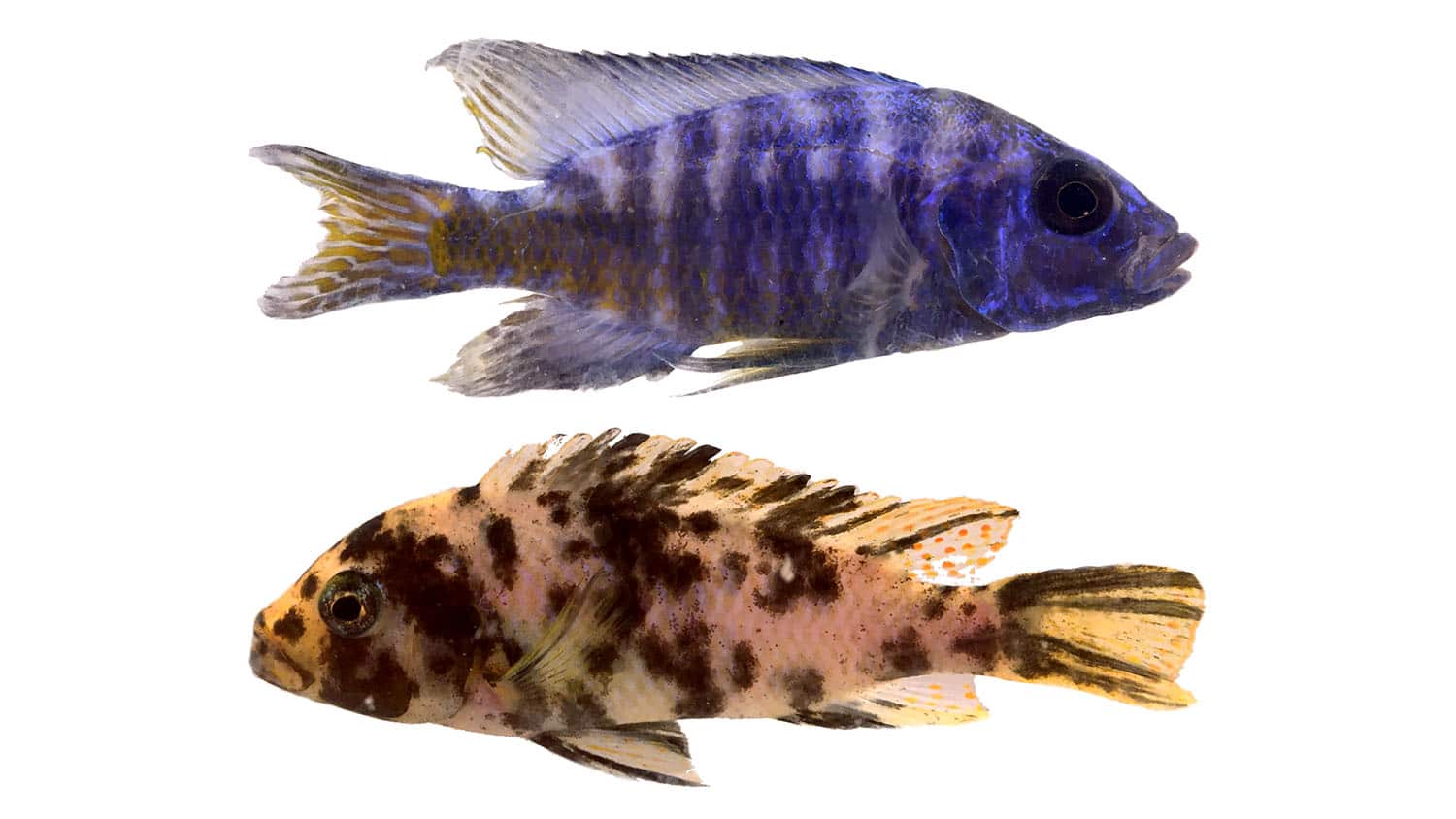 A male of the carnivorous species Aulonocara koningsi (top), and a female of the omnivorous species Metriaclima mbenjii (bottom), both cichlid fish species from Lake Malawi in East Africa. Image: Reade Roberts
<関連情報>
- https://news.ncsu.edu/2025/07/gut-length-driven-by-sexual-conflict-in-fish-species/
- https://academic.oup.com/genetics/advance-article-abstract/doi/10.1093/genetics/iyaf102/8150926
マラウイ湖のシクリッドにおける性競合下で進化した腸の長さ Gut length evolved under sexual conflict in Lake Malawi cichlids
Aldo Carmona Baez , Patrick J Ciccotto , Emily C Moore , Erin N Peterson , Melissa S Lamm , Natalie B Roberts , Kaitlin P Coyle , M Kaitlyn Barker , Ethan Dickson , Amanda N Cass ,…
Genetics Published:26 May 2025
DOI:https://doi.org/10.1093/genetics/iyaf102
Abstract
Variation in gastrointestinal morphology is associated with dietary specialization across the animal kingdom. Gut length generally correlates with trophic level, and increased gut length in herbivores is a classic example of adaptation to cope with diets having a lower nutrient content and a higher proportion of refractory material. However, the genetic basis of gut length variation remains largely unstudied, partly due to the inaccessibility and plasticity of the gut tissue, as well as the lack of dietary diversity within traditional model organisms relative to that observed among species belonging to different trophic levels. Here, we confirm the genetic basis of gut length variation among recently evolved Lake Malawi cichlid fish species with different dietary adaptations. We then produce interspecific, intertrophic-level hybrids to map evolved differences in intestinal length in an F2 mapping cross between Metriaclima mbenjii, an omnivore with a relatively long gut, and Aulonocara koningsi, a carnivore with a relatively short gut. We identify numerous candidate quantitative trait loci for evolved differences in intestinal length. These quantitative trait loci are predominantly sex-specific, supporting an evolutionary history of sexual conflicts for the gut. We also identify epistatic interactions potentially associated with canalization and the maintenance of cryptic variation in the cichlid adaptive radiation. Overall, our results suggest a complex, polygenic evolution of gut length variation associated with trophic level differences among cichlids, as well as conflicts and interactions that may be involved in evolutionary processes underlying other traits in cichlids.