2025-07-28 カリフォルニア大学サンディエゴ校(UCSD)

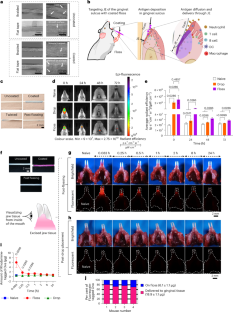
This micrograph shows a squamous cell carcinoma of the mouth. This and other head and neck cancers can be very difficult to treat, but researchers at UC San Diego have shown that by carefully timing multiple therapies, it may be possible to improve treatment outcomes for head and neck cancers. Photo Credit: KGH/Wikimedia Commons
<関連情報>
- https://today.ucsd.edu/story/synergistic-treatment-approach-supercharges-cancer-immunotherapy
- https://www.nature.com/articles/s41467-025-61780-4
腫瘍-センチネルリンパ節免疫移動体解析は、CCR7⁺樹状細胞が順序療法免疫放射線療法への反応を駆動することを明らかにした The tumor-sentinel lymph node immuno-migratome reveals CCR7⁺ dendritic cells drive response to sequenced immunoradiotherapy
Robert Saddawi-Konefka,Riyam Al Msari,Shiqi Tang,Chad Philips,Sayed Sadat,Lauren M. Clubb,Sarah Luna,Santiago Fassardi,Riley Jones,Ida Franiak Pietryga,Farhoud Faraji,Shiruyeh Schokrpur,Bryan S. Yung,Michael M. Allevato,Kelsey E. Decker,Chanond A. Nasamran,Daisy Chilin-Fuentes,Sara Brin Rosenthal,Shawn M. Jensen,Bernard A. Fox,R. Bryan Bell,J. Silvio Gutkind,Andrew Sharabi & Joseph A. Califano
Nature Communications Published:17 July 2025
DOI:https://doi.org/10.1038/s41467-025-61780-4
Abstract
Surgical ablation or broad radiation of tumor-draining lymph nodes can eliminate the primary tumor response to immunotherapy, highlighting the crucial role of these nodes in mediating the primary tumor response. Here, we show that immunoradiotherapy efficacy is dependent on treatment sequence and migration of modulated dendritic cells from tumor to sentinel lymph nodes. Using a tamoxifen-inducible reporter paired with CITE-sequencing in a murine model of oral cancer, we comprehensively characterize tumor immune cellular migration through lymphatic channels to sentinel lymph nodes at single-cell resolution, revealing a unique immunologic niche defined by distinct cellular phenotypic and transcriptional profiles. Through a structured approach of sequential immunomodulatory radiotherapy and checkpoint inhibition, we show that sequenced, lymphatic-sparing, tumor-directed radiotherapy followed by PD-1 inhibition achieves complete and durable tumor responses. Mechanistically, this treatment approach enhances migration of activated CCR7+ dendritic cell surveillance across the tumor-sentinel lymph node axis, revealing a shift from their canonical role in promoting tolerance to driving antitumor immunity. Overall, this work supports rationally sequencing immune-sensitizing, lymphatic-preserving, tumor-directed radiotherapy followed by immune checkpoint inhibition to optimize tumor response to immunoradiotherapy by driving activated dendritic cells to draining sentinel lymph nodes.