2025-08-01 早稲田大学
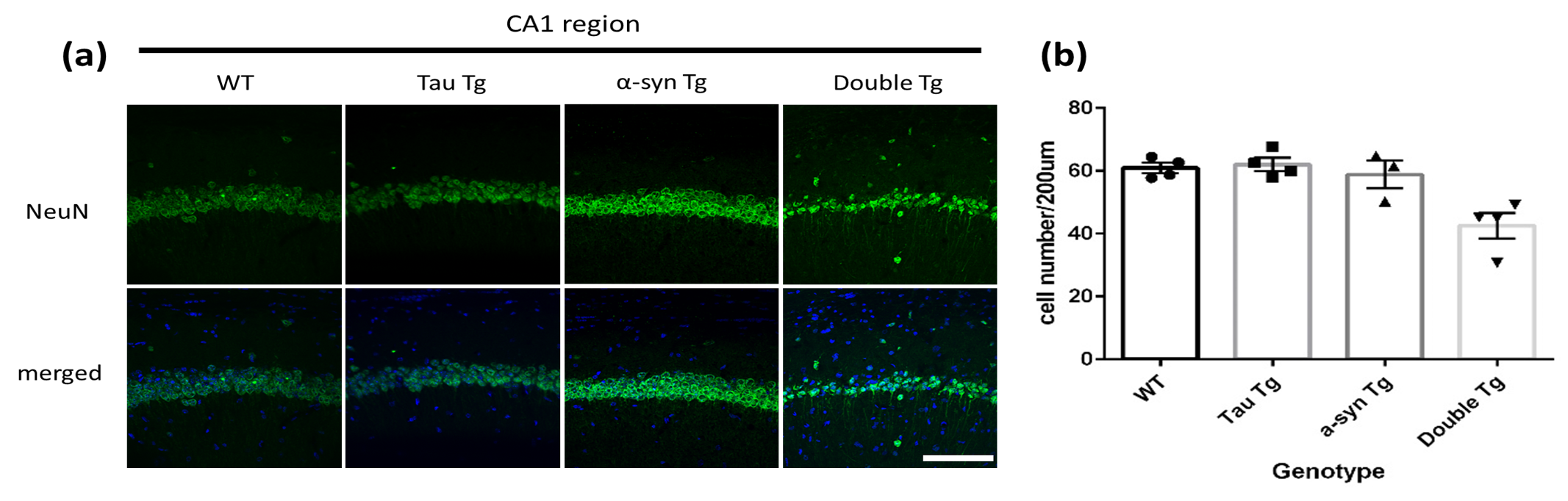 図1 海馬CA1領域の神経細胞数の比較
<関連情報>
- https://www.waseda.jp/inst/research/news/81674
- https://link.springer.com/article/10.1007/s12035-025-05248-y
神経細胞における変異型タウとα-シヌクレインの共発現は、マウス脳におけるタウのリン酸化、神経細胞の喪失、および神経炎症を促進する Co-Expression of Mutant Tau and α-Synuclein in Neurons Promotes Tau Phosphorylation, Neuronal Loss, and Neuroinflammation in Mouse Brain
Yuki Yamamoto,Toshiki Kubota,Daisuke Noguchi,Takaomi C. Saido & Toshio Ohshima
Molecular Neurobiology Published:25 July 2025
DOI:https://doi.org/10.1007/s12035-025-05248-y
Abstract
Intracellular aggregation and accumulation of protein is a hallmark of neurodegenerative diseases. Tauopathy, which is caused by aggregated tau accumulation, is a group of neurodegenerative diseases, including frontotemporal dementia (FTD), Pick disease, and Alzheimer’s disease. Similarly, synucleinopathy, which is caused by aggregated α-synuclein (α-syn) accumulation, includes Parkinson’s disease and dementia with Lewy body (DLB). The interaction between tau and α-syn has been attracting attention because of similarities in symptoms and the co-existence of tau and α-syn in neural cells. Previous studies revealed that tau and α-syn promote their aggregation with each other. Additionally, other studies showed that α-syn promotes tau spreading in the mouse brain. In the present study, we investigated the relationship between tau and α-syn and the effects of their co-existence in neuronal cells on mouse pathology by double transgenic strategy. Consequently, we found increased phosphorylated tau, a declined number of neurons in the CA1 region, and increased astrocyte and microglia in the hippocampi in double transgenic mice at 8 months old. In mice that co-express tau and α-syn, locomotive activity increased and cognitive function decreased in behavioral test. These results suggest the co-existence of tau andα-syn in neurons that promote neuronal loss and impaired cognitive function in neurodegenerative conditions.