2025-08-18 マックス・プランク研究所
<関連情報>
- https://www.mpg.de/25179774/exploration-and-dispersal-are-key-traits-involved-in-a-rapid-range-expansion
- https://peercommunityjournal.org/articles/10.24072/pcjournal.593/
- https://peercommunityjournal.org/articles/10.24072/pcjournal.591/
行動の柔軟性は探索行動と関連しているが、大胆さ、持続性、または運動多様性とは関連していない Behavioral flexibility is related to exploration, but not boldness, persistence or motor diversity
McCune, Kelsey B.; Lukas, Dieter; MacPherson, Maggie P.; Logan, Corina J.
Peer Community Journal Published:2025-08-18
DOI:https://doi.org/10.24072/pcjournal.593
Abstract
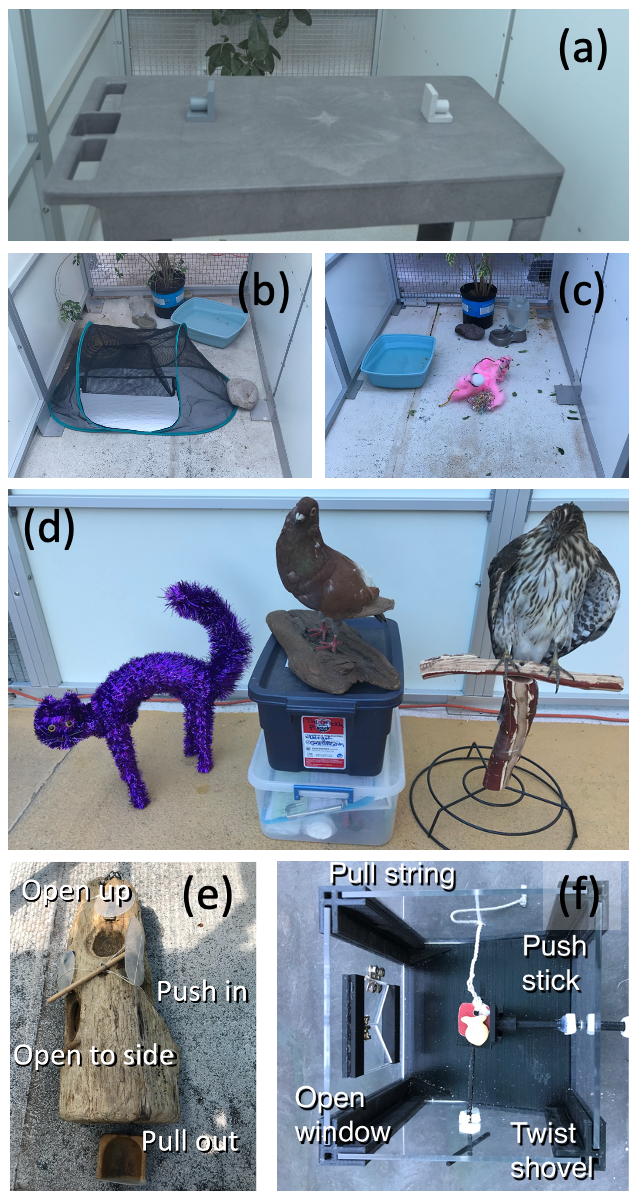
Behavioral flexibility, the ability to change behavior when circumstances change based on learning from previous experience, is thought to play an important role in a species’ ability to successfully adapt to new environments and expand its geographic range. However, behavioral flexibility is rarely directly tested at the individual level. This limits our ability to determine how it relates to other traits, such as exploration or persistence, that might also influence individual responses to novel circumstances. Without this information, we lack the power to predict which traits facilitate a species’ ability to adapt behavior to new environments. We use great-tailed grackles (a bird species; hereafter “grackles”) as a model to investigate this question because they have rapidly expanded their range into North America over the past 140 years. We evaluated whether grackle behavioral flexibility (measured as color reversal learning) correlated with individual differences in the exploration of new environments and novel objects, boldness towards known and novel threats, as well as persistence and motor diversity in accessing a novel food source. We determined that exploration of a novel environment across two time points and persistence when interacting with several different novel apparatuses were repeatable in individual grackles. There was no relationship between exploration or persistence and the two components of flexibility – the rate of learning to prefer a color option in the reversal learning task, and the rate of deviating from a preferred option. However, grackles that underwent serial reversal training to experimentally increase behavioral flexibility were more exploratory in that they spent more time in close proximity to the novel environment relative to control individuals. This indicates that, the more an individual investigated a novel apparatus, the more it was able to potentially learn and update its knowledge of current reward contingencies to adapt behavior accordingly. Our findings improve our understanding of the traits that are linked with flexibility in a highly adaptable species. We highlight the importance of using multiple different methods for measuring boldness and exploration to evaluate consistency of performance and therefore the methodological validity. We also show a link between exploration and behavioral flexibility that could facilitate adaptation to novel environmental changes.
関連性の低下が、大尾グラックルが分布域の端でより広範囲に分散することを示している Reduced levels of relatedness indicate that great-tailed grackles disperse further at the edge of their range
Lukas, Dieter; Blackwell, Aaron D.; Edrisi, Maryam; Hardy, Kristin; LeGrande, Christa; Marfori, Zara; McCune, Kelsey B.; Sevchik, August; Smith, Caroline; Logan, Corina J
Peer Community Journal Published:2025-08-18
DOI:https://doi.org/10.24072/pcjournal.591
Abstract
It is generally thought that behavioral flexibility, the ability to change behavior when circumstances change, plays an important role in the ability of a species to rapidly expand their geographic range. To expand into new areas, individuals might specifically show flexibility in dispersal behavior, their movement away from their parents to where they themselves reproduce. Great-tailed grackles (Quiscalus mexicanus) are a bird species that is rapidly expanding its geographic range and are behaviorally flexible. Here, we infer dispersal rates in wild-caught grackles from two populations across their range (an older population in the middle of the northern expansion front in Arizona nearer the core of their original range versus a young population on the northern edge of the expansion front in California) to investigate whether grackles show flexibility in their dispersal behavior between these two populations. Based on genetic relatedness, we observe no closely related pairs of individuals at the edge, suggesting that individuals of both sexes disperse further from their parents and siblings in this population than in the population nearer the core. Our analyses also suggest that, in both populations, females generally move shorter distances from where they hatched than males. These results elucidate that the rapid geographic range expansion of great-tailed grackles is associated with individuals, in particular females, differentially expressing dispersal behaviors.