2025-09-12 韓国基礎科学研究院 (IBS)
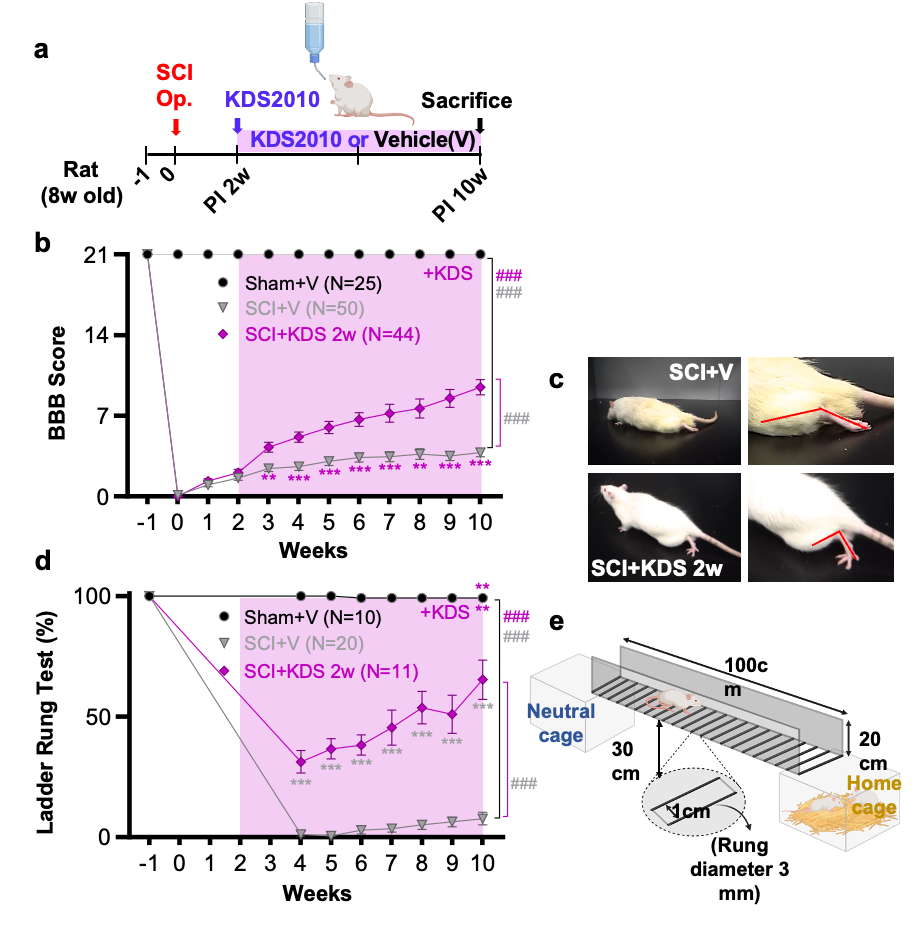
Figure 1. Therapeutic effects of KDS2010 in an animal model of spinal cord injury
The selective MAOB inhibitor KDS2010 significantly improved functional recovery in a spinal cord injury animal model. Treated animals showed marked restoration of behavioral scores and locomotor abilities, and these effects were sustained over time (b, d). While control animals with injury alone exhibited severe hindlimb paralysis, the KDS2010-treated group demonstrated clear recovery of motor function and improved walking performance. In particular, gait analysis using an automated locomotion assessment system revealed near-normal motor performance (e).
<関連情報>
- https://www.ibs.re.kr/cop/bbs/BBSMSTR_000000000738/selectBoardArticle.do?nttId=26120&pageIndex=1&searchCnd=&searchWrd=
- https://www.nature.com/articles/s41392-025-02398-2
脊髄損傷後の修復における分子ブレーキとしてのアストロサイト性モノアミン酸化酵素B(MAOB)-γ-アミノ酪酸(GABA)軸 Astrocytic monoamine oxidase B (MAOB)–gamma-aminobutyric acid (GABA) axis as a molecular brake on repair following spinal cord injury
Hye Yeong Lee,Jung Moo Lee,Hye-Lan Lee,Jiyeon Park,Heeyoung An,Eun Kyung Park,Sae Yeon Hwang,Sol lip Yoon,Gwang Yong Hwang,Keung Nyun Kim,Min-Ho Nam,Seung Eun Lee,Hyunji Kang,Joungha Won,Bo Ko Jang,Elijah Hwejin Lee,SunYeong Choi,Mingu Gordon Park,Sang Wook Kim,Ki Duk Park,SeungHwan Lee,C. Justin Lee & Yoon Ha
Signal Transduction and Targeted Therapy Published:11 September 2025
DOI:https://doi.org/10.1038/s41392-025-02398-2
Abstract
Neuroregeneration and remyelination rarely occur in the adult mammalian brain and spinal cord following central nervous system (CNS) injury. The glial scar has been proposed as a major contributor to this failure in the regenerative process. However, its underlying molecular and cellular mechanisms remain unclear. Here, we report that monoamine oxidase B (MAOB)-dependent excessive γ-aminobutyric acid (GABA) release from reactive astrocytes suppresses the CNS repair system by reducing brain‒derived neurotrophic factor (BDNF) and tropomyosin receptor kinase B (TrkB) expression in severe spinal cord injury (SCI) animal models. Genetic deletion of MAOB in a mouse SCI model promotes both functional and tissue recovery. Notably, the selective MAOB inhibitor, KDS2010, facilitates recovery and regeneration by disinhibiting the BDNF-TrkB axis in a rat SCI model. Its dose-dependent effects were further validated in a monkey SCI model. Moreover, KDS2010 demonstrated a tolerable safety profile and dose-proportional pharmacokinetics in healthy humans during a phase 1 clinical trial. This pathway therefore represents a pivotal target for overcoming the intrinsic barriers to CNS repair after injury. Our findings identify the astrocytic MAOB‒GABA axis as a crucial molecular and cellular brake on the CNS repair system following SCI and highlight the translational potential of KDS2010 as a promising therapeutic candidate for SCI treatment.