2025-09-16 早稲田大学
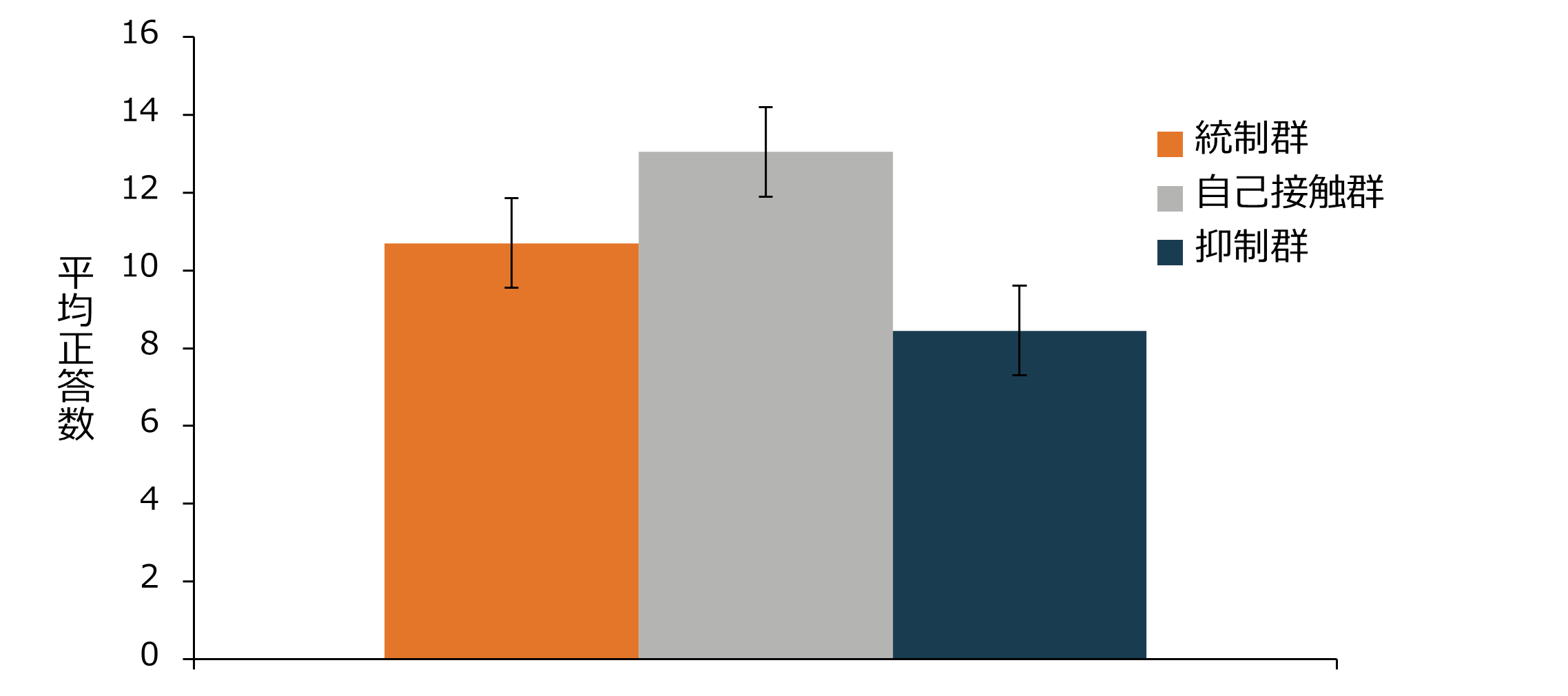
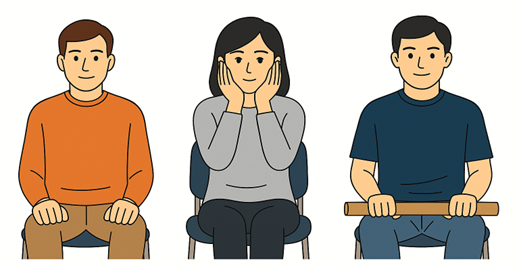
図1.正答数の結果と実験条件(誤差線は標準誤差)
<関連情報>
語彙検索における自己適応器の役割 The Role of Self-Adaptors in Lexical Retrieval
Kazuki Sekine and Hiroshi Hotta
Languages Published: 26 August 2025
DOI:https://doi.org/10.3390/languages10090209
Abstract
This study investigated whether self-adaptor behaviours, defined as non-communicative bodily actions such as touching one’s face or clasping one’s hands, facilitate lexical retrieval. Sixty Japanese-speaking adults were assigned to one of three conditions: a self-adaptor condition (instructed to hold their cheeks), a suppression condition (hand movements inhibited), and a control condition in which participants were allowed to move their hands freely. Participants completed a lexical retrieval task designed to elicit tip-of-the-tongue (TOT) states, followed by a recall task. Responses were categorised as successful retrieval, retrieval failure, TOT success, or TOT failure. Results showed that the self-adaptor condition achieved significantly more correct responses than the suppression condition, indicating that self-adaptor behaviour supports lexical access during retrieval difficulty. However, self-adaptor behaviour did not enhance the resolution of TOT states or improve recall performance. Video-based analysis further revealed that gestures increased markedly during TOT states, while self-adaptor behaviours were more frequent overall. These findings suggest that self-adaptor behaviour contributes to general lexical retrieval processes but does not directly facilitate the resolution of TOT states. The distinction between the functions of spontaneous bodily movements is therefore essential. This study extends the understanding of how embodied behaviours interact with verbal processes and underscores the cognitive significance of non-communicative bodily actions in speech production.