
2025-09-17 ヒューストン大学(UH)
<関連情報>
- https://uh.edu/news-events/stories/2025/september/09172025-language-processing-study-class.php
- https://www.nature.com/articles/s41598-025-13000-8
一次進行性失語症の鑑別診断における機械学習とEEGデータの時系列応答関数モデリングの応用 Application of machine learning and temporal response function modeling of EEG data for differential diagnosis in primary progressive aphasia
Heather Dial,Lokesha S. Pugalenthi,G. Nike Gnanateja,Junyi Jessy Li & Maya L. Henry
Scientific Reports Published:12 August 2025
DOI:https://doi.org/10.1038/s41598-025-13000-8
Abstract
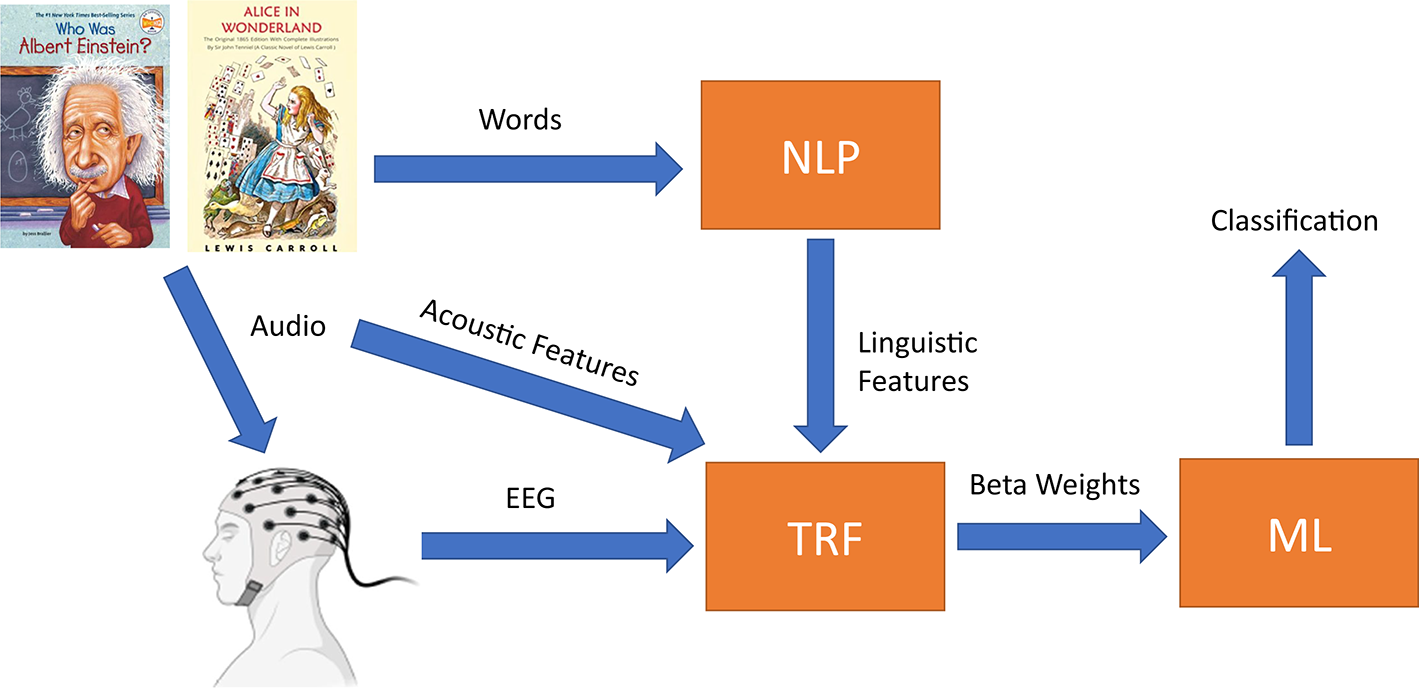
Primary progressive aphasia (PPA) is a neurodegenerative syndrome characterized by progressive decline in speech and/or language. There are three PPA subtypes with distinct speech-language profiles. Early diagnosis is essential for optimal provision of care but differential diagnosis by PPA subtype can be difficult and time consuming. We investigated the diagnostic utility of a novel electroencephalography (EEG)-based biomarker in conjunction with machine learning. Individuals with semantic, logopenic, or nonfluent/agrammatic variant PPA and healthy controls (n = 10 per group) listened to a continuous narrative while EEG responses were recorded. The speech envelope and linguistic features representing core language processes were extracted from the narrative speech and temporal response function (TRF) modeling was used to estimate the neural responses to these features. Although TRF modeling has shown promise for clinical applications, research is lacking regarding its diagnostic utility in populations like PPA. This study sought to provide preliminary evidence to address this gap. The resulting TRFs for channel Cz were used as input to machine learning algorithms for classification of PPA vs. healthy controls, three-way classification by PPA subtype, classification of a single PPA subtype relative to the other two (e.g., semantic vs. logopenic/nonfluent variant), and pairwise classification by PPA subtype. F1 scores were highest for the latter tasks (F1’s from 0.73 to 0.74), with better-than-chance classification in all tasks. Additional analyses determined that the TRF beta weights significantly improved classification over preprocessed EEG waveforms alone for all but one task (PPA vs. healthy controls). Our preliminary findings demonstrate the potential utility of this approach for differential diagnosis of PPA, warranting further investigation.
