2025-09-08 北京大学(PKU)
Web要約 の発言:
<関連情報>
- https://newsen.pku.edu.cn/news_events/news/research/15177.html
- https://www.cell.com/cell/fulltext/S0092-8674(25)00910-9
糖鎖シールドによるTCR依存性同種CAR-T療法の実現 Glycan shielding enables TCR-sufficient allogeneic CAR-T therapy
Zeguang Wu ∙ Jinhong Shi ∙ Qiezhong Lamao ∙ … ∙ Pengfei Yuan ∙ Weidong Han ∙ Wensheng Wei
Cell Published:August 21, 2025
DOI:https://doi.org/10.1016/j.cell.2025.07.046
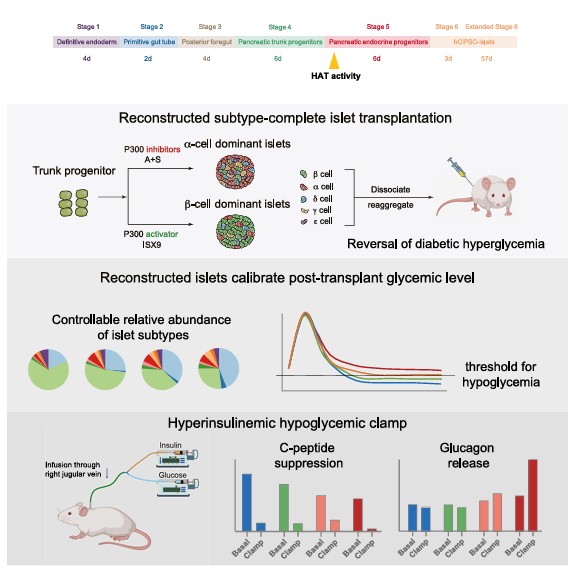
Graphical abstract

Highlights
- SPPL3 deletion increases the level and forms of glycosylation on primary T cells
- SPPL3 deletion reduces TCR expression, leading to reduced allogeneic immunity
- SPPL3 deletion does not impair tumor control by anti-CD19 allogeneic CAR-T cells
- SPPL3-null, TCR-sufficient anti-CD19 allogeneic CAR-T therapy is safe in three patients
Summary
Despite the success of autologous chimeric antigen receptor (CAR)-T cell therapy, achieving persistence and avoiding rejection in allogeneic settings remains challenging. We showed that signal peptide peptidase-like 3 (SPPL3) deletion enabled glycan-mediated immune evasion in primary T cells. SPPL3 deletion modified glycan profiles on T cells, restricted ligand accessibility, and reduced allogeneic immunity without compromising the functionality of anti-CD19 CAR molecules. In a phase I clinical trial, SPPL3-null, T cell receptor (TCR)-deficient anti-CD19 allogeneic CAR-T cells reached the safety primary endpoint, with grade 3 or higher cytokine release syndrome (CRS) observed in 3 out of 9 patients with relapsed/refractory B cell non-Hodgkin lymphoma (B-NHL) (ClinicalTrials.gov: NCT06014073). Reverse translational research highlighted the pivotal role of TCR in sustaining T cell persistence. We therefore evaluated the safety of SPPL3-null, TCR-sufficient CAR-T therapy on three patients with lymphoma or leukemia for compassionate care and observed no clinical signs of graft-versus-host disease. Our findings suggest glycan shielding by SPPL3 deletion is a promising direction for optimizing universal CAR-T therapies.