2025-10-27 ペンシルベニア州立大学(PennState)
<関連情報>
- https://www.psu.edu/news/agricultural-sciences/story/spotted-lanternfly-may-use-toxic-shield-fend-bird-predators
- https://link.springer.com/article/10.1007/s10886-025-01647-6
- https://link.springer.com/article/10.1007/s11829-025-10138-0
アブラムシ(Lycorma delicatula)による植物防御の隔離と鳥類捕食者への影響 Sequestration of plant defenses by spotted lanternfly (Lycorma delicatula) and effects on avian predators
Anne E. Johnson,Allison Cornell,Fang Zhu,Ashley E. Shay,Gabrielle Davis & Kelli Hoover
Journal of Chemical Ecology Published:23 October 2025
DOI:https://doi.org/10.1007/s10886-025-01647-6
Abstract
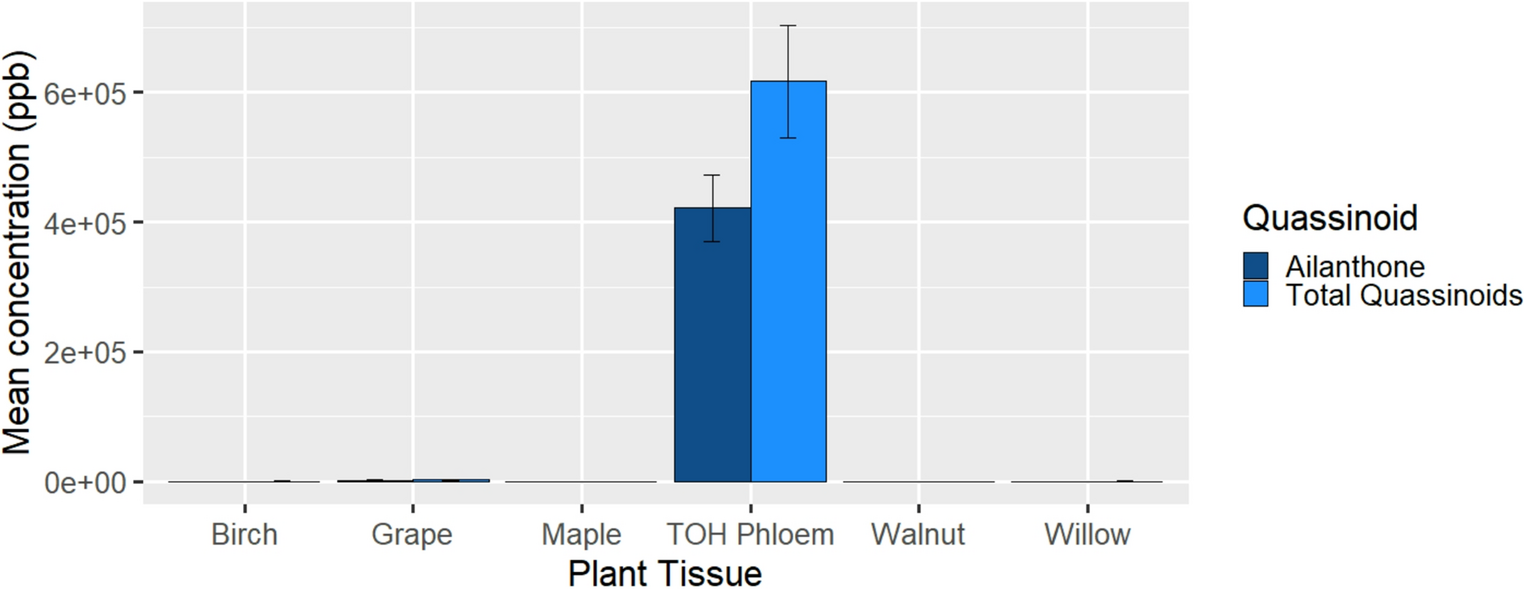
Lycorma delicatula is a polyphagous phloem feeder, which is spreading rapidly in the U.S., and is a major threat to grapes, hops, and ornamentals. Among its hosts, L. delicatula prefers Ailanthus altissima, an invasive tree from which it sequesters toxins, including several quassinoid compounds. We tested how these defenses affected predation by birds of nymphal and adult L. delicatula. Freeze-killed nymphs of each instar were reared with or without access to A. altissima and placed into cups on top of nest boxes occupied by house wrens (Troglodytes aedon). House wrens ate or fed their chicks a greater proportion of L. delicatula nymphs that had not had access to A. altissima than the nymphs that had access to this host plant. Adult L. delicatula reared with or without access to A. altissima were ground up and incorporated into separate batches of suet that were placed into double sided feeders set up at different sites during the winter. Trail camera video was reviewed to record how many times birds pecked each suet cake. Birds pecked the suet containing L. delicatula reared without access to A. altissima significantly more frequently than the suet containing adults that had fed on A. altissima. Of the quassinoids sequestered by L. delicatula from phloem sap of A. altissima, ailanthone and four other quassinoids were identified and quantified in different tissues, with the highest concentrations in the salivary glands. Results suggest that sequestration of toxic chemicals from A. altissima provides some protection to L. delicatula from avian predators.
北米における一般節足動物捕食者によるホシハナバエ(Lycorma delicatula )の捕食 Predation of spotted lanternfly (Lycorma delicatula) by generalist arthropod predators in North America
Anne E. Johnson,Sara Hermann & Kelli Hoover
Arthropod-Plant Interactions Published01 March 2025
DOIhttps://doi.org/10.1007/s11829-025-10138-0
Abstract
Spotted lanternfly (Lycorma delicatula White, (Hemiptera: Fulgoridae)) is a non-native, invasive pest with a broad host range that has rapidly spread since its discovery in the United States in 2014. Managing emerging invasive pests can be challenging as repeated insecticide inputs can lead to resistance and impact non-target organisms. Alternative strategies, such as biological control, reduce risks but require extensive investigation before implementation. A recent community science study suggests that arthropods are major predators of L. delicatula. However, this pest can sequester toxins from its preferred host, tree of heaven (Ailanthus altissima), which may defend it from predation. Thus, we tested a variety of predatory arthropods against all life stages of L. delicatula to determine if they would avoid prey fed on A. altissima compared to other host plants. Predatory arthropods did not show a preference when given a choice between L. delicatula reared with access to A. altissima compared to those reared on alternative hosts. We then tested 10 commercially available or easily field-collected generalist predators to determine if these potential biological control agents could reduce L. delicatula populations. Spined soldier bugs (Podisus maculiventris (Say, Hemiptera: Pentatomidae)), Carolina mantids (Stagmomantis carolina (Johansson, Mantodea: Mantidae)), and Chinese mantids (Tenodera sinensis (Saussure, Mantodea: Mantidae)) were the most effective at reducing prey populations, indicating they have promise as effective natural control agents. Our results also suggest that conservation and/or augmentation biological control using generalist predators already present in the landscape could be a useful management strategy for L. delicatula.