2025-11-11 成育医療研究センター
<関連情報>
- https://www.ncchd.go.jp/press/2025/1111.html
- https://www.ncchd.go.jp/press/2025/1111.pdf
- https://jamanetwork.com/journals/jamapediatrics/article-abstract/2837968
11の国際新生児ネットワークにおける妊娠22~23週で生まれた早産児の転帰 Outcomes of Preterm Infants Born at 22 to 23 Weeks’ Gestation in 11 International Neonatal Networks
Tetsuya Isayama, MD, PhD; Mikael Norman, MD, PhD; Satoshi Kusuda, MD;et al
JAMA Pediatrics Published:August 25, 2025
DOI:10.1001/jamapediatrics.2025.2958
Key Points
Question What are the rates of survival and major morbidity in infants born at 22 to 23 weeks’ gestation and admitted for neonatal intensive care?
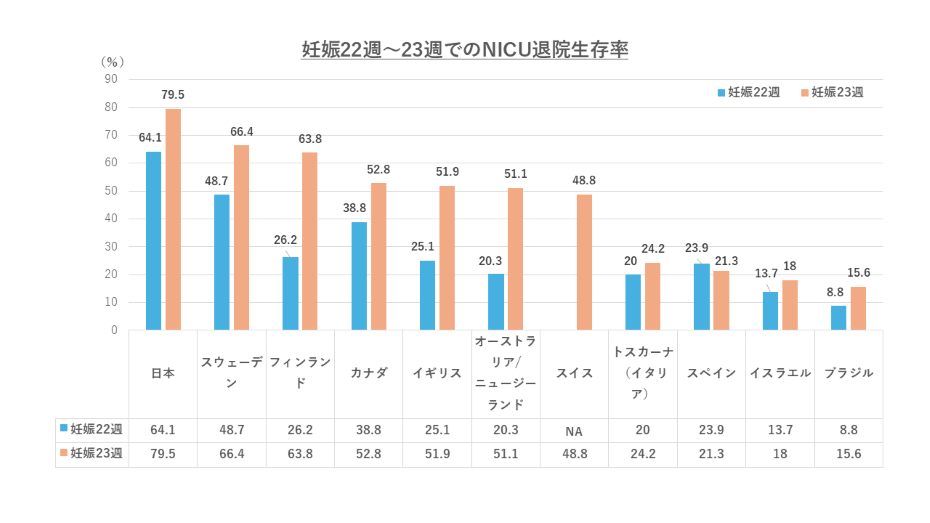
Findings In this international registry-based cohort study of 11 neonatal networks, significant variations were observed in adjusted probabilities of outcomes for 846 infants born at 22 weeks’ gestation and 4173 born at 23 weeks’ gestation, including survival to discharge (9%-64% and 16%-80%), severe periventricular hemorrhage or periventricular leukomalacia (24%-65% and 18%-56%), and treated retinopathy (32%-57% and 16%-48%), respectively.
Meaning Significant between-network variations exist in survival and morbidity in infants born at 22 and 23 weeks’ gestational age, for which explanation will require evaluation of patients, caregivers, systems, and processes.
Abstract
Importance Postnatal intensive care for preterm infants born at 22 to 23 weeks’ gestation is increasing, although survival rates remain low. Information on outcomes for multiple countries or regions can be important for research, benchmarking, quality improvement, and parental counseling.
Objective To evaluate survival and major morbidities and their between-network variations in infants born at 22 to 23 weeks’ gestation in 11 neonatal networks participating in the International Network for Evaluation of Outcomes (iNeo) in neonates in 12 countries or regions.
Design, Setting, and Participants International registry-based cohort study of infants born at 22 to 23 weeks’ gestation from January 1, 2015, through December 31, 2021, without major congenital anomalies who were admitted for neonatal intensive care in 11 national or regional neonatal consortia. Data analysis was performed from December 2, 2023, to June 15, 2025.
Exposures Neonatal consortium and gestational age at birth.
Main Outcomes and Measures Survival to neonatal intensive care unit discharge, major neonatal morbidities, and survival without any major morbidities.
Results A total of 5019 neonates were included (1084 of 4636 neonates [23%] with a maternal age >35 years; 2641 of 5017 neonates [53%] male); among them, 846 neonates were born at 22 weeks’ gestation and 4173 were born at 23 weeks’ gestation. Variations between contributing networks for perinatal management at 22 and 23 weeks’ gestation, respectively, include any antenatal steroids (ranges of 18%-83% and 57%-98%), cesarean birth (0%-42% and 5%-73%), and outborn (0%-26% and 0%-22%). Significant variations between contributing networks for adjusted probabilities of outcomes at 22 and 23 weeks’ gestation, respectively, include survival to discharge (95% CIs of 9%-64% and 16%-80%; P < .001), grade 3 or 4 periventricular hemorrhage (PVH) or periventricular leukomalacia (PVL) (severe PVH or PVL: 24%-65% and 18%-56%; P < .001), survival without severe PVH or PVL (7%-53% and 9%-69%; P < .001), treated retinopathy of prematurity among survivors (32%-57% [P = .008] and 16%-48% [P < .001]), bronchopulmonary dysplasia among survivors (for 23 weeks only: 64%-88%; P < .001), and necrotizing enterocolitis (for 23 weeks only: 6%-28%; P < .001). Standardized incidence ratios showed significant differences in survival and major morbidities in some networks compared with a reference population from all other networks.
Conclusions Substantial international variations were identified in outcomes for infants born at 22 to 23 weeks’ gestation who were admitted to 11 neonatal networks in the 12 countries or regions. The variations can be due to differences in systems, care practices, attitudes, and culture; however, identification of variation can help focus efforts toward research aimed at understanding the causal determinants of variation.