2025-11-10 デューク大学 (Duke)
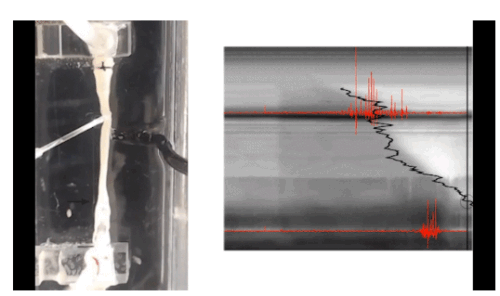
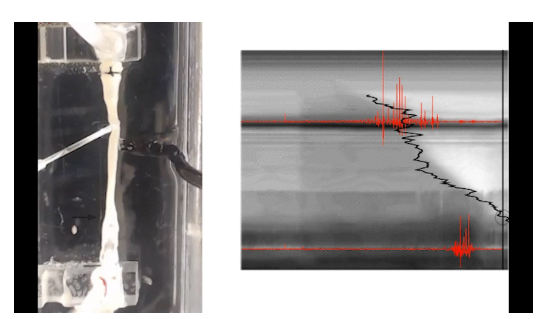
A mouse colon on the left shows how muscle contractions move through the tissue
<関連情報>
- https://pratt.duke.edu/news/using-electrical-bursts-to-get-the-gut-moving/
- https://www.science.org/doi/10.1126/scitranslmed.adu4615
バーストパターン刺激は前臨床モデルにおいて結腸運動を回復させる Burst-patterned stimulation restores colonic motility in preclinical models
Bradley B. Barth and Warren M. Grill
Science Translational medicine Published:5 Nov 2025
DOI:https://doi.org/10.1126/scitranslmed.adu4615
Editor’s summary
Chronic constipation refractory to medications greatly affects patients’ quality of life. Barth et al. used computational modeling and preclinical animal models to optimize sacral nerve stimulation patterns for restoring colonic motility. They identified specific burst patterns of stimulation that produced effective propulsive contractions, restoring gut motility in a loperamide-induced constipation model in rats. This preclinical evidence supports patterned neuromodulation as a potential therapy for restoring gut motility in refractory constipation. —Molly Ogle
Abstract
Disrupted communication along the brain-gut axis contributes to impaired visceral function and debilitating symptoms. Colonic dysmotility, in particular, remains poorly managed by conventional pharmaceuticals. The objectives of our study were to restore colonic motility by electrical stimulation of the sacral nerves, optimize the stimulation pattern to relieve constipation, and elucidate the mechanisms of motor patterns evoked by stimulation. Through a combination of computational, ex vivo, and in vivo preclinical models, we engineered temporal patterns of sacral nerve stimulation to evoke maximally propulsive, prokinetic motility. We validated the optimized pattern of stimulation by measuring defecatory behavior in a loperamide model of constipation in rats. Compared with sham stimulation and the continuous pattern of stimulation conventionally used in the clinic, burst-patterned sacral nerve stimulation significantly increased fecal output to baseline and relieved constipation in awake, behaving rats. Further, we systematically varied stimulation frequency, stimulation duration, and interburst interval and determined the minimum effective parameters to maximize anorectal contractions. We demonstrated that a precise temporal pattern of sacral nerve stimulation relieves constipation in rats, establishing preclinical evidence and the foundational principles for translation to future pilot clinical trials.