2025-10-23 マウントサイナイ医療システム
<関連情報>
- https://www.mountsinai.org/about/newsroom/2025/mount-sinai-study-finds-chronic-traumatic-encephalopathy-rare-among-individuals-with-isolated-brain-injuries
- https://academic.oup.com/jnen/advance-article/doi/10.1093/jnen/nlaf117/8293059
外傷性脳損傷後遺症プロジェクトにおける慢性外傷性脳症の神経病理学的変化:地域剖検コホートにおける知見 Chronic traumatic encephalopathy neuropathologic change in the Late Effects of Traumatic Brain Injury project: Findings in a community autopsy cohort
Enna Selmanovic, BS, Alan C Seifert, PhD, Bradley N Delman, MD, Ariel Pruyser, BS, Emma L Thorn, MA, Amber L Nolan, MD, PhD, C Dirk Keene, MD, PhD, Jamie M Walker, MD, PhD, John F Crary, MD, PhD, Patrick R Hof, MD …
Journal of Neuropathology & Experimental Neurology Published:18 October 2025
DOI:https://doi.org/10.1093/jnen/nlaf117
Abstract
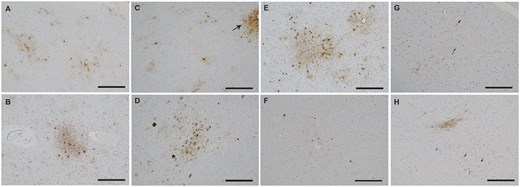
Chronic traumatic encephalopathy-neuropathologic change (CTE-NC) has been studied in contact sport athletes with repetitive head impacts (RHI), but its association with isolated traumatic brain injury (iTBI) and non-sport RHI in the community remains unclear. Forty-seven consecutive donor brains from the Late Effects of TBI Project underwent comprehensive neuropathologic evaluation. Seven (14.9%; median age, seventh decade) had CTE-NC, defined as perivascular neuronal tau at the depth of sulcus. Four had 4 “low” CTE-NC burden, 1 “high,” and 2 “indeterminate.” Ex vivo neuroimaging in 5 facilitated histological sampling of subtle changes otherwise likely to be overlooked. Five of the 7 CTE-NC donors reportedly had substantial RHI exposure: football (n = 3), boxing (n = 1), military and interpersonal violence (n = 1), and child abuse (n = 1). One CTE-NC case had no known RHI exposure but had 2 severe iTBIs sustained 30 and 3 years prior to death. Donors without CTE-NC had variable patterns of head trauma: RHI exposure (college football, n = 4), some RHI (n = 21, 17 of whom also had ≥1 iTBI), and ≥1 iTBI but no RHI (n = 15). These findings converge with prior reports that CTE is largely associated with extensive RHI and is infrequent in a cohort with varying TBI exposures.