
2025-08-14 マックス・プランク研究所
<関連情報>
- https://www.mpg.de/25212157/reduced-genome-flexible-performance
- https://www.embopress.org/doi/full/10.1038/s44319-025-00525-2
遺伝子が侵食された共生菌は、宿主のライフステージと環境に応じて遺伝子発現を調整する Symbionts with eroded genomes adjust gene expression according to host life-stage and environment
Ana S P Carvalho, Sinah T Wingert https://orcid.org/0009-0008-1559-9366, Roy Kirsch, Heiko Vogel, Gregor Kölsch, and Martin Kaltenpoth
EMBO Reports Published:8 August 2025
DOI:https://doi.org/10.1038/s44319-025-00525-2
Abstract
Symbiotic bacteria in long-term host associations frequently undergo extreme genome reduction. While they retain genes beneficial to the host, their repertoire of transcription factors is severely reduced. Here, we assessed whether genome-eroded symbionts can still regulate gene expression by characterizing the transcriptional responses of obligate symbionts in reed beetles to different temperatures and host life stages. These symbionts feature a small genome (~0.5 Mb), encoding for 9–10 essential amino acid biosynthesis pathways, 0–2 pectinases, and 4–5 transcription factors. We found that the symbionts respond to winter conditions by upregulating a heat-shock sigma factor and downregulating translation machinery. Across life stages, symbionts adjusted gene expression to meet the hosts’ nutritional demands, upregulating amino acid biosynthesis in larvae, while expression and activity of host and symbiont enzymes involved in plant cell wall breakdown increased in the folivorous adults. In addition, the regulation of symbiont cell morphology genes corresponded to cell shape differences across life stages. Thus, reed beetle symbionts may use their few transcription factors to respond to the host’s environment, highlighting the regulatory potential of long-term coevolved symbionts despite severely reduced genomes.
Synopsis
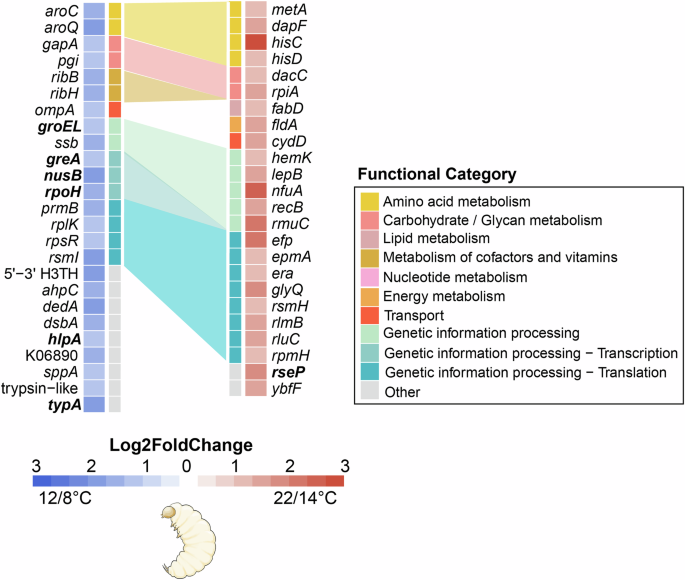
The symbionts of Donaciinae, despite having severely eroded genomes of around 0.5 Mbp, exhibit specific transcriptional responses that allow them to react to changes both within and across host-life stages, with the symbionts upregulating amino acid biosynthesis specifically during the host’s larval stages and pectinase genes during adult stages, thus supporting larval growth and adult folivory, respectively.
- The genome-eroded symbionts of the Donaciinae show specific transcriptional responses to prolonged winter conditions and host nutritional demands.
- While the symbionts’ amino acid biosynthetic pathways are upregulated in host larval stages, host- and symbiont- encoded plant cell wall degrading enzymes are predominantly expressed in adults.
- The symbionts of the Donaciinae differentially express individual genes related to bacterial cell shape and cell envelope biosynthesis and change their cell shape across host life-stages.

