2025-08-26 スイス連邦工科大学ローザンヌ校(EPFL)
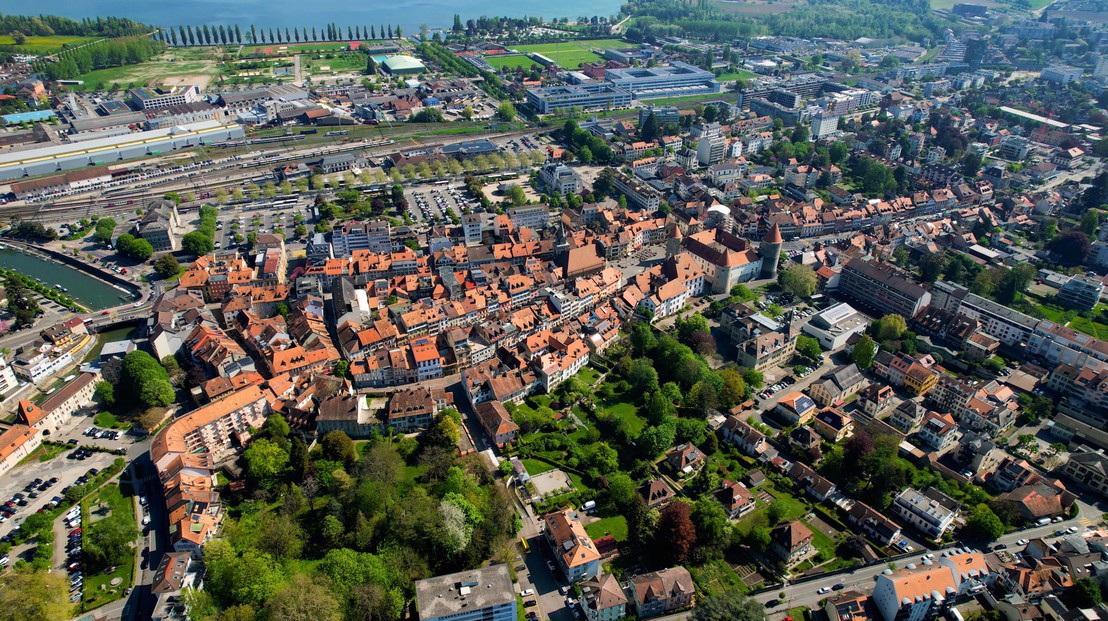
Sleep disorders are evenly distributed throughout the town of Yverdon-les-Bains, according to the study. © iStock
<関連情報>
- https://actu.epfl.ch/news/high-prevalence-of-sleep-disorders-detected-in-yve/
- https://www.sciencedirect.com/science/article/pii/S0165032725007086?via%3Dihub
睡眠障害と日中の眠気の高度なレベルに関連するクラスター特異的都市環境:Urbasan共同研究からの知見 Cluster-specific urban contexts associated with high levels of sleep impairment and daytime sleepiness: Findings from the Urbasan collaborative study
Philippe Voruz, Marco Vieira Ruas, Noé Fellay, Noemi Romano, Michelangelo Mussini, Mathieu Saubade, Vincent Faivre, Vincent Gremeauxi, Ophélia Jeanneret, Quentin Tonnerre, Marie-Noëlle Domon-Aubort, Dario Spini, Bengt Kayser, Daniel Rappo, Stéphane Joost
Journal of Affective Disorders Available online: 23 April 2025
DOI:https://doi.org/10.1016/j.jad.2025.04.133

Highlights
- High level of sleep disorders within urban environment
- Relationship between sleep indicators and environmental factors
- Specific spatial clusters are associated with indicators of sleep quality
Abstract
Introduction
Impaired sleep is a global health concern. However, the environmental factors contributing to sleep impairment in urban settings are still not well understood.
Methodology
This study involved 179 participants from a Swiss municipality (Yverdon-les-Bains), where sleep quality and diurnal sleepiness were measured using validated questionnaires, alongside environmental and geo-referenced data.
Results
The findings revealed a high prevalence of sleep disorders across diverse demographic groups (respectively 15.6 % for diurnal sleepiness and 91.1 % for significantly altered sleep quality). Additionally, sleep disorders were associated with both environmental and socio-demographic factors. Geospatial analysis identified clusters of sleep disturbances in specific neighborhoods, with distinct associations to specific sub-scores (factors) of the sleep evaluation.
Conclusion
Assessing sleep in urban environments is crucial, as it is linked to elevated levels of sleepiness. Environmental and socio-demographic variables play significant roles in these disturbances. The incorporation of geospatial analyses allows for a more precise identification of patterns within the city, offering opportunities for tailored interventions to address the different patterns of sleep disorders.