2025-08-27 ノースウェスタン大学
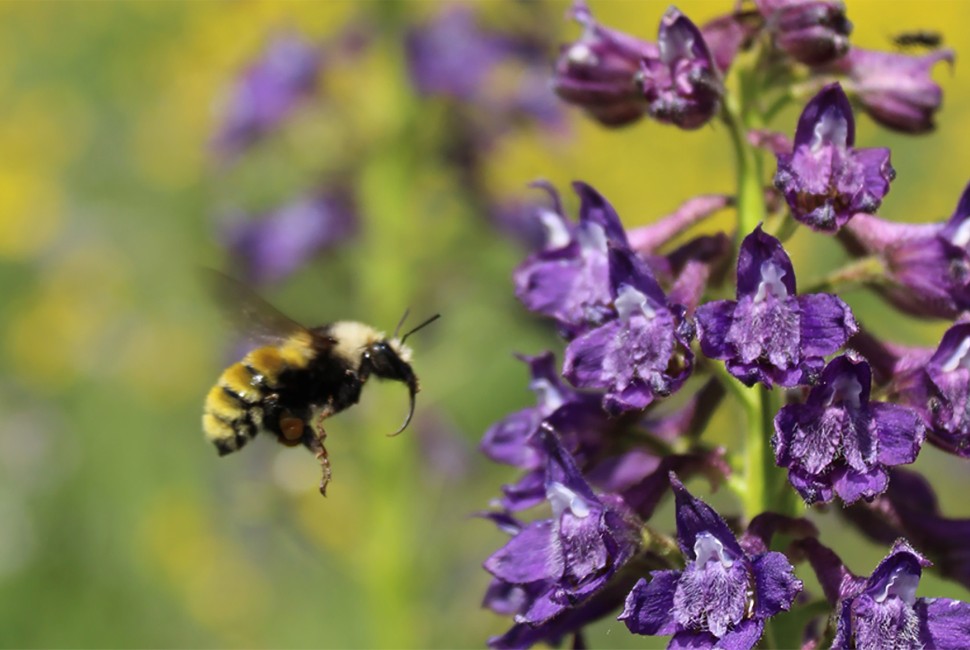
A new study from Northwestern and the Chicago Botanic Garden finds that wild bees aren’t just flitting from flower to flower, collecting pollen at random. Instead, they are strategically targeting flowers that enable them to carefully balance their protein, fat and carbs. Photo by Paul CaraDonna
<関連情報>
- https://news.northwestern.edu/stories/2025/08/for-bees-diet-isnt-one-size-fits-all/
- https://royalsocietypublishing.org/doi/10.1098/rspb.2025.0643
野生花粉媒介者間の栄養ニッチ動態 Nutrient niche dynamics among wild pollinators
Justin A. Bain,Jane E. Ogilvie,William K. Petry and Paul J. CaraDonna
Proceedings of the Royal Society B Published:27 August 2025
DOI:https://doi.org/10.1098/rspb.2025.0643
Abstract
Food underpins fitness and ecological interactions, yet how nutrient availability shapes species interactions in natural communities remains poorly understood. Most nutritional ecology research focuses on laboratory or single-species systems, limiting insight into how nutrient use and nutrient niche dynamics occur in complex, multispecies assemblages in the wild. We combined long-term plant–pollinator interaction data with pollen macronutrient analyses to examine how wild bumble bees exploit macronutrients and whether they occupy distinct nutrient niches. Pollen macronutrient composition varied across plant species and over the season, with protein-rich pollen peaking in spring and lipid- and carbohydrate-rich pollen increasing by late summer. Across this nutrient landscape, bumble bee species occupied two distinct macronutrient niches: one high in protein and low in lipid and carbohydrate, and the other lower in protein but moderate in lipid and carbohydrate. Nutrient niche partitioning was associated with differences in feeding morphology and colony life stage (but not phenology). We found little evidence that nutrient niche breadth differed among species or was explained by feeding morphology or colony life stage. Our results extend nutritional ecology to a multispecies context, provide evidence for nutrient niche partitioning among wild pollinators and highlight the need to consider species-specific nutritional requirements in pollinator conservation.