2025-09-08 早稲田大学
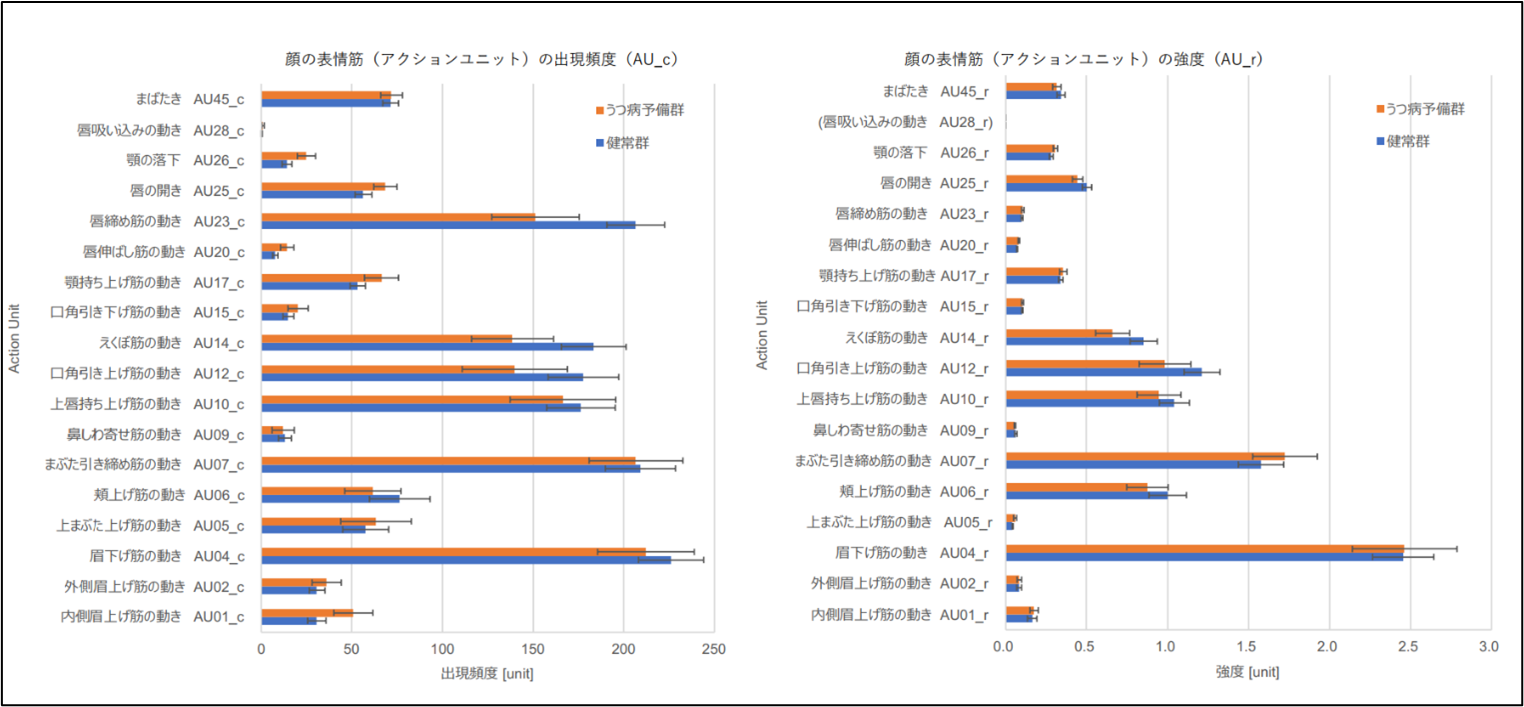
図1:OpenFace2.0ソフトウェアによって解析された10秒間の自己紹介動画に基づく
健常群およびサブスレッショルドうつ群(うつ病予備群)の顔面表情筋(アクションユニット)
出現頻度(AU_c)と強度(AU_r)のプロファイル
<関連情報>
閾下抑制は、主観的評価および動作単位分析を介した表情の変化と印象形成に関連している Subthreshold depression is associated with altered facial expression and impression formation via subjective ratings and action unit analysis
Eriko Sugimori & Mayu Yamaguchi
Scientific Reports Published:21 August 2025
DOI:https://doi.org/10.1038/s41598-025-15874-0
Abstract
Depression is often linked to reduced facial expressivity and to biases in recognizing others’ emotions. Whether subthreshold depression (StD)—a putative prodromal stage—shows comparable alterations remains unclear. We recorded 10‑second self‑introduction videos of Japanese undergraduates (ratees; n = 64) and obtained subjective impression ratings from a separate group (raters; n = 63). Both groups completed the Beck Depression Inventory‑II (BDI‑II). Raters’ depressive tendency was not associated with their impression ratings (p > .10, Benjamini–Hochberg corrected). In contrast, ratees with StD (BDI‑II = 11–20) received significantly lower scores on positive items—expressive, natural, friendly, likeable—than healthy ratees (BDI‑II = 1–10; partial η² = 0.18–0.70). Automated analysis with OpenFace 2.0 showed higher presence/intensity of AU01 (Inner Brow Raiser), AU05 (Upper Lid Raiser), AU20 (Lip Stretcher), AU25/26/28 (mouth‑opening AUs) in StD faces; five of these AUs correlated with BDI‑II after false‑discovery‑rate correction (q < 0.05). Subthreshold depression was associated with muted positive expressivity and distinct eye‑ and mouth‑movement patterns, but did not bias observers’ first‑impression judgements. The observed AU signatures may aid early identification of individuals at risk for clinical depression. Together, our findings suggest that subthreshold depression is associated with alterations in facial expressivity, particularly in positive expressions, while not significantly influencing how others perceive those expressions.