2025-10-02 ワシントン州立大学(WSU)
<関連情報>
- https://news.wsu.edu/press-release/2025/10/02/sudan-ebola-virus-can-persist-in-survivors-for-months-wsu-study-shows/
- https://bmcmedicine.biomedcentral.com/articles/10.1186/s12916-025-04271-z
スーダンエボラウイルス感染症の感染後2年を経過した生存者における長期臨床後遺症:マッチドコホート研究 Long-term clinical sequelae among Sudan ebolavirus disease survivors 2 years post-infection: a matched cohort study
Haruna Muwonge,Carolyne Nasimiyu,Barnabas Bakamutumaho,Peter Elyanu,Moses L. Joloba,Silvia Situma,John Schieffelin,Bronwyn Gunn,Shuangyi Bai,Robert F. Breiman,Isaac Ssewanyana,Susan Nabadda,Julius Lutwama,Yonas Tegen,Allan Muruta,Bruce Kirenga,Charles Olaro,Jane Ruth Aceng,Henry Kyobe Bosa & M. Kariuki Njenga
BMC Medicine Published1:8 July 2025
DOI:https://doi.org/10.1186/s12916-025-04271-z
Abstract
Background
The long-term health effects of ebolavirus disease (EVD) caused by the Sudan ebolavirus (SUDV) strain remain poorly characterized. Here, we assessed the nature, frequency, and persistence of post-EVD clinical symptoms among SUDV survivors 2 years after infection by comparing them with matched community controls.
Methods
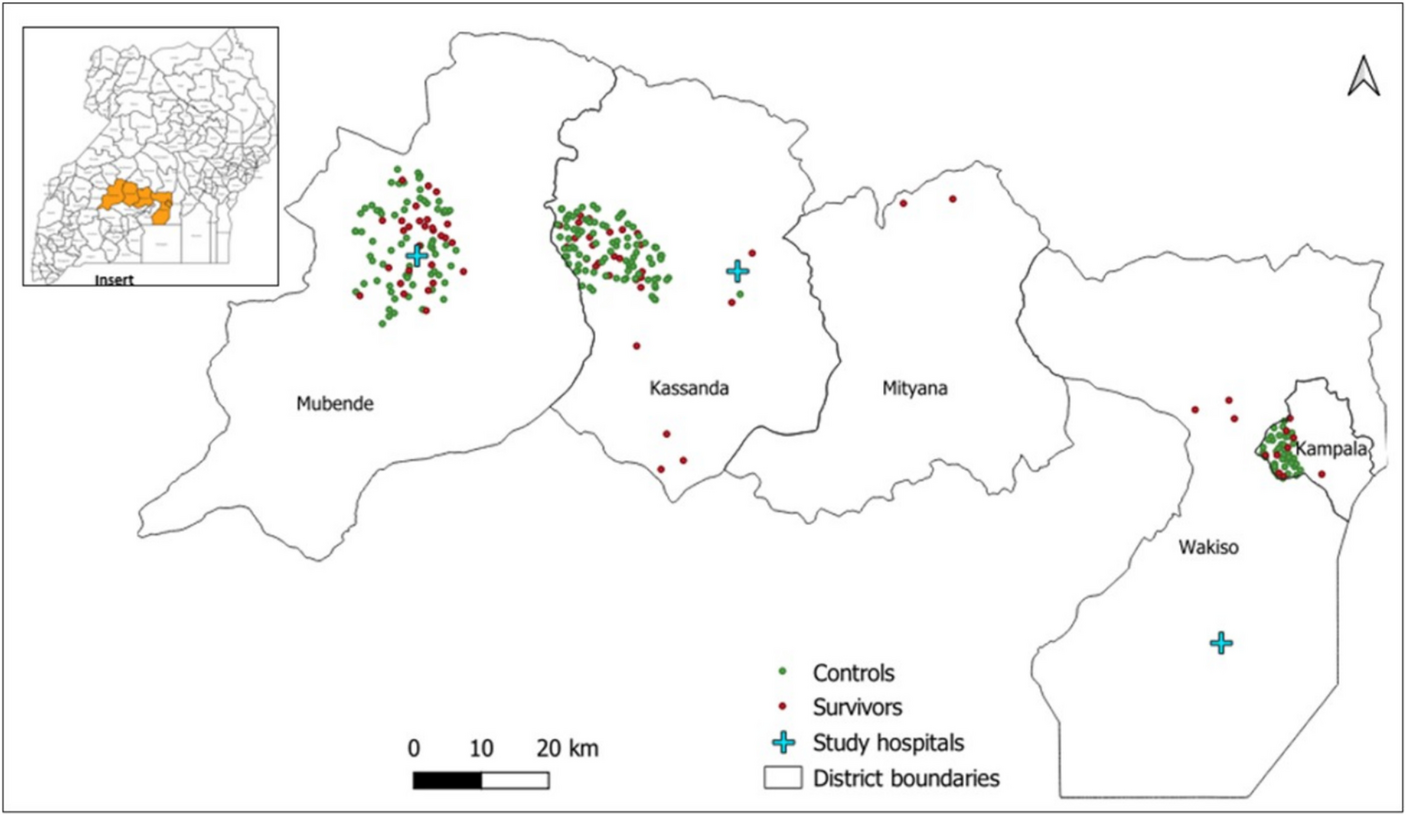
The primary objective was determining the prevalence of clinical symptoms over the 24-month period. Using a prospective matched cohort approach, 87 laboratory-confirmed SUDV survivors from the 2022–2023 Ugandan outbreak and 176 age-, sex- and village-matched controls were followed at 3, 9, 12, 15 and 24 months. Symptom data were collected through structured interviews and targeted clinical examinations. A secondary objective was investigating the duration of viral RNA shedding in semen and breast milk of survivors collected during follow-up, using the PCR test.
Results
Of the 87 SUDV survivors, 57.5% reported significantly higher frequencies of clinical symptoms involving musculoskeletal (45.0%, P < 0.001), central nervous system (36.3%, p < 0.001), ophthalmologic (20%, P < 0.001), and respiratory (10%, P < 0.001) systems than those observed among controls. The risk ratio of occurrence was highest for ophthalmologic (20% vs 3.4%, RR = 5.9; p < 0.001) and central nervous systems symptoms (36.3% vs 6.8%, RR = 5.3, p < 0.001), and lowest for reproductive system (13.8% vs 8.5%; RR = 1.6; p > 0.005). Importantly, 50% of the survivors reported persistent multi-systemic symptoms, including low back pain, hand and feet numbness, confusion, and diarrhoea that resulted in an inability to perform basic activities of living. Viral RNA was detected in semen for up to 210 post-infection (median = 131 days, range: 111–210 days) and in breast milk for up to 199 days (median = 149 days, range: 111–199 days).
Conclusions
This study demonstrates that SUDV survivors develop long-term clinical sequelae characterized by persistent multi-systemic clinical symptoms. Detection of viral RNA in semen and breastmilk for up to 7 months post-infection suggests prolonged persistence, opening the possibility of latency and reactivation of the virus.