2025-10-09 ペンシルベニア州立大学 (PennState)
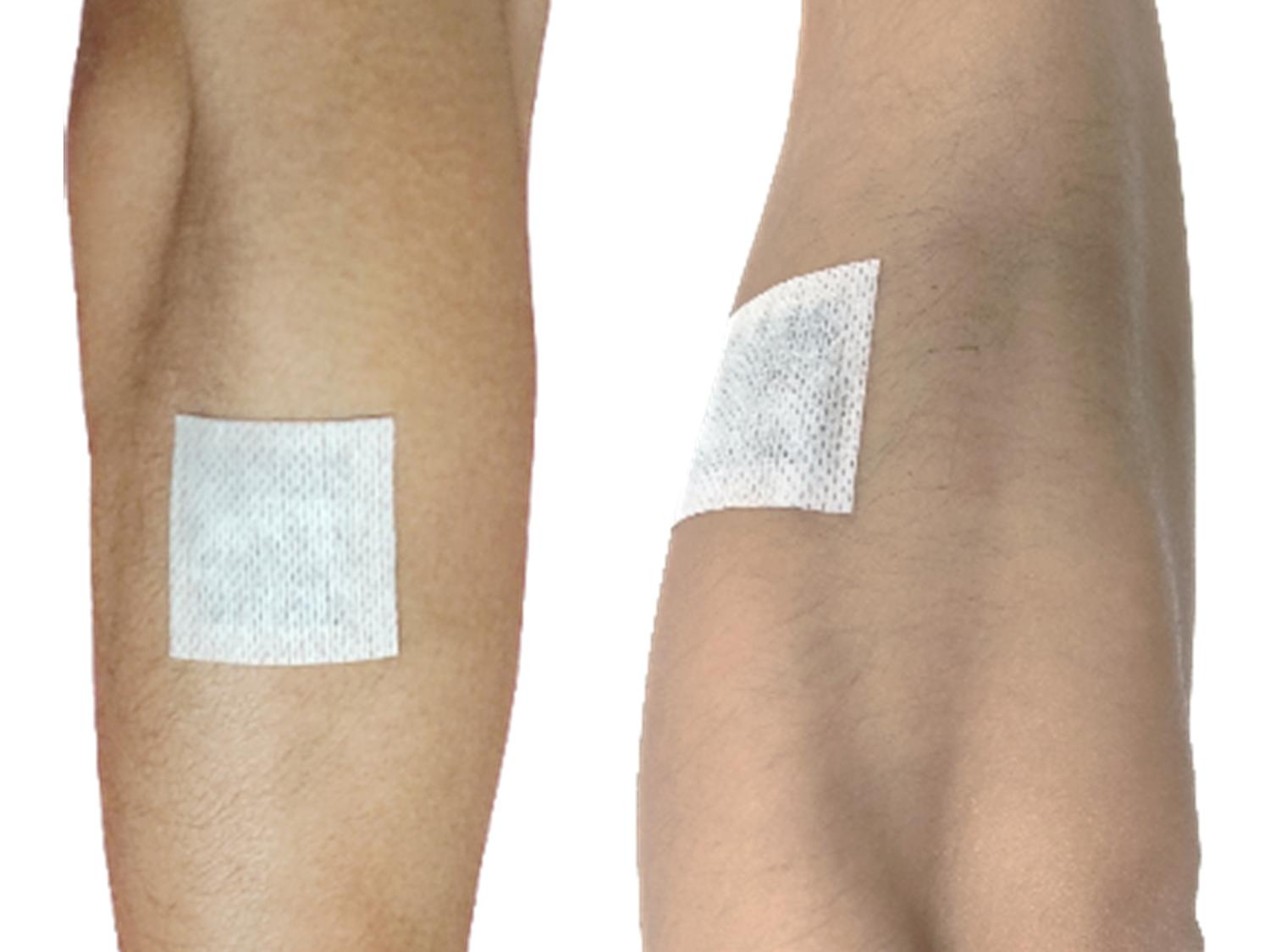
The on-skin sensing platform, developed by a team led by researchers at Penn State, can detect vitamin B6 in small concentrations of sweat. The sensor also has the capability to be adapted for glucose sensing at a high sensitivity, allowing patients with diabetes to monitor glucose and vitamin B6 simultaneously. Credit: Provided by Larry Cheng . All Rights Reserved.
<関連情報>
- https://www.psu.edu/news/engineering/story/highly-sensitive-monitor-can-detect-vitamin-b6-glucose-sweat
- https://www.sciencedirect.com/science/article/abs/pii/S1359836825007498
ビタミンB6とグルコースの電気化学的センシングのための分子インプリントポリマーとプルシアンブルーを用いたレーザー誘起グラフェンナノ複合体 Laser-induced graphene nanocomposites with molecularly imprinted polymers and Prussian blue for electrochemical sensing of vitamin B6 and glucose
Li Yang, Anqi Feng, Hui Zhang, Hanjie Wang, Xiaoman Wei, Zihan Wang, Xuezheng Hou, Huanyu Cheng
Composites Part B: Engineering Available online: 22 July 2025
DOI:https://doi.org/10.1016/j.compositesb.2025.112843
Highlights
- A wearable sweat sensor enables near-real-time detection of vitamin B6 in sweat.
- The sensor integrates LIG nanocomposites, MIPs, and PBNP as a redox probe.
- It achieves high sensitivity (39.949 μA log10 (μM)-1 mm-2) and a low LOD (0.93 nM).
- The system adapts for glucose sensing with a sensitivity of 19.33 μA log10 (μM)-1 mm-2.
- The platform supports precision nutrition by noninvasively tracking sweat biomarkers.
Abstract
Despite the rapid developments of wearable electrochemical sweat sensors, it is still challenging to detect non-electroactive substances such as vitamins with ultralow concentrations in sweat. Herein, this work reports a wearable, regenerable, highly sensitive, and stable sweat sensor based on laser-induced graphene (LIG) nanocomposites with molecularly imprinted polymers (MIPs) and Prussian blue (PBNP) as a redox probe for near-real-time, accurate detection of water-soluble vitamin B6 in sweat. The resulting sensor exhibits a high sensitivity of 39.95 μA log10 (μM)-1 mm-2 and a low limit of detection (LOD) of 0.93 nM for vitamin B6 detection, which can also be adapted for glucose sensing with a sensitivity of 19.33 μA log10 (μM)-1 mm-2. Combined with a microfluidic module, the integrated sweat sensing system provides opportunities to continuously monitor sweat vitamins and other biomarkers with trace concentrations during exercise in near-real-time. The reported wearable sweat sensing platform unlocks opportunities to noninvasively track nutrients for personalized dietary suggestions, offering significant potential to support precision nutrition.