2025-10-13 スイス連邦工科大学ローザンヌ校(EPFL)
<関連情報>
- https://actu.epfl.ch/news/ai-nutrition-study-finds-five-every-day-may-keep-t/
- https://www.nature.com/articles/s41467-025-63799-z
時間的栄養分析は、食事の規則性と質を腸内微生物叢の多様性と関連付ける:Food & Youデジタルコホートからの洞察 Temporal nutrition analysis associates dietary regularity and quality with gut microbiome diversity: insights from the Food & You digital cohort
Rohan Singh,Daniel McDonald,Alejandra Rios Hernandez,Se Jin Song,Andrew Bartko,Rob Knight &Marcel Salathé
Nature Communications Published:30 September 2025
DOI:https://doi.org/10.1038/s41467-025-63799-z
Abstract
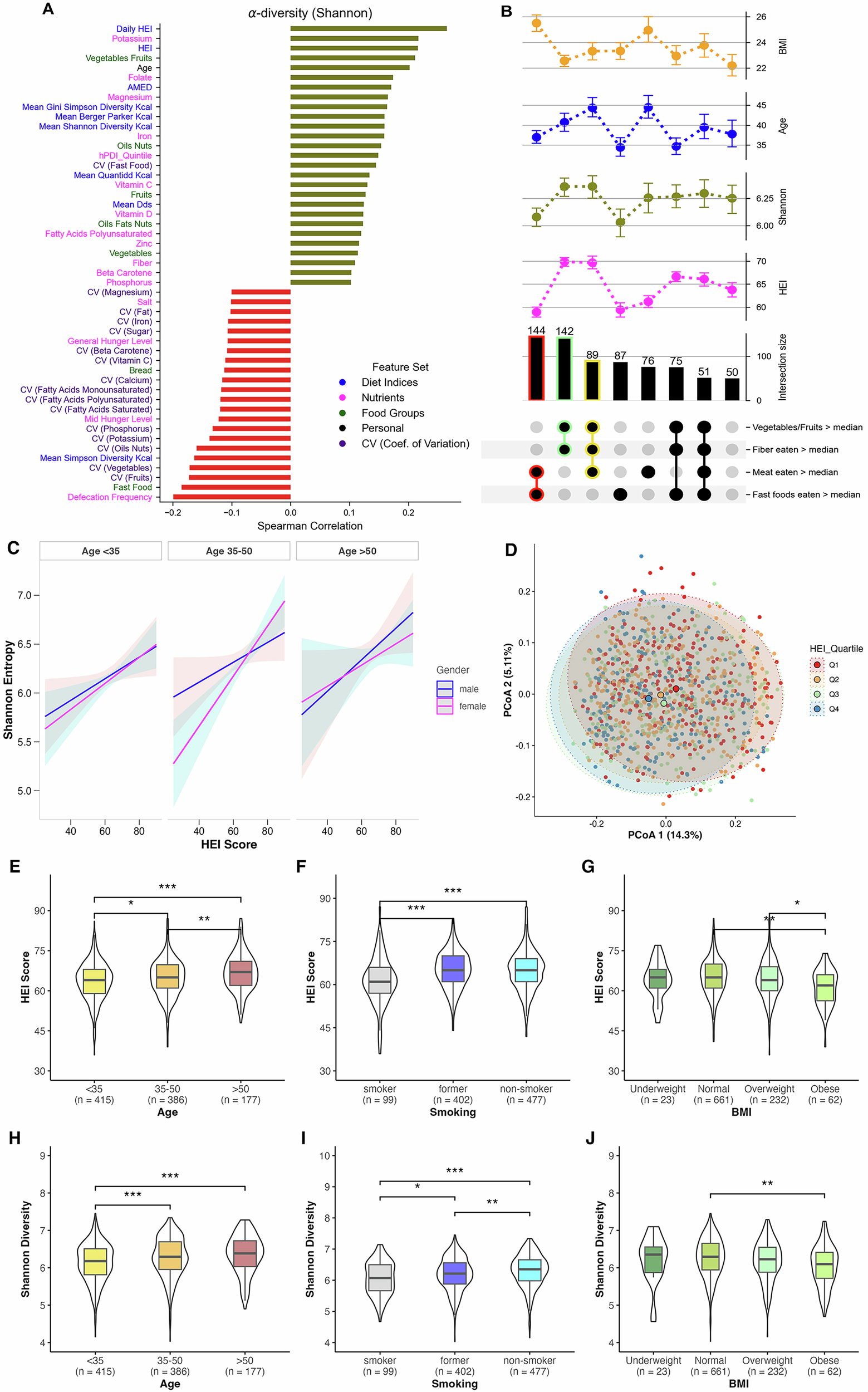
The gut microbiota is profoundly influenced by dietary choices, with emerging evidence linking it to various health outcomes. Here, we investigate diet-microbiota associations using detailed temporal nutrition intake data captured through real-time food logging via a smartphone app and gut microbiota profiles from 16S rDNA sequencing in ~ 1,000 participants from a digital cohort on personalized nutrition (“Food & You” – clinicaltrials.gov NCT03848299). The primary outcome of the parental trial was to investigate post-meal glucose response variations between individuals in function of their individual factors such as diet, microbiome composition and lifestyle. Our analysis reaffirms that high-quality diets rich in vegetables, fruits, nuts, micronutrients, and favorable dietary indices like HEI (calculated both as standard HEI and daily HEI to capture day-to-day diet quality regularity) correlate with increased microbial diversity and improved stool quality, while fast food-rich diets show opposite effects. Regular consumption of beneficial food groups emerges as a key factor, with regularity in both food intake and diet quality sometimes showing stronger associations than average intake quantities. Machine learning analyses reveal strong bidirectional predictability between gut microbiota composition and dietary factors (ROC AUC up to ~ 0.85-0.9). These findings highlight the critical role of both diet quality and regularity in shaping gut microbiota, the importance of temporal nutrition tracking in offering insights for targeted nutritional strategies, and suggest that the gut microbiota can be used to estimate dietary indices.