2025-10-21 東京大学
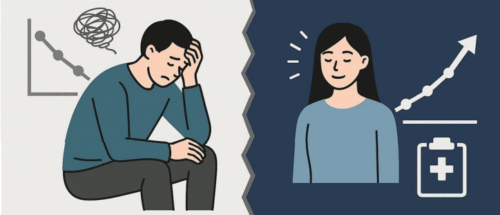
新型コロナウイルス感染症パンデミック前後で日本人のメンタルヘルスが二極化
<関連情報>
- https://www.u-tokyo.ac.jp/content/400272718.pdf
- https://www.sciencedirect.com/science/article/pii/S0165032725018403
日本における精神的苦痛とメンタルヘルスサービス利用動向(2013~2022年):COVID-19パンデミック前後の変化に焦点を当てて Psychological distress and mental health service use trends in Japan (2013–2022): Focusing on the change before and after the COVID-19 pandemic
Natsu Sasaki, Asuka Takae, Hiroki Asaoka, Naoaki Kuroda, Hiroshi Yatsuya, Nanami Nishio, Takahiro Tabuchi, Daisuke Nishi
Journal of Affective Disorders Available online: 20 October 2025
DOI:https://doi.org/10.1016/j.jad.2025.120398
Highlights
- Moderate distress declined from 25.52 % to 21.81 % (2013–2022).
- High distress rose from 4.66 % to 5.02 % over the study period.
- Men 35–49 and women 18–25 had the greatest rise in high distress.
- Mental health visits increased, notably among young adults.
- Women consistently showed higher distress and service use than men.
Abstract
This study investigated trends in psychological distress and mental health service use in Japan before and after the COVID-19 pandemic using nationally representative data from the Comprehensive Survey of Living Conditions (2013–2022). Psychological distress was assessed using the Japanese version of the Kessler 6 Scale, with scores of 5–12 indicating moderate distress and scores of ≥13 indicating high distress. Mental health service use was defined as regular visits to hospitals or clinics for depression or other psychological disorders. Analysis of data from 1,765,102 participants revealed that while the prevalence of moderate distress decreased from 24.9 % in 2019 to 21.8 % in 2022, the prevalence of high distress increased from 4.7 % to 5.0 % over the same period. Notably, increases in high distress were most prominent among aged 35–49 population. Cross-sectionally, women aged 26–34 showed highest prevalence of high distress (7.6 %). Additionally, mental health service use rose markedly, especially among young adults with high distress, with women consistently reporting higher distress and service utilization than men. These findings suggest a polarization in psychological distress in Japan, with a decline in moderate symptoms concurrent with a rise in severe distress, highlighting emerging gaps in mental health care. The results underscore the need for targeted interventions and the expansion of accessible, diverse mental health services to address unmet needs, particularly among vulnerable subgroups including young women and middle-aged population.