2025-10-22 中国科学院(CAS)
Web要約 の発言:
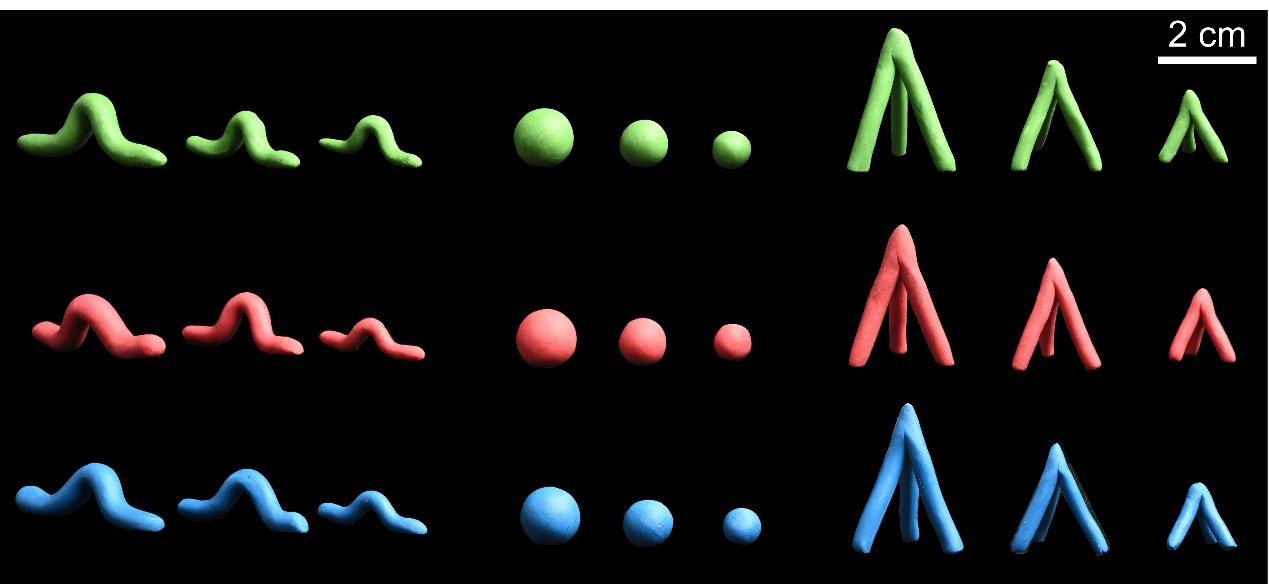
Designs of the plasticine models in the experiment. (Image by HUANG Xiao)
<関連情報>
- https://english.cas.cn/newsroom/research_news/life/202510/t20251022_1089992.shtml
- https://royalsocietypublishing.org/doi/10.1098/rspb.2025.2247
人間は知覚するが動物は知覚しない:生物間相互作用を評価するための粘土モデルの使用における落とし穴 Humans perceive but animals don’t: pitfalls in using plasticine models for assessing biotic interactions
Xiao Huang and Si-Chong Chen
Proceedings of the Royal Society B: Biological Sciences Published:22 October 2025
DOI:https://doi.org/10.1098/rspb.2025.2247
Abstract
Observation methods are crucial for understanding ecological processes. One widely used method is the application of plasticine models that visually mimic prey organisms in assessing biotic interactions. However, questions remain about whether this approach may accurately capture specific interaction intensity and types. Here, we initially synthesized previous studies applying plasticine models to quantify different types of biotic interaction. Following the experimental designs in these studies, we deployed 2430 plasticine models with different sizes, shapes and colours, mimicking various prey types, in natural habitats located in two different biomes across multiple seasons. Our results revealed that attack rates were not significantly different among plasticine models with varying characteristics, whether attack marks were pooled or separated by different animal guilds. This suggests that animals may not consistently distinguish visually different plasticine models as distinct prey types, and attack rates on plasticine models may be influenced by overall animal richness and activity levels rather than exclusively reflecting specific biotic interactions. Our study indicates the existence of anthropocentric biases in the application of plasticine models to assess biotic interactions. We highlight the importance of incorporating the habits and behaviours of studied animal taxa in ecological experimental designs to minimize anthropocentric biases and ensure an accurate assessment of ecological processes.