2025-10-29 カロリンスカ研究所(KI)
<関連情報>
- https://news.ki.se/four-subgroups-of-pcos-open-up-for-individualised-treatment
- https://www.nature.com/articles/s41591-025-03984-1
データに基づく多嚢胞性卵巣症候群のサブタイプと臨床転帰との関連性 Data-driven subtypes of polycystic ovary syndrome and their association with clinical outcomes
Xueying Gao,Shigang Zhao,Yanzhi Du,Ziyi Yang,Ye Tian,Junli Zhao,Xi Yuan,Betania R. Santos,Daimin Wei,Linlin Cui,Junhao Yan,Yingying Qin,Yuhua Shi,Rong Tang,Yun Sun,Jingmei Hu,Lingling Ding,Xueru Song,Lingxia Ha,Jingyu Li,China Women’s Reproductive Metabolic Network,Heping Zhang,Poli Mara Spritzer,Bulent O. Yildiz,… Zi-Jiang Chen
Nature Medicine Published:29 October 2025
DOI:https://doi.org/10.1038/s41591-025-03984-1
Abstract
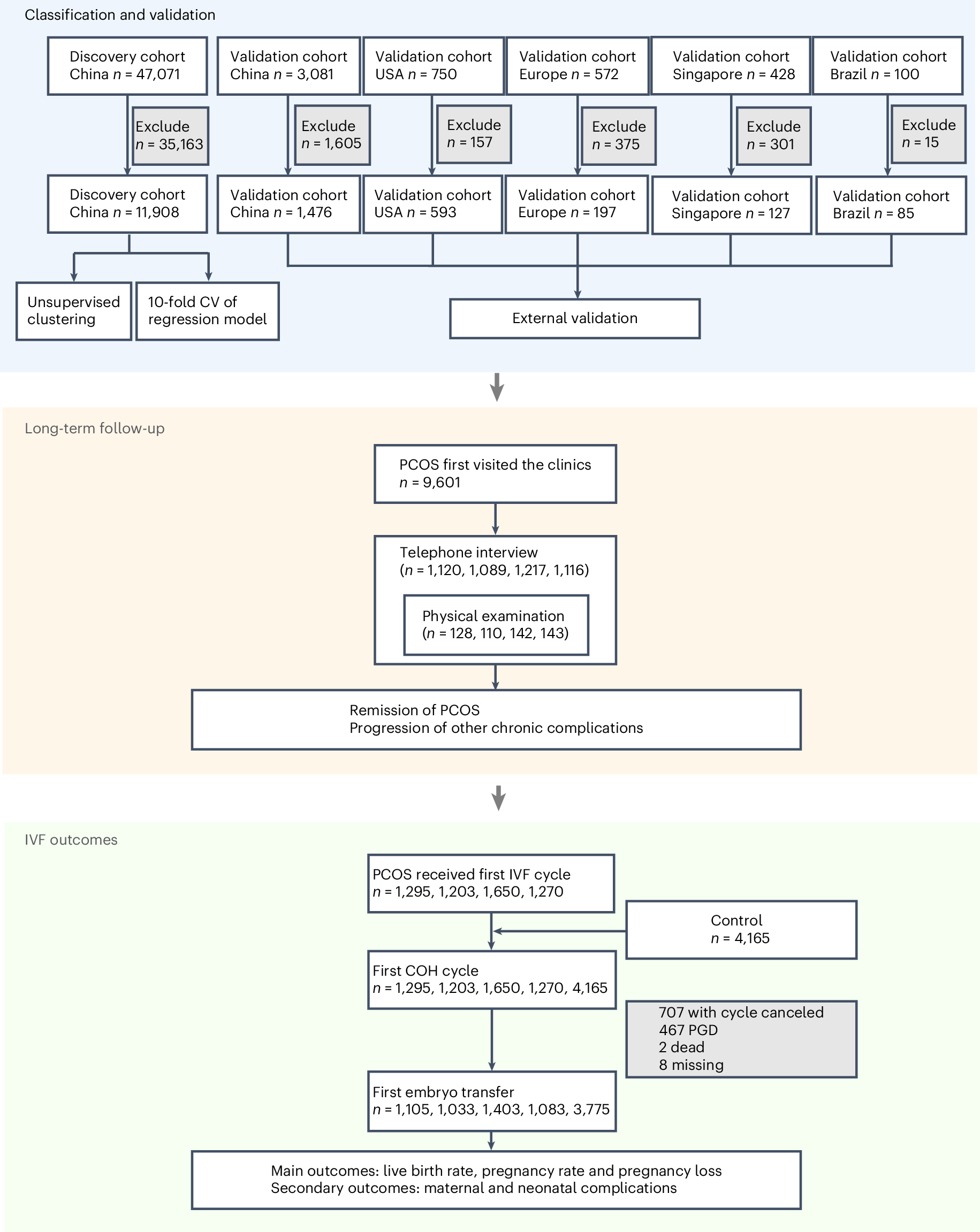
Polycystic ovary syndrome (PCOS) is a common and heterogeneous endocrine disorder that affects 11%–13% of women worldwide, with profound implications for fertility and long-term metabolic health. Here we identify four reproducible subtypes—PCOS with hyperandrogen, with obesity, with high-sex hormone-binding globulin and with high-luteinizing hormone–anti-Müllerian hormone—through unsupervised clustering of 9 clinical variables in 11,908 affected women, validated across 5 international cohorts. Prospective 6.5-year follow-up and in vitro fertilization treatment data revealed distinct reproductive and metabolic trajectories: hyperandrogenic PCOS showed the highest risk of second trimester pregnancy loss and dyslipidemia incidence; PCOS with obesity exhibited the most severe metabolic complications, lowest live birth rates and highest PCOS remission rate; PCOS with high-sex hormone-binding globulin demonstrated favorable reproductive outcomes and the lowest incidence of diabetes and hypertension; and PCOS with high-luteinizing hormone–anti-Müllerian hormone had the greatest risk of ovarian hyperstimulation and the lowest PCOS remission rate. These findings advance understanding of PCOS heterogeneity and provide a framework for subtype-based risk stratification and personalized management.