
2025-11-13 ニューヨーク大学(NYU)
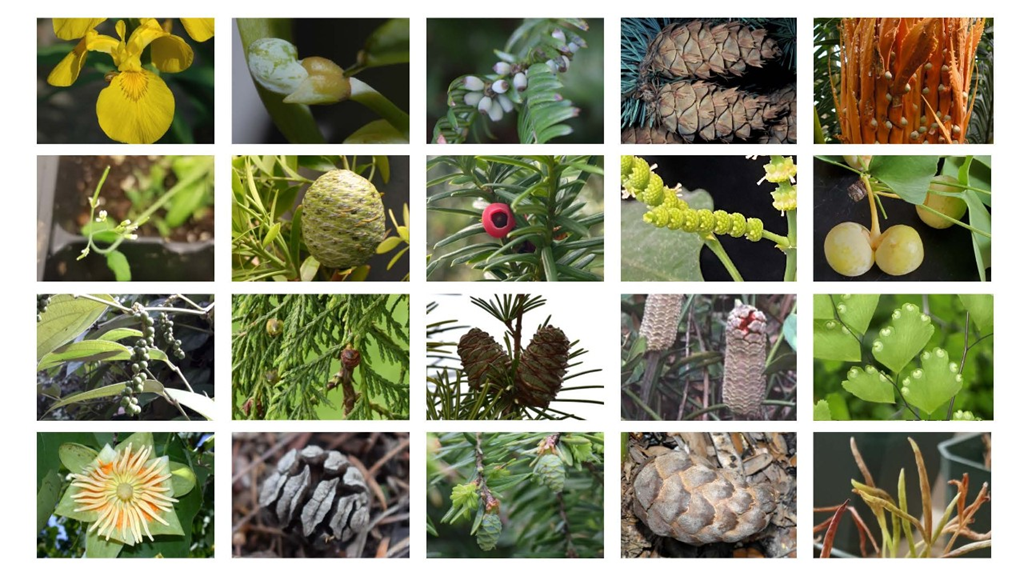
Researchers collected ovules and conducted genetic analyses for 20 plant species, including 14 gymnosperms, four flowering plants, and two ferns. Photos courtesy of Veronica Sondervan of NYU/NYBG and Dennis Stevenson, Barbara Ambrose, and Cecilia Zumajo-Cardona of NYBG
<関連情報>
- https://www.nyu.edu/about/news-publications/news/2025/november/living-fossils-genes-seed-improvement.html
- https://www.nature.com/articles/s41467-025-65399-3
発生的に制御される遺伝子が胚珠の進化における系統ゲノム分岐を引き起こす Developmentally regulated genes drive phylogenomic splits in ovule evolution
Veronica M. Sondervan,Gil Eshel,Kranthi Varala,Samantha Frangos,Manpreet S. Katari,Tim L. Jeffers,Cecilia Zumajo-Cardona,Sebastiano Nigris,Lisa DeGironimo,Tynisha Smalls,W. Richard McCombie,Damon P. Little,Barbara Ambrose,Dennis Wm. Stevenson & Gloria M. Coruzzi
Nature Communications
Abstract
The evolution of seeds transformed life on earth and is responsible for our most important food crops. Gymnosperms, the oldest living seed plants, are an untapped genomic reservoir for genes involved in seed evolution. To tap this resource, we assemble deep transcriptomes of 14 gymnosperms, four angiosperms, and two ferns and identified 22,429 phylogenetically informative ortholog groups. We observe that genes differentially expressed in ovules or leaves provide the majority of phylogenomic support for the evolutionary splits between 1) seed and non-seed plants; 2) gymnosperms and angiosperms; and/or 3) within gymnosperms (conifers vs. “ancient” gymnosperms). Our gymnosperm data identifies unreported candidate ovule regulated genes in Arabidopsis. Moreover, prior knowledge from Arabidopsis helps uncover 4,076 candidate ovule genes that influence these evolutionary splits. We validate the expression of candidate ovule genes in gymnosperm-specific ovule structures. Our work provides a resource for seed gene discovery, conservation, and crop improvement.

