2025-12-01 マックス・プランク研究所
<関連情報>
- https://www.mpg.de/25775166/1125-neur-the-smell-of-fatty-foods-during-pregnancy-promotes-obesity-in-offspring-153735-x
- https://www.nature.com/articles/s42255-025-01405-8
幼少期における脂肪感覚刺激は食物と肥満に対する中枢反応をプログラムする Fat sensory cues in early life program central response to food and obesity
Laura Casanueva Reimon,Ayden Gouveia,André Carvalho,Joscha N. Schmehr,Mouna El Mehdi,Rolando D. Moreira-Soto,Carlos G. Ardanaz,Janice Bulk,Lionel Rigoux,Paul Klemm,Anna Lena Cremer,Frederik Dethloff,Yvonne Hinze,Heiko Backes,Patrick Giavalisco & Sophie M. Steculorum
Nature Metabolism Published:01 December 2025
DOI:https://doi.org/10.1038/s42255-025-01405-8
Abstract
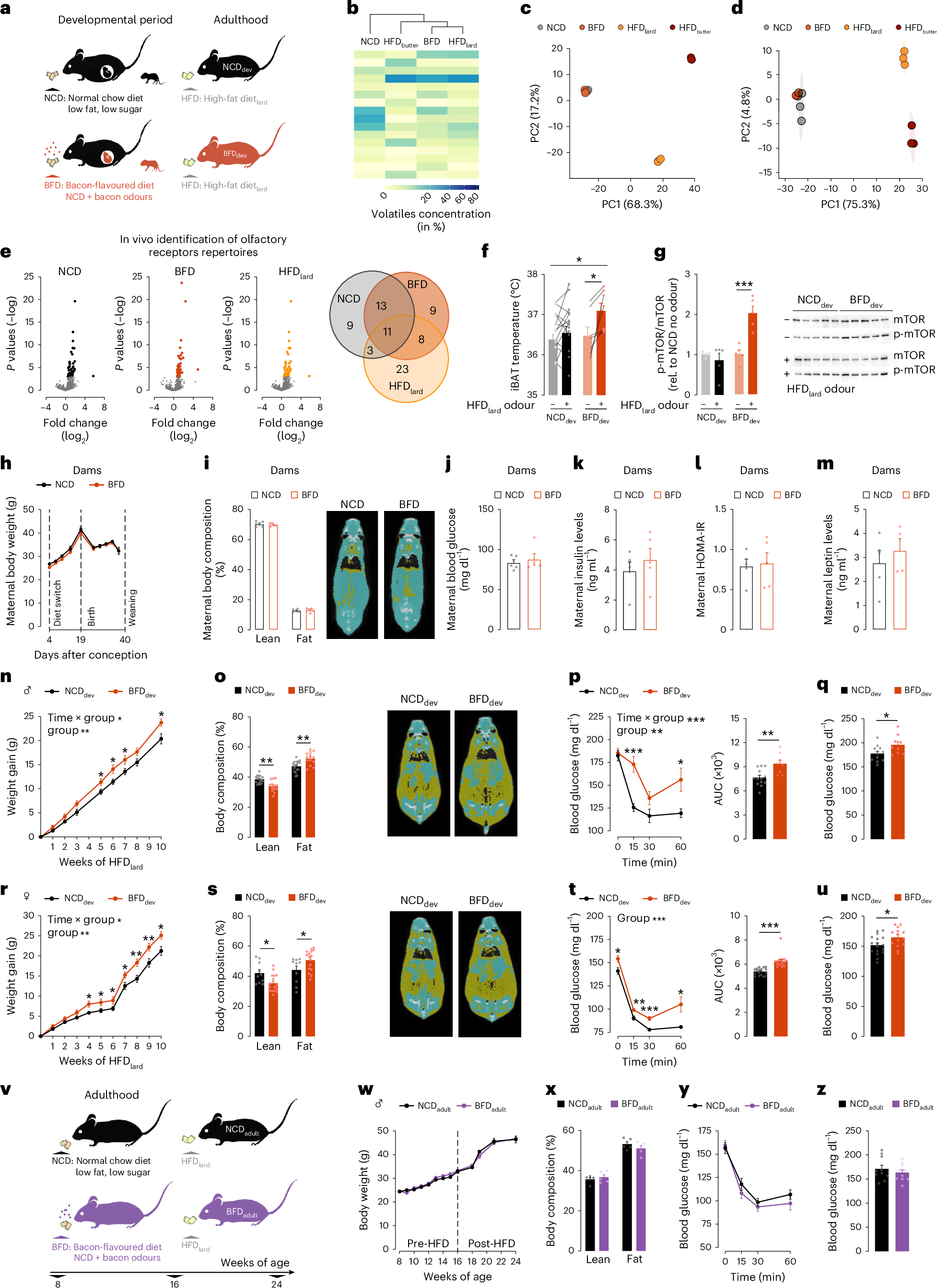
Maternal obesity predisposes offspring to metabolic diseases. Here, we show that non-nutritive sensory components of a high-fat diet (HFD), beyond its hypercaloric, obesogenic effects, are sufficient to alter metabolic health in the offspring. To dissociate the caloric and sensory components of HFD, we fed dams a bacon-flavoured diet, isonutritional to a normal chow diet but enriched with fat-related odours. Offspring exposed to these fat-related odours during development display metabolic inflexibility and increased adiposity when fed HFD in adulthood independently of maternal metabolic health. Developmental exposure to fat-related odours shifts mesolimbic dopaminergic circuits and Agouti-related peptide (AgRP) hunger neurons’ responses to phenocopy those of obese mice, including a desensitization of AgRP neurons to dietary fat. While neither neonatal optogenetic activation of sensory circuits nor passive exposure to fat-related odours is sufficient to alter metabolic responses to HFD, coupling optogenetic stimulation of sensory circuits with caloric intake exacerbates obesity. Collectively, we report that fat-related sensory cues during development act as signals that can prime central responses to food cues and whole-body metabolism regulation.