
2025-12-08 ジョージア工科大学 (Georgia Tech)
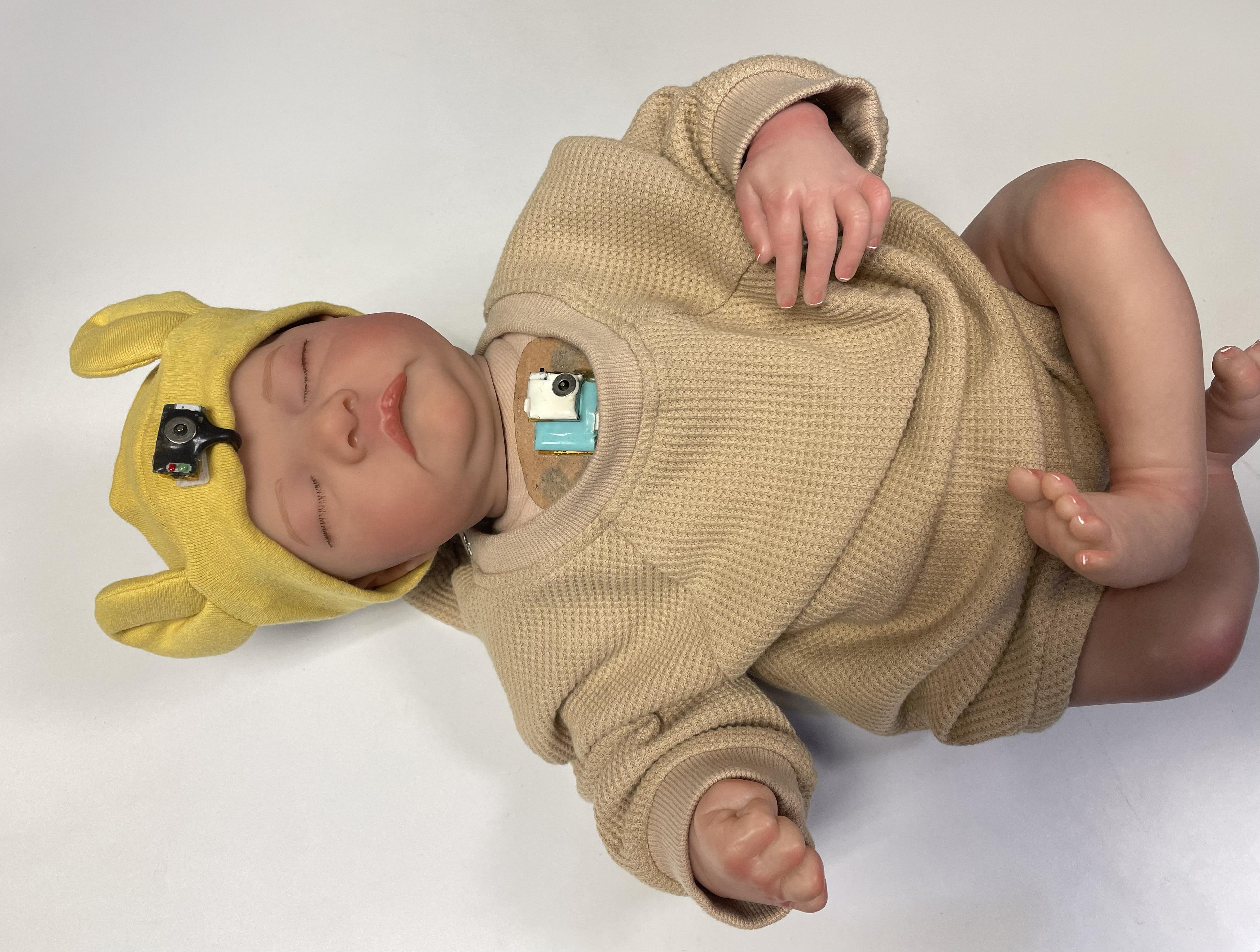
Wearable chest-mounted patch and forehead-mounted pulse oximeter shown on a mannequin baby for illustration
<関連情報>
- https://research.gatech.edu/advancing-neonatal-health-monitoring-ethiopia
- https://www.nature.com/articles/s41746-025-01974-8
エチオピアの新生児の健康モニタリングを推進するための、ソフトでオールインワンのナノメンブレンウェアラブルシステム Soft, all-in-one, nanomembrane wearable system for advancing neonatal health monitoring in Ethiopia
Lauren Zhou,Michele Joseph,Yoon Jae Lee,Diva Yadav,Likhit Nayak,Julia Woodall,Jared Matthews,Ira Soltis,Firehiwot Markos Mekuria,Kullehe Haddis Yeshanew,Yonas Kebede Mamo,Abebaw Fekadu,Asrat Demtse,Rudolph Gleason & Woon-Hong Yeo
npj Digital Medicine Published:25 September 2025
DOI:https://doi.org/10.1038/s41746-025-01974-8
Abstract
The neonatal period is critical and stressful, particularly in low-resource settings where existing monitoring methods for newborns are sporadic and labor-intensive. There is a pressing need for an affordable, user-friendly device that offers continuous and effective monitoring. Here, we present a soft, all-in-one, wearable system designed for continuous wireless monitoring of neonatal health in low-resource settings. Developed using advanced packaging technologies, this system features a chest-mounted patch and a forehead-mounted pulse oximeter that transmit real-time data to a smartphone app. The integrated device measures clinical-grade parameters, including electrocardiograms, heart rate, respiration rate, temperature, and blood oxygen saturation, showing excellent correlation with hospital-grade tabletop devices and reduced motion artifacts. This pilot study demonstrates a significant improvement over current monitoring methods by providing continuous oversight, ensures critical events are not missed, and automates the process for enhanced neonatal care, resulting in 84% satisfaction by parents interested in using the system at home.

