2026-01-08 ノースウェスタン大学
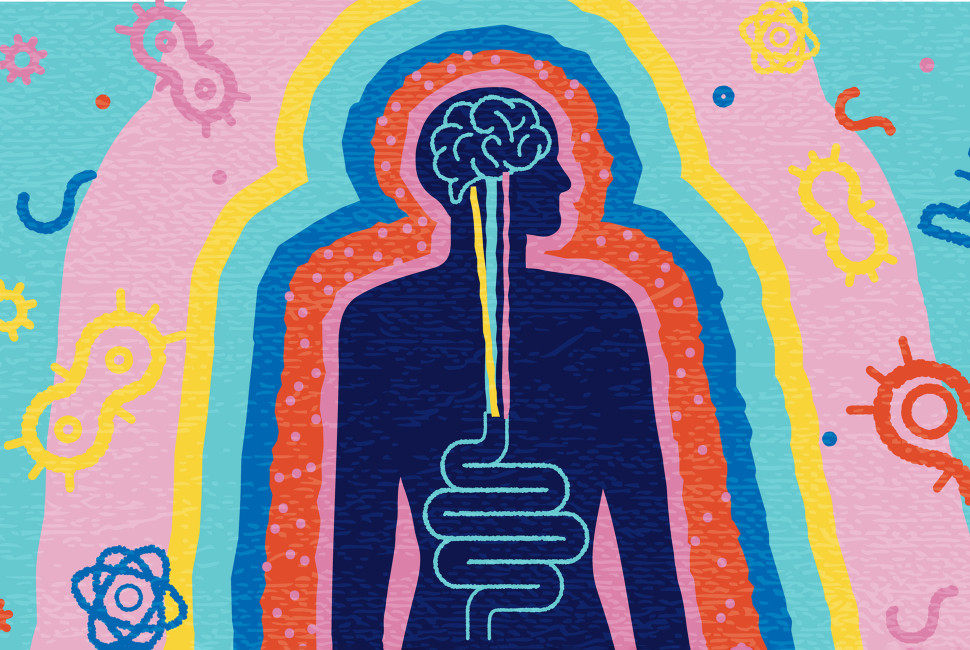
A new Northwestern stud provides the first empirical data showing the direct role the gut microbiome plays in shaping differences in the way the brain functions across different primate species. Getty Images
<関連情報>
- https://news.northwestern.edu/stories/2026/01/microbes-may-hold-the-key-to-brain-evolution
- https://www.pnas.org/doi/abs/10.1073/pnas.2426232122
- https://medibio.tiisys.com/137248/
霊長類の腸内細菌叢はマウスの神経発達において進化的に顕著な変化を引き起こす Primate gut microbiota induce evolutionarily salient changes in mouse neurodevelopment
Alex R. DeCasien, Jacob E. Aronoff, Elizabeth K. Mallott, +11 , and Katherine R. Amato
Proceedings of the National Academy of Sciences Published:January 5, 2026
DOI:https://doi.org/10.1073/pnas.2426232122
Significance
Compared to other primates, humans have remarkably large brains relative to their body sizes. The resultant high demands for glucose may have been supported by changes in the gut microbiota (GM), which can influence host metabolism. In this study, we tested this idea by inoculating germ-free mice with GMs from three primate species varying in brain size. Brain gene expression differences between mice inoculated with human versus macaque GMs mirrored patterns observed in human versus macaque brains, and human GMs stimulated glucose production and use in the mouse brain. These findings suggest that species differences in GM can influence brain metabolism and raise the possibility that the GM may have supported the energetic demands associated with larger brains in primates.
Abstract
Multiple primate species, including humans, evolved brains that are exceptionally large relative to their body sizes. These large brains coevolved with metabolic adaptations that enhance cerebral energy supply, including increased circulating glucose levels. While the gut microbiota (GM) is known to influence host metabolism, its potential role in primate brain evolution remains unclear. To investigate this, we inoculated germ-free mice with the GMs of primate species selected to separate the effects of brain size (encephalization) from phylogenetic relatedness: humans (large-brained, Catarrhini), macaques (smaller-brained, Catarrhini), and squirrel monkeys (large-brained, Platyrrhini). We first show that differences in brain gene expression between mice inoculated with human versus macaque GMs resemble those observed between actual human and macaque brains. Comparing the effects of the different primate GMs on mouse brain gene expression further revealed that despite greater evolutionary distance, the GMs from the two larger-brained species (humans and squirrel monkeys) similarly upregulated genes associated with energy production. Notably, human GMs specifically increased the expression of genes involved in oxidative phosphorylation, and these gene expression changes correlated with increased abundances of GM metabolic pathways related to glucose metabolism and gluconeogenesis. Human GMs also downregulated evolutionarily conserved genes implicated in neurodevelopmental disorders such as autism. Although these are findings based on a small sample of primate species and must be interpreted as preliminary, they suggest that species differences in GM composition can influence brain metabolism and raise the possibility that the GM could have played a supporting role in primate encephalization.